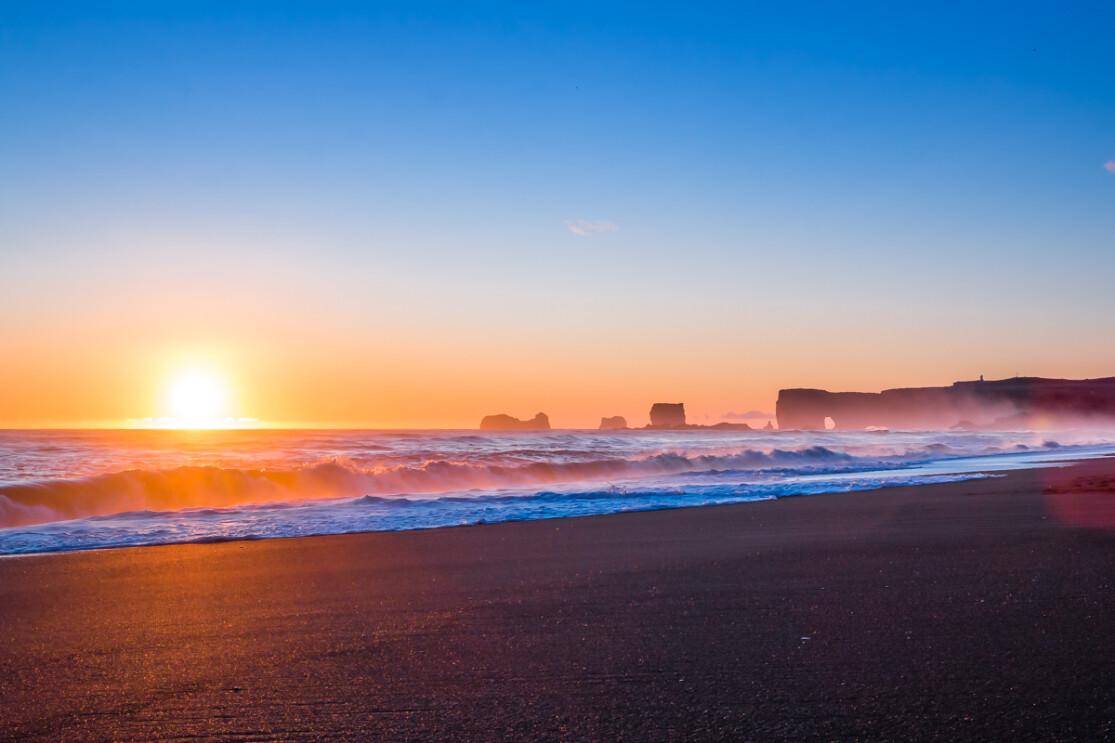
The phenomenon of the midnight sun in Iceland—where daylight persists well into the early hours of the night during summer months—creates a unique set of challenges for sleep. While the country’s dramatic landscapes and long days attract countless travelers, the lingering glow can subtly or dramatically alter circadian rhythms, hormone balance, and overall sleep quality. The following list outlines the most salient effects, providing a clear perspective for anyone planning to experience Iceland’s endless daylight.
1. Disruption of Melatonin Production
Melatonin, the hormone that signals darkness to the brain, is produced in response to decreasing light levels. The midnight sun blurs the natural transition from day to night, leading to a reduced melatonin surge. This hormonal shortfall can delay sleep onset, shorten total sleep time, and impair the restorative phases of the sleep cycle.
2. Shifted Circadian Rhythm
The body’s internal clock, or circadian rhythm, relies on a 24‑hour pattern of light and darkness. Continuous daylight pushes this clock forward, often resulting in a phase delay where individuals feel alert later into the night and struggle to align with conventional bedtime schedules.
3. Decreased Sleep Efficiency
Sleep efficiency—measured as the ratio of time spent asleep to time spent in bed—tends to decline under the midnight sun. Studies in high‑latitude regions show an increase in wake after sleep onset (WASO) and a rise in light‑stage sleep, indicating a less consolidated and less restorative night’s rest.
4. Altered REM Sleep Patterns
Rapid eye movement (REM) sleep, essential for memory consolidation and emotional regulation, is sensitive to light exposure. Persistent illumination can compress REM periods, leading to fragmented dreaming and reduced emotional processing, which may affect mood and cognitive performance the following day.
5. Increased Sleep Latency
Sleep latency—the time it takes to transition from wakefulness to sleep—often lengthens when ambient light persists past the usual bedtime. Even low‑intensity blue light from the sky can keep the suprachiasmatic nucleus (SCN) active, making it harder for the brain to “switch off.”
6. Heightened Alertness in the Early Hours
Because daylight remains high, cortisol, the stress hormone that peaks in the morning, can stay elevated longer. This sustained cortisol level fuels alertness well into what would traditionally be considered night, creating a feedback loop that further suppresses the drive to sleep.
7. Changes in Body Temperature Regulation
The body’s core temperature naturally drops at night to facilitate sleep. Continuous exposure to sunlight can interfere with this dip, maintaining a higher peripheral temperature that hinders the onset of deep, slow‑wave sleep (SWS), the phase most associated with physical recovery.
8. Impact on Sleep Architecture
Overall sleep architecture—how the night is divided among stages N1, N2, N3, and REM—tends to shift under the midnight sun. Researchers observe a reduction in stage N3 (slow‑wave) and an increase in lighter N2 sleep, resulting in a night that feels less restorative despite adequate total sleep time.
9. Greater Susceptibility to Insomnia
People with pre‑existing sleep disorders are especially vulnerable. The persistent light can exacerbate insomnia by amplifying hyperarousal, making it difficult to fall asleep or maintain sleep throughout the night, and can trigger a cycle of anxiety about not sleeping.
10. Interaction with Artificial Light Sources
While natural light is the primary driver, artificial lighting—especially blue‑rich LEDs—can compound the problem. In hotels or cabins, using blackout curtains and low‑temperature lighting can mitigate the effect, but failure to do so often intensifies the disruption caused by the midnight sun.
11. Influence on Mental Health
Sleep deprivation and fragmented sleep are linked to mood disturbances, including irritability, anxiety, and depressive symptoms. The continuous daylight can subtly destabilize emotional regulation, especially for travelers unaccustomed to high‑latitude summer conditions.
12. Adaptive Strategies for Better Rest
Effective countermeasures include wearing blue‑light‑blocking glasses in the evening, maintaining a consistent bedtime routine, using blackout curtains, and limiting caffeine after noon. Some visitors find that exposure to natural darkness—by seeking out caves, tunnels, or remote coastal spots—helps recalibrate their circadian rhythm more quickly.