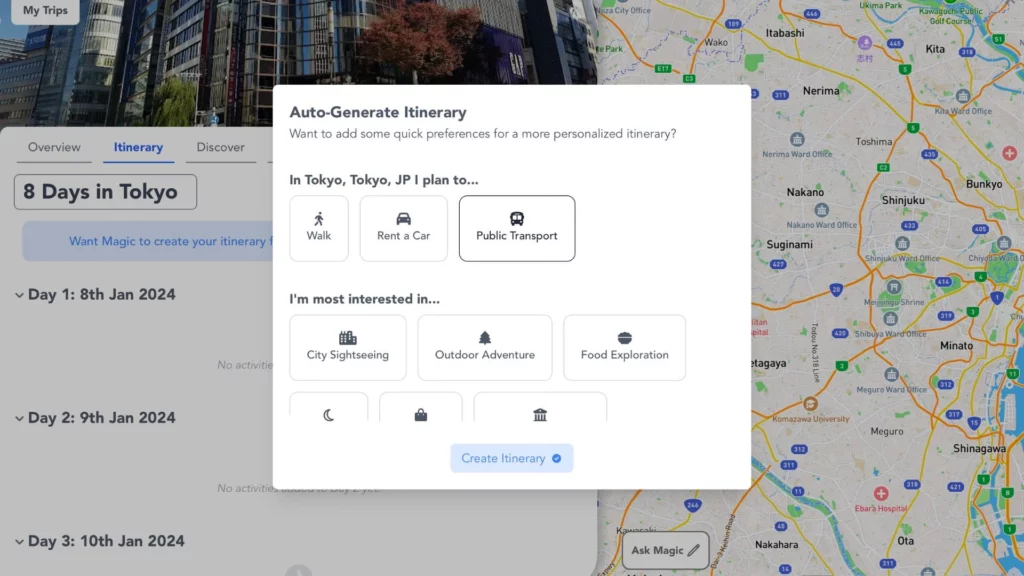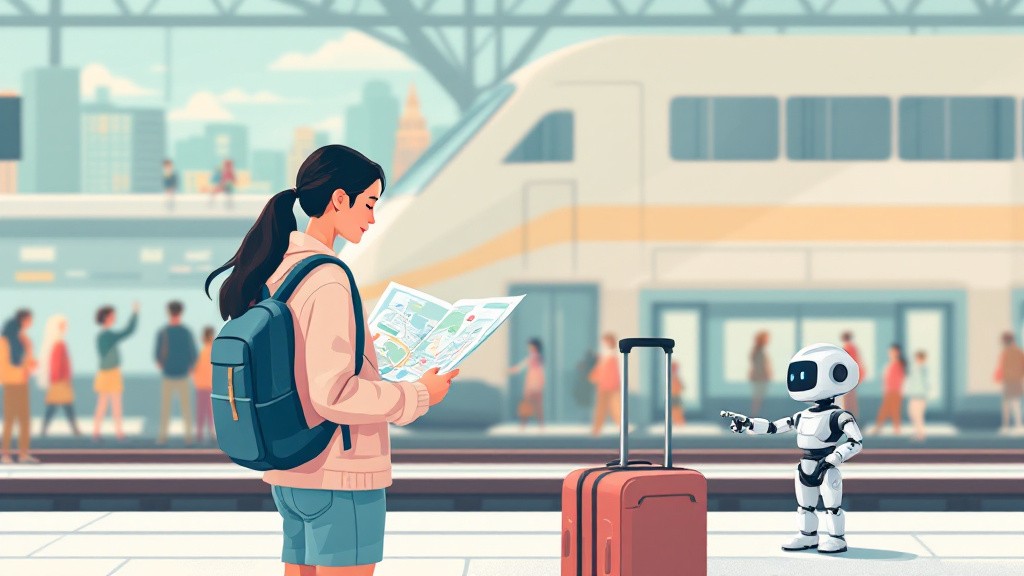
Group travel has always been a chaotic dance of contrasting desires, fluctuating moods, and relentless compromises. Imagine now a single orchestrator—an AI—attempting to harmonize the wildly divergent rhythms of fifteen unique personalities. At first glance, it sounds like the setup for a comedy of errors or a cautionary tale about technology’s limits. But delve deeper, and there lies a far more intriguing narrative about human nature, technology’s evolving role, and our strange fascination with surrendering control to algorithms. Can artificial intelligence truly handle the complexity of group travel with fifteen distinct personalities? The answer unfolds in layers, revealing not only the capabilities but also the subtle cracks in the veneer of digital omnipotence.
The Intricacies of Fifteen Minds: More Than a Numbers Game
Group travel often becomes a microcosm of social dynamics—each participant bringing an idiosyncratic blend of preferences, priorities, and pet peeves. When that group balloons to fifteen people, the complexity escalates exponentially. It’s not merely an arithmetic challenge; it’s a psychological and logistical labyrinth. An AI tasked with managing such a diverse itinerary must decode not only basic preferences but also the underlying emotional currents that influence decision-making.
The intricacy amplifies when personalities diverge starkly—there’s the meticulous planner who craves control, the spontaneous adventurer fuelled by whimsy, the peace-seeking introvert wary of overstimulation, and the lively extrovert energized by constant social interaction. At this scale, conflicts in preferences are inevitable.
AI, designed to optimize efficiency and balance, offers promise by parsing massive data points rapidly. Yet, is it equipped to grasp the ephemeral nuances swirling beneath interpersonal dynamics? Its strength lies in pattern recognition, algorithmic predictability—and therein lies why the fascination persists. Humans are drawn to AI because it promises impartiality and scalability in managing the seemingly insurmountable complexity of group travel.
AI as the Ultimate Travel Concierge: Myth or Reality?
The idea of an AI serving as a flawless travel concierge is seductive. Imagine one central digital brain orchestrating accommodation, dining, transport, and activities seamlessly, tailored to the whims of fifteen different personalities. AI can collate user data—from past travel behaviors to real-time mood analytics—to curate options that theoretically satisfy all participants.
However, the crux of the issue is the unpredictable human element. While AI can gather and analyze preferences, it struggles with spontaneity, emotional fluctuations, and the subtle art of diplomacy necessary to quell brewing tensions. Its decision-making is bound by the data input and the parameters of its programming, limiting its capacity for empathetic improvisation.
Though AI-powered tools have revolutionized travel planning by automating logistics, the myth of a perfectly smooth group travel experience—fully powered by AI—remains elusive. What they excel at is streamlining the predictable, freeing human travelers from mundane tasks, but they falter when confronted with the messy unpredictability of human emotion and social friction.

Testing the AI: The Experiment with 15 Diverse Personalities
Putting AI to the test with fifteen individuals, each embodying starkly different travel personas, illuminates its strengths and weaknesses. From the outset, the AI collected data points—dietary restrictions, preferred activities, budget ceilings, timing flexibility, and more—then generated an itinerary intent on maximizing collective satisfaction.
The AI’s strength was evident in logistics: efficient route planning, accommodation matching, and even proactive adjustments for weather changes. Yet, as human personalities gyrated unpredictably—last-minute changes, mood swings, and clashing preferences—the AI’s rigidity surfaced.
For instance, when half the group craved a tranquil museum visit, while others demanded an adrenaline-pumping excursion, the AI offered compromises but lacked the finesse to reconcile hidden emotional stakes. It suggested split activities rather than true integration, highlighting a fundamental issue: AI can engineer fairness but struggles to generate genuine consensus or emotional resonance.
The Fascination With AI’s Role in Group Dynamics
Why, despite these limitations, does the fascination with AI’s role in group travel persist? Humans are paradoxical creatures—yearning for control yet intrigued by the unknown. AI represents a tantalizing promise of order amidst chaos, an algorithmic utopia where conflicting desires yield to cold logic.
This allure taps into a deeper cultural narrative—our fascination isn’t just with what AI can do practically, but with the symbolic surrender of agency. Trusting an AI with fifteen personalities means trusting technology to negotiate social harmony, a task historically reserved for human intuition.
This tension—human versus machine emotional intelligence—sparks curiosity. We are collectively testing boundaries, questioning not just if AI can optimize travel, but if it can understand the ineffable complexity of human relationships forged and fractured in the crucible of group adventure.
Implications for Travelers and Developers
The experiment suggests several critical implications. For travelers, AI can be a powerful ally in managing the logistical chaos of large groups but should not be misconstrued as a panacea for interpersonal conflicts. It’s a tool—precise yet inherently limited by its lack of true empathy.
For developers, the challenge is to iterate beyond data-driven optimization toward systems capable of emotional intelligence and adaptability. Integrating sentiment analysis, mood prediction, and real-time conflict detection could edge AI closer to the elusive ideal of managing the complexity of large group travel.
Moreover, the human-AI interface itself must evolve. Instead of a monolithic decision-maker, AI might best function as a nuanced facilitator that empowers users to negotiate their own compromises, supported by data insights but ultimately human-driven.
Conclusion: The Symbiotic Future of AI and Group Travel
AI’s attempt to handle fifteen personalities in group travel is less a story about technological failure or triumph than a mirror reflecting human complexity in the age of algorithms. It’s a narrative of potential, limits, and an unspoken question: can technology ever truly replicate the messy, unpredictable tapestry of human relationships?
In surrendering some control to AI, travelers gain unprecedented logistical efficiency but must recognize that emotional alchemy remains human territory. The future belongs not to AI as sole orchestrator, but to a symbiotic partnership where artificial intelligence supports and amplifies the instinctual wisdom of the group itself. Until then, the magic—and the madness—of group travel will continue to resist tidy digital codification, much to our collective fascination.