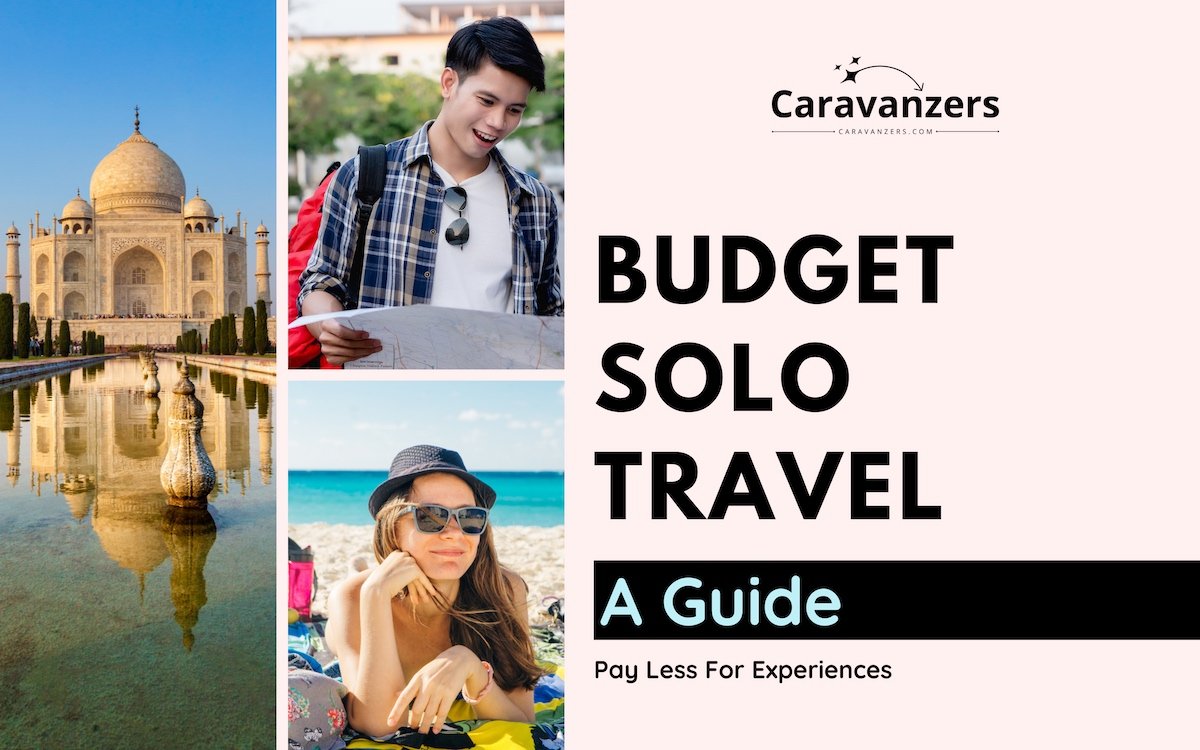
What if I told you that a year of solo travel—where you wake up to new horizons, taste unfamiliar cuisines, and dance under foreign skies—could be yours for just $10,000? Not $50,000. Not $20,000. A mere ten grand. Sounds like a fantasy? A pipe dream whispered by backpackers in hostel kitchens? Think again. This isn’t about deprivation. It’s about strategy. It’s about turning the art of travel into a game of financial judo—using minimal resources to flip the world into your playground. So, buckle up. Because we’re about to break down how to solo travel for a full year on $10,000 without selling a kidney or sleeping in airport terminals. But first—let’s address the elephant in the room: Can you really do this without losing your mind, your health, or your sense of adventure?
The Myth of the “Cheap” Traveler: Why $10,000 Is Actually a Luxury
Let’s dispel a dangerous myth: that $10,000 is “cheap.” In reality, it’s a modest but intentional budget—one that demands discipline, creativity, and a willingness to embrace discomfort. Think of it as the difference between eating at a Michelin-starred restaurant every night versus savoring street food in Hanoi, where each bowl of pho costs less than a dollar and carries the weight of generations. The key isn’t to survive on rice and water; it’s to redefine what “enough” means. You’re not counting pennies—you’re curating experiences. And that, my friend, is where the magic begins.
But here’s the catch: this budget assumes you’re not chasing luxury, but chasing depth. You won’t be staying in five-star hotels. You won’t be eating lobster every night. But you will be sleeping in family-run guesthouses in Portugal, learning to make pasta with nonnas in Italy, and waking up to the sound of waves in a Thai bungalow. You’ll be trading transactional comfort for transformational connection. And that, ultimately, is what makes the journey priceless.
Breaking Down the $10,000: Where the Money Goes (And Where It Doesn’t)
Let’s slice this budget like a sushi chef—precisely, respectfully, and with purpose. Of the $10,000, here’s a realistic allocation:
- Flights: $3,000–$3,500 (book early, use points, fly mid-week)
- Accommodation: $2,500–$3,000 (hostels, guesthouses, Couchsurfing, house-sitting)
- Food: $2,000–$2,500 (cook sometimes, eat street food, avoid tourist traps)
- Transport: $1,000–$1,200 (buses, trains, rideshares, occasional flights)
- Visa & Insurance: $500–$800 (mandatory, non-negotiable)
- Miscellaneous: $500–$1,000 (sim cards, souvenirs, unexpected costs)
Notice what’s missing? Guilt. Notice what’s not prioritized? Overpacking. You’re not bringing a suitcase full of “just in case” items. You’re bringing a backpack full of curiosity. And that changes everything.

The Art of the Flight Hack: How to Fly Far Without Flying Broke
Flights are the biggest single expense. So, how do you hack them? First, embrace the art of the open-jaw ticket. Fly into one city and out of another—often cheaper than round-trip. Second, use flight search engines like Skyscanner or Google Flights in “whole month” mode. You’ll spot patterns: Tuesday flights to Lisbon are 40% cheaper than Saturday flights. Third, leverage airline miles and credit card points. Sign up for a travel card with a sign-up bonus (e.g., 50,000 miles after spending $3,000 in three months). Use it for daily expenses, then redeem for flights. Fourth, be flexible with destinations. Want to go to Southeast Asia? Fly into Bangkok instead of Singapore. Want Europe? Consider Albania over France. The world is your oyster—and oysters are cheaper in the right places.
Sleeping Like a Local: The Accommodation Revolution
Hostels aren’t just for 20-year-olds with dreadlocks and a guitar. They’re micro-communities of wanderers, dreamers, and accidental philosophers. A $15–$25/night dorm bed in Lisbon gives you a bunk, Wi-Fi, and a chance to swap travel stories with a German engineer or a Brazilian artist. But don’t stop there. House-sitting is the ultimate hack. Websites like TrustedHousesitters connect you with homeowners who need someone to water their plants and feed their cat. In exchange? Free accommodation. You get a kitchen, a couch, and a local’s perspective. Then there’s Couchsurfing—where locals offer free stays, not out of charity, but out of a shared love of culture. You’ll sleep on couches, floors, and sometimes in gardens. But you’ll wake up with stories—and maybe a new friend.
Eating Like a King (Without the Crown): Food on a Dime
Food is where most travelers overspend—and where you can outsmart the system. First, cook your own meals. Even in hostels with shared kitchens, you can boil pasta, fry eggs, or stir-fry vegetables. Second, eat where locals eat. In Bangkok, skip the restaurant with the English menu and follow the queue of taxi drivers to a street stall serving khao soi for 60 cents. In Mexico City, order tacos al pastor from a vendor whose cart has a line out the door. Third, learn the language of food. A simple “¿Dónde está el mercado?” (Where’s the market?) can lead you to fresh produce, local cheese, and homemade bread—cheaper and tastier than anything in a supermarket. Fourth, embrace the “one treat” rule. Allow yourself one splurge a week—a craft beer in Berlin, a gelato in Rome, a bowl of ramen in Tokyo. Everything else? Fuel for the journey.
The Silent Killer: Transport Traps and How to Dodge Them
Transport is the great illusionist—it makes you think you’re saving money when you’re actually hemorrhaging cash. Buses are your best friend. Overnight buses in Southeast Asia cost $20 and deliver you to a new city while you sleep. Trains in Europe? Book in advance on Trainline or Omio for as little as $30 between cities. Avoid taxis at all costs. Use Uber or Bolt in cities, or walk—because the best discoveries happen when you’re not in a metal box. Rideshares like BlaBlaCar connect you with locals heading your way for a fraction of the train price. And when you must fly? Use budget airlines like Ryanair or AirAsia—but read the fine print. Those $10 tickets come with $50 in baggage fees if you’re not careful.
Visa Roulette: Navigating Bureaucracy Without Losing Your Sanity
Visas are the bureaucratic equivalent of a bad ex—unpredictable, expensive, and impossible to ignore. The key is to plan your route around visa policies. Want to spend a year in Southeast Asia? You can get 30 days in Thailand, 30 in Vietnam, 30 in Cambodia, and 30 in Laos—just by crossing borders. Want Europe? The Schengen Zone allows 90 days in 26 countries. After that? Head to the Balkans or Turkey. Use visa calculators online to map your journey. And always, always check official government websites—because visa rules change faster than a politician’s promises. Also, get travel insurance. Not the kind that covers your phone. The kind that covers medical emergencies, theft, and trip cancellations. It’s not exciting. But neither is a $50,000 hospital bill in the U.S.
The Psychological Game: Staying Sane When the World Feels Overwhelming
Solo travel isn’t just a physical journey—it’s a mental marathon. The loneliness will hit. The days when you miss your bed, your coffee shop, your routine. The moments when you question why you left in the first place. The antidote? Rituals. A morning coffee in a new city. A journal entry at sunset. A weekly video call with a friend. Join local meetups or language exchanges. Websites like Meetup.com or Couchsurfing events connect you with fellow travelers and locals. Learn the basics of the local language. Not to become fluent, but to say “hello,” “thank you,” and “where’s the bathroom?”—because those three phrases can turn strangers into allies. And when the homesickness creeps in? Remember: you’re not running away. You’re running toward something bigger.
The Grand Finale: Is $10,000 Enough? The Answer Might Surprise You
So, can you really solo travel for a year on $10,000? The answer is yes—but not if you’re chasing Instagram perfection. Not if you’re insisting on private rooms, organic salads, and daily massages. This budget works for the traveler who sees the world as a classroom, not a resort. It works for the person who’s willing to sleep on a train, eat street food, and strike up conversations with strangers. It works for the adventurer who understands that the real currency isn’t dollars—it’s curiosity, resilience, and the willingness to be changed by the journey.
So, are you ready to take the leap? To trade stability for spontaneity? To trade comfort for connection? The world isn’t waiting for you to be ready. It’s waiting for you to show up.