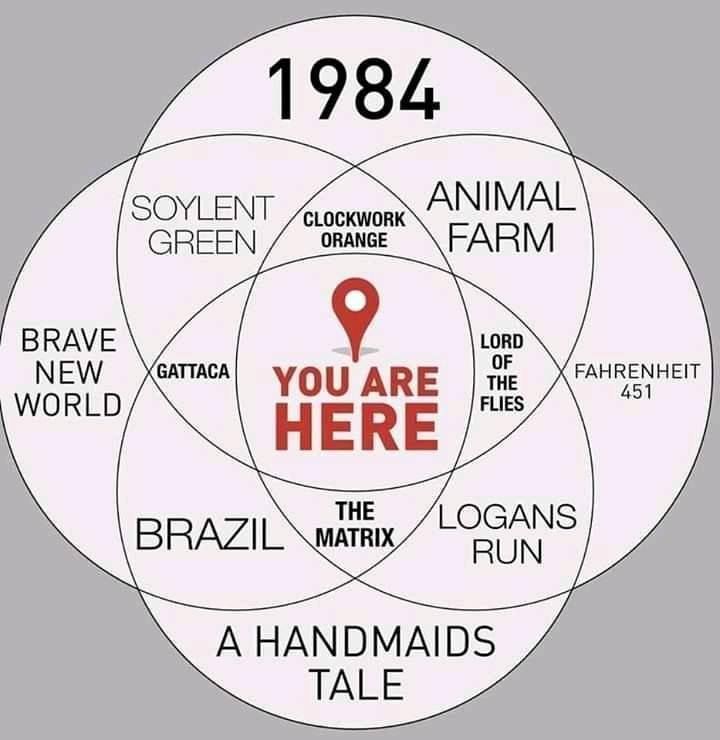
Ever found yourself wondering what it would be like to step into the pages of your favorite dystopian novel? To wander the cobbled streets of a city where the air hums with the weight of oppressive regimes, or to stand beneath the towering spires of a world where technology has either enslaved or saved humanity? If the answer is a resounding “yes,” then you’re not alone. Dystopian literature isn’t just about cautionary tales—it’s an invitation to explore the boundaries of imagination, and the real world has no shortage of places that echo the chilling atmospheres of Fahrenheit 451, The Handmaid’s Tale, Brave New World, and beyond. So, pack your metaphorical fireproof suit and your most rebellious spirit—we’re about to embark on a journey through 12 real-world destinations that will make you feel like you’ve been transported straight into the heart of your favorite dystopian narrative.
Where the Books Burn: Tracing the Ashes of Fahrenheit 451 in Los Angeles, USA
Ray Bradbury’s Fahrenheit 451 isn’t just a novel about book burning—it’s a love letter to literature and a warning about the dangers of censorship. But where in the real world can you feel the heat of that fiery metaphor? Look no further than Los Angeles, a city that has long been a battleground for free speech and artistic expression. From the historic Central Library, which survived a devastating fire in 1986, to the eclectic shelves of The Last Bookstore, LA’s literary spirit burns brighter than ever. Stroll down Hollywood Boulevard, where the neon signs flicker like the last embers of a forbidden flame, and imagine the day when knowledge itself becomes a crime.
The Gilead of Today: Where The Handmaid’s Tale Meets Reality in Boston, USA
Margaret Atwood’s The Handmaid’s Tale paints a harrowing picture of a theocratic regime where women are stripped of autonomy and reduced to their reproductive roles. But Boston, with its historic ties to Puritanism and its modern-day blend of tradition and progress, offers a chillingly plausible backdrop. Walk through the streets of Beacon Hill, where red brick facades and gas lamps evoke a sense of timelessness, or visit the Old North Church, a symbol of both rebellion and control. Here, the past and present collide, making it easy to imagine a world where theocratic rule isn’t just a dystopian fantasy.
Aldous Huxley’s Brave New World: The Hollow Laughter of London’s Modernist Architecture
London isn’t just a city—it’s a character in dystopian literature, and Aldous Huxley’s Brave New World finds its echo in the city’s stark, modernist architecture. The Barbican Centre, with its Brutalist concrete towers and labyrinthine walkways, feels like a real-life instantiation of Huxley’s World State. The sterile, controlled environment of the Barbican’s residential towers mirrors the novel’s obsession with efficiency and conformity. Meanwhile, the neon-lit streets of Soho offer a stark contrast, where pleasure and distraction reign supreme—just as they do in Huxley’s dystopia. Can you hear the hollow laughter of the citizens of London echoing through the concrete canyons?
The Neon Jungle: Tokyo’s Cyberpunk Dreamscapes
If dystopia has a capital, it might just be Tokyo. The city’s neon-drenched streets, where holographic billboards flicker like digital ghosts, feel plucked straight from the pages of cyberpunk classics like Neuromancer or Snow Crash. Shibuya Crossing, the world’s busiest pedestrian scramble, is a symphony of chaos and order, where individuality is both celebrated and erased in the same breath. The Akihabara district, with its electronic emporiums and otaku culture, offers a glimpse into a world where technology has become both savior and oppressor. Tokyo doesn’t just feel like a dystopian novel—it feels like the future that dystopian novels warned us about.
The Iron Curtain’s Shadow: Berlin’s Haunting Remnants of Division
Berlin is a city that has lived through the extremes of both utopia and dystopia, and its scars are still visible today. The remnants of the Berlin Wall, now adorned with vibrant murals, serve as a stark reminder of a divided world where freedom was a luxury. The Stasi Museum, housed in the former headquarters of East Germany’s secret police, offers a chilling look into a regime built on surveillance and paranoia. Berlin’s dystopian allure isn’t just in its history—it’s in the way the city balances its past with a relentless push toward the future, creating a tension that feels ripped from the pages of 1984.
The Silent City: Venice’s Watery Labyrinth of Decay
Venice isn’t just a city—it’s a metaphor. Its labyrinthine canals, crumbling palazzos, and sinking foundations feel like a physical manifestation of a world in decline. The city’s slow submersion into the lagoon mirrors the themes of entropy and collapse found in dystopian literature. As you glide through the Grand Canal in a vaporetto, imagine a world where the sea reclaims what humanity has built, where the past is both beautiful and inescapable. Venice isn’t just a destination; it’s a warning.
The Glass Beehive: Dubai’s Futuristic Dystopia in the Desert
Dubai is a city that defies logic, a glittering mirage in the desert where skyscrapers pierce the sky and artificial islands bloom like geometric flowers. It’s a place where wealth and excess mask a darker reality—one of extreme inequality and authoritarian control. The Burj Khalifa, the world’s tallest building, looms like a monument to human ambition gone awry, while the city’s obsession with surveillance and order feels like a page straight out of Black Mirror. Dubai isn’t just a city of the future; it’s a city that asks whether the future is worth the cost.
The Red Forest: Chernobyl’s Eerie Silence
No list of dystopian destinations would be complete without Chernobyl. The abandoned city of Pripyat, frozen in time since the 1986 nuclear disaster, is a haunting reminder of humanity’s hubris. The rusted Ferris wheel, the overgrown streets, and the eerie silence of the Red Forest create an atmosphere that feels like stepping into a post-apocalyptic novel. Chernobyl isn’t just a place—it’s a monument to the fragility of civilization, a warning of what happens when we push the boundaries of nature too far.
The Clockwork City: Prague’s Gothic Dystopia
Prague is a city that feels like it was plucked from a dark fairy tale. Its Gothic spires, labyrinthine alleys, and shadowy courtyards evoke a sense of foreboding that feels straight out of Frankenstein or Dracula. The Astronomical Clock, with its skeletal figures and ominous chimes, feels like a relic from a world where time itself is a tyrant. Wander through the Charles Bridge at dawn, when the mist clings to the river like a shroud, and you’ll understand why Prague has long been a muse for dystopian storytellers.
The Concrete Jungle: Brasília’s Modernist Nightmare
Brasília, Brazil’s purpose-built capital, is a city that looks like it was designed by a dystopian architect. Its sweeping curves, stark lines, and monumental scale feel both awe-inspiring and oppressive. The city’s layout, with its rigid separation of residential, commercial, and governmental zones, mirrors the dehumanizing efficiency of dystopian regimes. As you stand in the vast, empty plazas of the National Congress, it’s easy to imagine a world where individuality is sacrificed for the sake of order. Brasília isn’t just a city—it’s a cautionary tale in concrete and steel.
The Frozen Wasteland: Norilsk’s Industrial Desolation
Norilsk, a city in the Russian Arctic, is one of the most polluted places on Earth. Its smelters belch toxic fumes into the air, its streets are lined with rusted metal, and its inhabitants live in a state of perpetual gray. The city feels like a real-life instantiation of a post-apocalyptic wasteland, where humanity’s industrial ambitions have left only ruin in their wake. Norilsk isn’t just a destination—it’s a stark reminder of what happens when we prioritize progress over the planet.
The Final Frontier: The Empty Streets of Detroit
Detroit, once the heart of America’s automotive industry, is now a city of hollowed-out buildings and empty streets. Its abandoned factories and crumbling neighborhoods feel like a glimpse into a future where economic collapse has rendered civilization obsolete. The Heidelberg Project, an outdoor art installation in one of the city’s most blighted neighborhoods, transforms the ruins into a canvas of hope and defiance. Detroit isn’t just a city—it’s a testament to resilience in the face of dystopia.