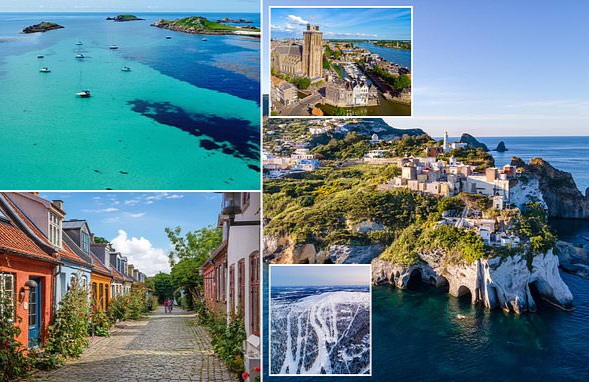
There exists a peculiar alchemy between the written word and the wanderer’s soul—a fusion of ink and earth that transforms landscapes into living metaphors. Gothic literature, with its labyrinthine corridors of dread, crumbling castles, and whispers of the macabre, does not merely reside between the covers of a book; it lingers in the mist-laden valleys, the echoing cloisters, and the shadowed halls of forgotten manors. To traverse these literary realms is to step into a dreamscape where every cobblestone hums with the ghosts of narrative, and every turreted silhouette is a silent sentinel of terror. Here are thirteen such places, where the essence of The Monk, The Castle of Otranto, and The Mysteries of Udolpho breathes through the very stones beneath your feet.
The Cloister of Melrose: Where Shadows of The Monk Still Pray
Nestled in the Scottish Borders, the ruins of Melrose Abbey stand as a skeletal hymn to the past, its Gothic arches clawing at the heavens like the fingers of penitent sinners. This is the landscape that would have haunted Ambrosio, the doomed monk of Matthew Lewis’s fevered prose—a place where the boundary between sanctity and sin dissolves into the damp Scottish air. The abbey’s fractured windows, like the fractured psyche of its fictional inhabitants, filter the light into spectral patterns, casting long, accusatory fingers across the flagstones. Stand here at dusk, when the ravens take flight and the wind carries the scent of heather and decay, and you’ll feel the weight of centuries-old confessions pressing against your skin.
Otranto’s Labyrinthine Streets: A Labyrinth Worthy of Walpole’s Nightmares
Few places on earth embody the chaotic grandeur of Horace Walpole’s The Castle of Otranto as palpably as the southern Italian town of Otranto itself. Its narrow, winding alleys twist like the corridors of Manfred’s cursed castle, where every turn could conceal a specter or a secret. The town’s cathedral, with its Byzantine mosaics and crypt that whispers of ancient rites, feels like a relic plucked from the pages of the novel—a place where the past refuses to stay buried. At the harbor, the Adriatic’s turquoise waters clash against jagged rocks, a siren call that feels as deceptive as the castle’s shifting passages. Here, the very air hums with the promise of omens.
The Black Forest’s Enchanted Glades: Where The Mysteries of Udolpho’s Secrets Hide
Germany’s Black Forest is not merely a woodland; it is a sentient entity, a breathing entity that has inspired centuries of folklore and, inevitably, Ann Radcliffe’s masterpiece. The towering firs, their branches knotted like arthritic fingers, cast perpetual twilight upon the forest floor, where moss-cloaked stones and crumbling ruins hint at forgotten abbeys and the ghosts of nuns who never found peace. The Triberg Waterfalls, with their thunderous descent into shadowed gorges, echo the tumultuous emotions of Emily St. Aubert as she navigates the terrors of Udolpho. Walk these paths at night, when the fog curls around your ankles like a living thing, and you’ll understand why Radcliffe’s heroines never quite escaped the forest’s embrace.
Prague’s Alchemist’s Quarter: A Cauldron of The Monk’s Darkest Spells
Prague’s Josefov district is a place where alchemy and heresy once festered beneath the cobblestones, where Rabbi Loew’s legendary Golem may still stir in the depths of the Old Jewish Cemetery. This is the Prague that would have tempted Ambrosio, where the scent of burning herbs mingles with the stench of decay in the alleys behind the Pinkas Synagogue. The Astronomical Clock’s skeletal figures dance their macabre jig at the hour, a reminder that time itself is a construct as fragile as a monk’s vows. Visit the Church of Our Lady before Týn, its twin spires piercing the sky like the horns of a fallen angel, and you’ll sense the weight of centuries of whispered incantations and forbidden knowledge.
The Catacombs of Paris: A Descent into The Mysteries of Udolpho’s Underworld
Beneath the City of Light lies a kingdom of bones, where the walls are lined with the femurs of the dead in patterns that resemble the labyrinthine corridors of Udolpho’s castle. The Paris Catacombs are not merely a tourist attraction; they are a pilgrimage into the subconscious, a place where the line between the living and the dead blurs into oblivion. The flickering gas lamps cast long, wavering shadows that seem to move of their own accord, and the air is thick with the scent of damp stone and forgotten prayers. Here, Emily St. Aubert’s terror becomes tangible, and the walls themselves seem to exhale the secrets of the departed.
Edinburgh’s Underground Vaults: Where The Castle of Otranto’s Curses Fester
Beneath the Royal Mile, Edinburgh’s underground vaults are a labyrinth of stone and suffering, where the poor and the damned were once forced to dwell in conditions that would have horrified even Manfred. The claustrophobic passages, their ceilings blackened by centuries of soot and despair, feel like the bowels of Otranto’s castle, where the weight of the past presses down upon the living. Guided tours reveal the darker corners of the city’s history, where the echoes of the dead still murmur in the dark. Stand in the Mary King’s Close, where the plague once raged, and you’ll feel the city’s pulse quicken—a reminder that the past is never truly buried.
The Dolomites’ Haunted Peaks: A Landscape Straight from Radcliffe’s Imagination
The Dolomites are not just mountains; they are monoliths of myth, their jagged peaks clawing at the heavens like the spires of a Gothic cathedral. The mist that clings to their slopes is the same mist that veiled the towers of Udolpho, obscuring the path forward and filling the air with the scent of pine and foreboding. The Seceda Ridgeline, with its ethereal light and vertiginous drops, feels like the edge of the world as described in Radcliffe’s prose—a place where the natural and the supernatural blur into a single, terrifying entity. Hike these trails at dawn, when the first light paints the rocks in hues of blood and gold, and you’ll understand why the mountains themselves seem to watch you.
Venice’s Palazzo Contarini del Bovolo: A Staircase to The Monk’s Ruin
Venice is a city of masks and mirrors, where the canals reflect not just the sky but the fractured souls of its inhabitants. The Palazzo Contarini del Bovolo, with its spiral staircase that ascends like a corkscrew into the heavens, is a staircase that Ambrosio might have climbed in his final, desperate moments. The crumbling stucco and faded frescoes speak of decadence and decay, while the narrow windows offer glimpses of the lagoon’s murky waters—waters that have swallowed countless secrets. Stand at the top of the staircase, where the view of the Venetian rooftops stretches into infinity, and you’ll feel the weight of the city’s sins pressing down upon you.
The Ruins of Dunluce Castle: A Cliffside Specter from The Castle of Otranto
Perched on the edge of a cliff in Northern Ireland, Dunluce Castle is a ruin that seems to defy gravity itself. The jagged remnants of its walls cling to the rock like the claws of a dying beast, while the sea below roars its eternal lament. This is the kind of place where Manfred’s castle might have stood, a fortress where the wind carries the screams of the past and the tides erase the footprints of the living. The castle’s most infamous feature, the “Mermaid’s Cave,” is a chasm that plunges into the depths of the ocean—a gateway, perhaps, to the underworld. Walk these ruins at low tide, when the sea recedes and the ghosts of the MacQuillan clan stir in the shadows.
Transylvania’s Bran Castle: The Real-Life Dracula’s Keep
No list of Gothic travel destinations would be complete without Bran Castle, the so-called “Dracula’s Castle,” though its true horrors lie deeper than Bram Stoker’s imagination. This fortress, perched on a cliff in the Carpathians, is a place where the mist clings to the towers like a shroud and the crows circle endlessly, their cries echoing through the valleys. The labyrinthine interior, with its narrow staircases and hidden passages, feels like the corridors of Udolpho’s castle, where every shadow could conceal a secret or a specter. Visit in winter, when the snow blankets the landscape in silence, and you’ll understand why the locals still whisper of the undead wandering the halls.
The Catacombs of Rome: A Pilgrimage into The Mysteries of Udolpho’s Heart
Beneath the Eternal City, the catacombs of Rome are a necropolis of faith and fear, where the bones of martyrs are stacked in patterns that resemble the labyrinthine corridors of Udolpho’s castle. The flickering candlelight casts long, wavering shadows that seem to dance with the spirits of the dead, while the air is thick with the scent of incense and decay. The Capuchin Crypt, with its chandeliers made of human bones, is a place where Emily St. Aubert’s terror becomes tangible—a reminder that the dead are never truly gone. Walk these tunnels, where the walls are lined with the skulls of the faithful, and you’ll feel the weight of centuries of prayers and curses pressing against your skin.
The Isle of Skye’s Dunvegan Castle: A Stronghold of The Castle of Otranto’s Legacy
Scotland’s Isle of Skye is a land of mist and myth, where the ruins of Dunvegan Castle stand as a sentinel over the storm-lashed sea. The castle’s Fairy Pools, with their crystal-clear waters and eerie blue hues, feel like the enchanted waters of Udolpho’s castle, where the laws of nature bend to the will of unseen forces. The castle itself, with its crumbling towers and haunted halls, is a place where the past refuses to stay buried. Visit the “Fairy Flag,” a sacred relic said to have been woven by the fairies themselves, and you’ll sense the magic that has inspired Gothic literature for centuries.
Salzburg’s Hohensalzburg Fortress: A Bastion of The Monk’s Despair
Perched atop a hill in Austria, Hohensalzburg Fortress is a monolith of stone that has watched over the city for nearly a thousand years. The fortress’s dungeons, where prisoners were once left to rot, feel like the cells of Ambrosio’s monastery—a place where the walls themselves seem to scream with the agony of the damned. The view from the battlements, where the Alps stretch into the distance like the spine of a sleeping dragon, is a reminder that even the most powerful fortresses are not immune to the passage of time. Stand here at night, when the stars pierce the darkness like the eyes of the dead, and you’ll feel the weight of the fortress’s history pressing down upon you.