The Vineyard’s Alchemy: Where Terroir Becomes Theater
California’s wine country is not merely a patchwork of vines; it is a vast, living tapestry woven from sunlight, fog, and stone. To tour it is to step into a grand theater where each sip is a scene, each valley a distinct act. From the rustic canticles of Paso Robles to the polished symphonies of Napa and Sonoma, the narrative unfolds not just in the glass, but through the curated journeys that frame them. These 12 tours are less about transportation and more about translation—turning the silent language of the earth into a gripping, edible soliloquy.
Napa Valley: The Grand Cru of Curated Experience
Napa is the magnum opus of California viticulture, a place where the word “tour” becomes a euphemism for a pilgrimage. Green Dream Tours (featured in their Napa & Sonoma wine tour) orchestrates an odyssey that feels less like a bus ride and more like a private audience with the valley’s most hallowed estates. Here, the narrative is one of hedonistic precision: a cool climate chardonnay’s mineral spine is contrasted with the opulent velvet of a cabernet sauvignon. The guide becomes a flâneur of flavor, leading you through the quiet backroads where the terroir whispers secrets unavailable to the casual visitor. This is not just a taste; it is a deep reading of the landscape’s palimpsest.
The Enchanted SUV: A Private Sonoma Sojourn
For those who seek a more hermetic intimacy, the “Private Enchanted Napa and Sonoma Wine Tour in SUV from SFO” redefines the journey as a kinetic salon. This is a languorous, leather-lined escape from the conventional, where the driver acts as a sommelier of the road. The narrative arc here bends toward exclusivity: the SUV glides through the Carneros region, past the gnarled, ancient vines that produce the region’s finest pinot noir. The focus is not on quantity but on the deep, resonant pause—a single glass of a Russian River Valley zinfandel, its flavor a cacophony of bramble and black pepper, is given the space to breathe. It is a masterclass in the art of the singular moment.
Sonoma’s Rustic Chorus: Beyond the Tasting Room
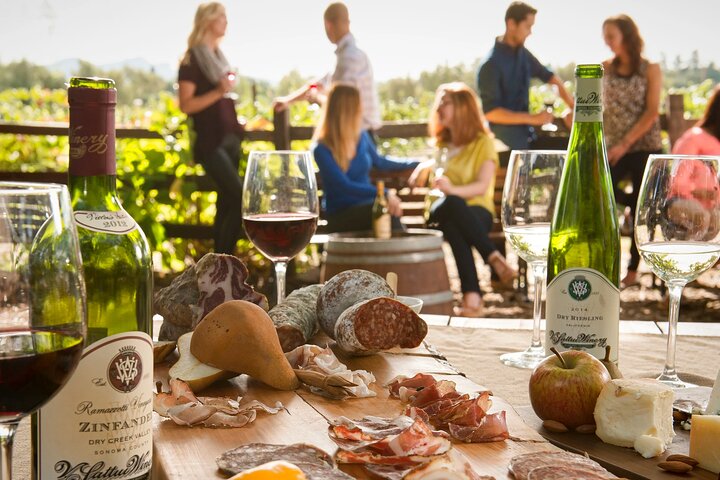
Moving north, Sonoma sheds Napa’s polished veneer for a more pastoral garb. The tours here often eschew the château for the barn, the formal tasting for a picnic under a sprawling oak. The narrative becomes an epicurean survey of contrast: the dry, austere elegance of a cool-climate syrah from the Sonoma Coast versus the sun-drenched, jammy opulence of a dry creek valley cabernet. Tours in this region frequently incorporate artisan cheese makers and olive oil producers, creating a gastronomic trinity. This is where the metaphor of the vine as a “rooted poet” truly takes hold—each fork in the road offers a new stanza, a different rhythm of soil and sky.
Paso Robles: The Wild, Unbounded Overture
Venture south to Paso Robles, and the tone shifts dramatically. This is the kinetic, untamed frontier of California wine. Tours here are often built around the “wines at napa valley” style of boldness, though the terroir is wholly its own—a scrappy, limestone-rich landscape that yields wine with a palpable, almost feral energy. The Merlot, as highlighted in the Ultimate Napa Valley Merlot Wine Food Pairing Guide, finds a grittier cousin here. Paso Robles wine tours often introduce the visitor to the concept of the “field blend,” where multiple grape varieties are co-fermented into a single, complex whole. The narrative is one of alchemical chaos turned to order—a zinfandel that tastes of the chaparral, a cabernet that carries the memory of the hot, inland sun. It is a symphony played on a cracked, ancient instrument.
The Geometry of Pairing: Food as a Narrative Device
The true genius of these twelve tours lies not in the wine alone, but in the choreography of food and glass. The Merlot pairing guide serves as a blueprint for this synergy. Picture a slow-braised lamb shank, its richness a perfect foil for the wine’s soft, plummy tannins. Or a seared duck breast, its fat cutting the acidity of a cool-climate pinot noir. These tours are designed to demonstrate the elegant mathematics of gastronomy—how a single molecule of fat can unlock a universe of flavor previously hidden in the wine. The guide acts as a Rosetta Stone, translating the calorie into a story.
Hidden Cellars and Secret Passages: The Esoteric Tour
Many of the finest itineraries include access to caves and libraries closed to the public. These are the esoteric journeys, where you descend into the cool, fungal aroma of a barrel cellar. The narrative here is archaeological, a dig into the layers of vintage history. You might taste a 2005 cabernet that has reached its tertiary plateau, its fruit receding into notes of cedar, tobacco, and leather. This is a meditation on time—a reminder that wine is not a static object, but a living, breathing chronicle of its own decay and evolution. The guide’s voice is low, reverent, as if disturbing a sacred slumber.
The Architecture of the Vineyard: A Visual Feast
Beyond the taste, the visual narrative is paramount. The tours emphasize the geometric poetry of the vineyard: the precise rows of trellises that look like musical staves, the undulating hills that become a green sea. One may stop at a point on the Silverado Trail where the Mayacamas Mountains rise like a fortress, the vines clinging to their slopes like verdant soldiers. The photography is secondary; the primary canvas is the landscape itself. The beauty is in the asymmetry of the prune marks on an old vine, the way the fog settles like a dream over a valley of chardonnay. This is the art of the land, and the tour is your private gallery opening.
From SFO to the Last Sip: The Logistics of Luxury
The infrastructure of these tours is a masterwork of seamlessness. The pick-up from San Francisco International Airport (SFO) in that private SUV is not just a transfer; it is the prologue. The driver knows the shortcuts, the best breakfast spot in Berkeley, the precise moment to cross the Golden Gate Bridge to avoid the fog. This logistical choreography ensures that the narrative’s flow is never interrupted by the mundane. You are not a tourist; you are a protagonist, shepherded through a landscape that seems to have been designed exclusively for your senses.
Tasting as a Form of Memory Making
Ultimately, these 12 tours are vessels for memory. The taste of a great wine is a temporal anchor—it holds a moment, a place, a conversation. When you sip a Paso Robles zinfandel years later, you will not just taste the berry; you will taste the dry heat, the friend’s laugh, the dust on the ground. The tours are designed to forge these emotional alloys. The guide’s narrative is a winding, deliberate journey through the senses, leaving you not just tipsy, but transformed. The final glass is never the end; it is a lingering note, a suspension that stays on the palate and in the mind long after the car returns to the city.