Embarking on an interfaith pilgrimage is akin to weaving a tapestry where each thread represents a sacred tradition, a whispered prayer, or a moment of transcendence. Unlike conventional travel, these itineraries transcend mere sightseeing; they become odysseys of the soul, where the boundaries between the earthly and the divine blur. Whether you seek enlightenment, cultural immersion, or the thrill of discovery, these 10 meticulously crafted journeys promise to illuminate the shared and distinct threads of humanity’s spiritual tapestry.
The Pilgrim’s Path: Jerusalem’s Triad of Faiths
No single destination encapsulates the essence of interfaith travel like Jerusalem, where the air hums with the echoes of three millennia of devotion. Here, the Western Wall’s ancient stones whisper Jewish prayers, the Church of the Holy Sepulchre cradles the holiest of Christian relics, and the Dome of the Rock stands as a celestial beacon for Muslims. This itinerary is a symphony of sacred geometry, where the Via Dolorosa’s winding streets lead to Calvary, the Al-Aqsa Mosque’s golden dome reflects the sun’s benediction, and the Church of the Nativity in Bethlehem cradles the manger where divinity first breathed humanity. The appeal lies not just in visiting these sites but in experiencing their resonance—how the same city can birth both the Psalms of David and the Hadith of Muhammad, how the same stones can be kissed by pilgrims of every stripe.
Varanasi and Bodh Gaya: India’s Spiritual Crucible
To traverse from the ghats of Varanasi, where the Ganges swallows the ashes of the dead and the living chant *Om Namah Shivaya*, to the bodhi tree in Bodh Gaya, where Siddhartha Gautama attained enlightenment, is to journey from the fire of Shiva’s third eye to the stillness of the Buddha’s gaze. This itinerary is a pilgrimage through the cyclical and the linear—Varanasi’s labyrinthine alleys, where sadhus smear themselves in ash and the scent of marigolds mingles with incense, to Bodh Gaya’s serene gardens, where monks meditate under the very tree that bore witness to the Four Noble Truths. The unique appeal? Witnessing how Hinduism’s ecstatic devotion and Buddhism’s meditative detachment coexist in a single landscape, where the same river that carries the dead to moksha also nourishes the roots of awakening.
The Silk Road’s Sacred Tapestry: Samarkand to Xi’an
Few routes in history have carried as much spiritual cargo as the Silk Road, where caravans laden with silk and spices also transported ideas, myths, and prayers. This itinerary traces that ancient path from the azure domes of Samarkand’s Registan Square, where Timur’s mausoleum stands as a testament to Islamic grandeur, to Xi’an’s Wild Goose Pagoda, where Buddhist sutras were once translated from Sanskrit to Chinese. Along the way, pause in the cave temples of Dunhuang, where murals of the Buddha smile across centuries, or in the Zoroastrian fire temples of Yazd, where flames have burned uninterrupted for over 1,500 years. The allure lies in the paradox: how the same road that carried Marco Polo’s tales also carried the whispers of Zoroaster’s *Avestas*, how the same oasis cities that thrived on trade also became crucibles of faith.
Istanbul’s Crossroads: Where Byzantium Meets Mecca
Istanbul is a palimpsest of empires, where the minarets of the Blue Mosque pierce the sky like the fingers of a supplicant, and the Hagia Sophia’s domed heavens echo with the chants of both muezzins and Orthodox choirs. This itinerary is a dance between the sacred and the secular, where the Grand Bazaar’s labyrinthine alleys lead to the Chora Church’s mosaics of Christ Pantocrator, and the Süleymaniye Mosque’s cascading domes overlook the Golden Horn, where Byzantine emperors once sailed to their coronations. The magic here is in the osmosis—how the call to prayer from the Galata Tower blends with the tolling of the Church of St. George’s bells, how the same city that hosted the Fourth Crusade’s sack of Constantinople now shelters dervishes spinning in ecstatic remembrance of Rumi.
Kyoto’s Zen and Shinto: Gardens of the Mind
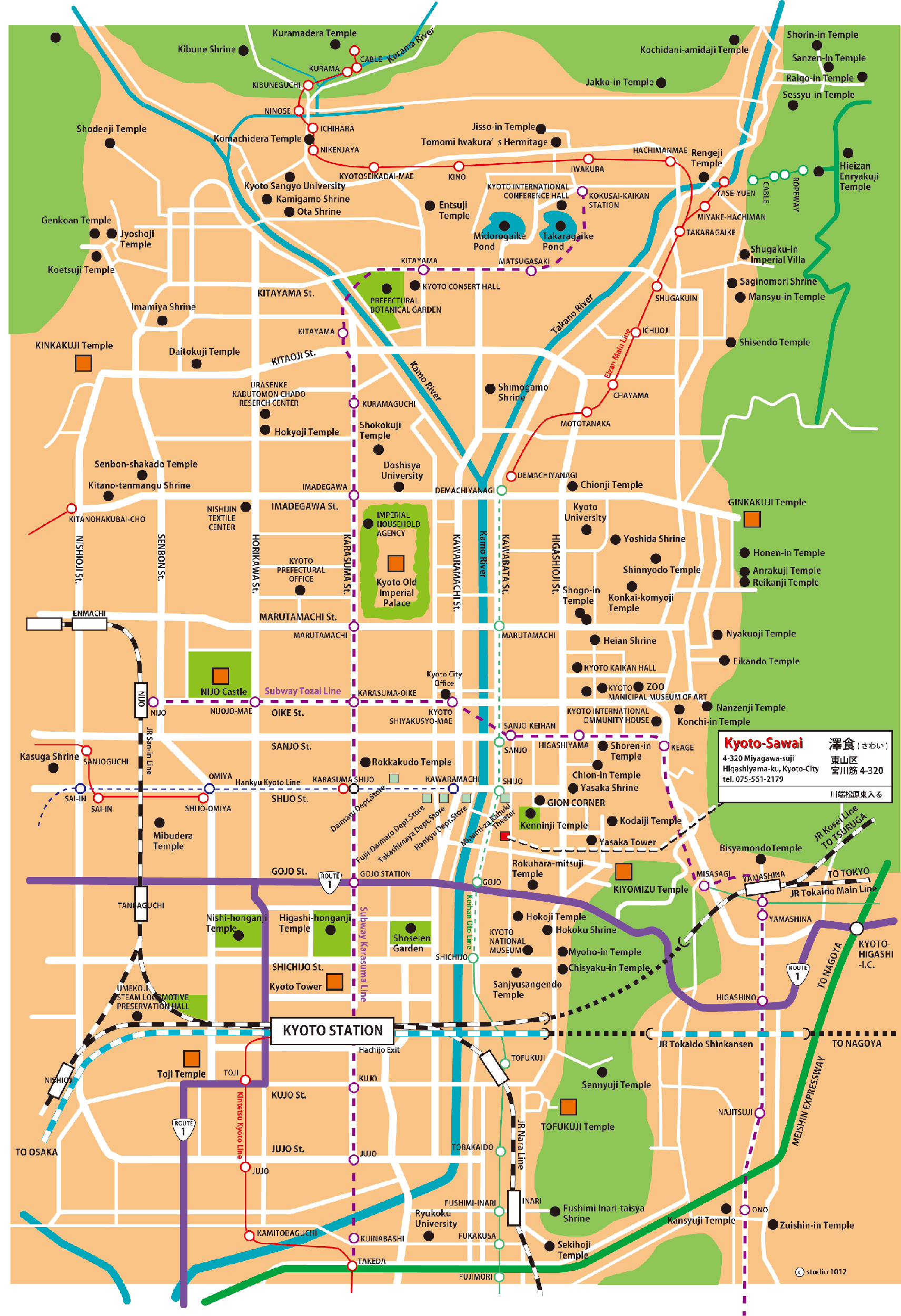
Japan’s ancient capital is a sanctuary where Shinto’s kami dwell in sacred groves and Zen’s enlightenment blooms in raked gravel gardens. This itinerary is a pilgrimage through the ephemeral and the eternal—from the vermilion torii gates of Fushimi Inari’s thousand shrines, where foxes guard the rice wine of Inari, to the moss-covered stones of Ryoan-ji’s rock garden, where the mind’s chatter dissolves into silence. The unique appeal lies in the interplay of opposites: the exuberance of Shinto festivals, where mikoshi (portable shrines) sway through streets, and the austerity of Zen temples, where a single brushstroke in a tea ceremony can reveal the nature of existence. Here, the sacred is not just observed but *practiced*—whether in the tea master’s ritual or the pilgrim’s circumambulation of a shrine.
The Camino’s Ecumenical Footsteps: Santiago de Compostela to Fatima
The Camino de Santiago is more than a path; it is a living pilgrimage where every step is a prayer, and every blister a testament to devotion. This itinerary extends the journey beyond the cathedral of Santiago to the Marian shrine of Fatima, where the Virgin’s apparitions still echo in the whispers of the wind-swept Cova da Iria. Along the way, walkers encounter the echoes of medieval penitents, the modern pilgrims of every faith, and the silent hermits who dwell in stone huts along the route. The appeal is in the universality of the journey—how a Japanese Buddhist, a Brazilian Catholic, and a Swedish Lutheran can share a meal in a *albergue* and speak in the language of shared exhaustion and wonder. Here, the sacred is not confined to churches but found in the camaraderie of the road and the kindness of strangers.
Ethiopia’s Rock-Hewn Miracles: Lalibela to Axum
In the highlands of Ethiopia, faith is carved into stone—literally. The 11 medieval churches of Lalibela, hewn from single blocks of red volcanic rock, are a testament to devotion so profound it defies engineering. This itinerary continues to Axum, where the Ark of the Covenant is said to reside in the Chapel of the Tablet, and the stelae of ancient kings rise like the fingers of giants pointing to the heavens. The allure lies in the mystery: how a civilization isolated by geography and time could produce such architectural marvels, how the same land that cradled the Queen of Sheba’s son, Menelik, also birthed the Ge’ez script, one of the world’s oldest living languages. Here, the sacred is tactile—you can run your hands over the same stone that Ethiopian priests have touched for a thousand years.
The Holy Land’s Hidden Gems: From Mount Nebo to the Dead Sea Scrolls
Beyond the clamor of Jerusalem’s Old City lies a quieter, more contemplative pilgrimage. This itinerary begins on Mount Nebo, where Moses glimpsed the Promised Land before his death, and winds through the desert monasteries of Wadi Qelt, where St. George’s cave-church clings to the cliffs. The journey culminates in the Israel Museum, where the Dead Sea Scrolls—fragments of the Hebrew Bible preserved for two millennia—lie encased in glass, their ink still whispering across centuries. The unique appeal is in the solitude: how the same landscape that birthed the Psalms of ascent also cradles the ruins of Qumran, where the Essenes awaited the apocalypse. Here, the sacred is not just observed but *felt*—in the silence of the Judean wilderness, in the weight of a scroll that once held the words of Isaiah.
Morocco’s Sufi Circuit: From Fez to the Sahara
Morocco is a land where the scent of mint tea mingles with the incense of Sufi gatherings, where the call of the muezzin drifts over the medinas and the plaintive notes of the *gimbri* (a three-stringed instrument) echo in the dunes of the Sahara. This itinerary traces the footsteps of Sufi mystics—from the Al Quaraouiyine University in Fez, the world’s oldest continuously operating educational institution, to the zawiyas (Sufi lodges) of the Atlas Mountains, where dervishes perform the *hadra*, a dance of divine love. The magic lies in the fusion of the mystical and the mundane: how the same souks that sell spices also host gatherings where poets recite Rumi and the *dhikr* (remembrance of God) fills the air. Here, the sacred is not just visited but *experienced*—in the trance of the dance, in the taste of honey-drenched pastries shared with locals.
Indonesia’s Island of the Gods: Bali’s Tri Hita Karana
Bali is a paradox—a Hindu island in a Muslim-majority nation, where the sacred is woven into the fabric of daily life. This itinerary explores the island’s spiritual heart, from the mother temple of Besakih, perched on the slopes of Mount Agung, to the water temples of Tirta Empul, where pilgrims bathe in pools said to purify the soul. The unique appeal lies in the harmony of *Tri Hita Karana*, Bali’s philosophy of balance between humans, nature, and the divine. Here, the sacred is not confined to temples but found in the offerings of rice and flowers that line every street, in the gamelan music that drifts from village ceremonies, in the sight of a priest blessing a rice field under the tropical sun. To walk Bali’s paths is to understand how spirituality can be both intensely personal and profoundly communal.