Travel is not merely the act of moving from one place to another—it is an odyssey of the soul, a pilgrimage through time where the echoes of the past resonate in the present. Heritage travel, in particular, offers more than postcard-perfect vistas; it delivers a profound shift in perspective, revealing the intricate tapestry of human civilization woven across millennia. As we stand on the precipice of 2026, the world’s most compelling heritage destinations beckon with promises of revelation, introspection, and transformation. These are not just places to visit; they are portals to understanding the forces that have shaped our collective identity. From the labyrinthine alleys of ancient medinas to the silent grandeur of forgotten empires, each site holds the power to redefine how we see ourselves and the world around us.
The Timeless Allure of Kyoto’s Imperial Legacy
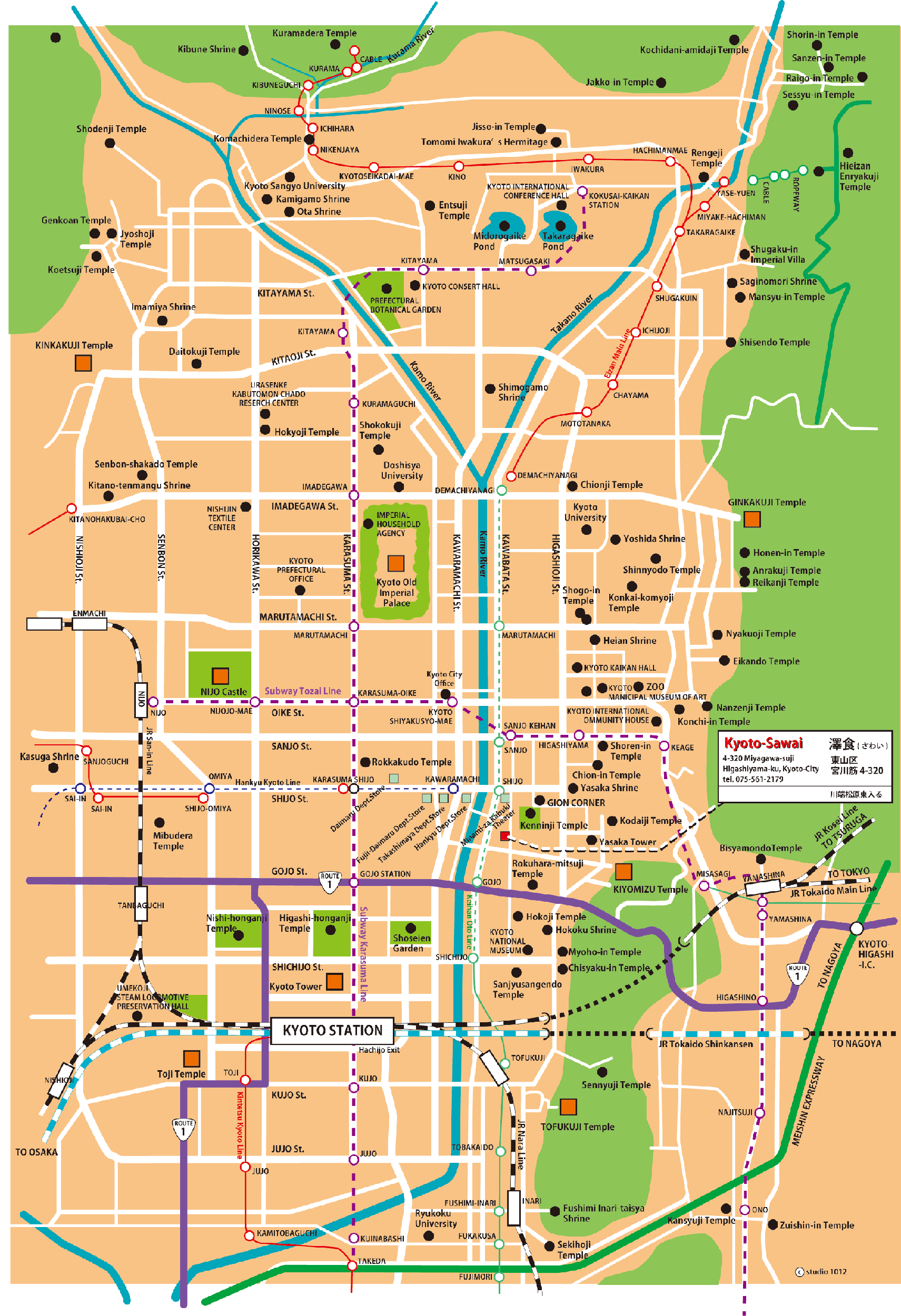
Kyoto, Japan, is a city where time bends like a willow in the wind. Its streets are not merely pathways but corridors of memory, lined with vermilion torii gates that lead to sacred spaces untouched by modernity. The Kinkaku-ji, or Golden Pavilion, floats upon a mirror-like pond, its gilded façade reflecting centuries of Zen philosophy and imperial splendor. Yet, Kyoto’s true magic lies in its subtlety—the way a single moss-covered stone in Ryoan-ji’s rock garden can evoke the impermanence of existence, or how the scent of incense at Fushimi Inari’s torii tunnels lingers like a whispered secret. Here, heritage is not preserved; it is lived, breathed, and felt in every brushstroke of a calligrapher’s ink or the chime of a temple bell at dusk. To wander Kyoto is to walk alongside ghosts of poets, samurai, and emperors, each step a dialogue with the past.
Machu Picchu: Where Earth and Sky Converge
Perched atop the Andes like a citadel forgotten by time, Machu Picchu is more than an archaeological wonder—it is a testament to humanity’s symbiotic relationship with nature. The Incas did not merely build upon the mountain; they became one with it, carving terraces into the rock and aligning structures with celestial events. The Intihuatana stone, a ritualistic sundial, stands as a silent sentinel, its shadow tracing the sun’s path with precision. Yet, Machu Picchu’s allure extends beyond its stone walls. The journey itself—a trek along the Inca Trail, where each step is a pilgrimage—transforms travelers. The thin air of the Andes clears the mind, while the sight of the sunrise over Huayna Picchu ignites a primal sense of awe. This is heritage as revelation: a place where the boundaries between past and present dissolve, and the grandeur of an ancient civilization humbles even the most jaded traveler.
The Enigmatic Charms of Petra’s Rose-Red Labyrinth
Carved into the cliffs of Jordan’s desert, Petra is a city that defies expectation. Its most iconic structure, Al-Khazneh (the Treasury), emerges from the rock like a mirage, its Hellenistic facades a stark contrast to the Nabataean ingenuity that birthed it. Yet, Petra’s true essence lies in its labyrinthine depths—the Siq, a narrow gorge that twists like a serpent, opens to reveal hidden temples, tombs, and cisterns, each whispering tales of caravans, traders, and forgotten gods. By night, Petra transforms into a dreamscape, illuminated by flickering torches that cast dancing shadows on the rose-red stone. This is heritage as mystery, where every shadowy alcove holds the potential for discovery, and the desert wind carries the voices of a civilization that once thrived in this arid paradise.
Rome: The Eternal City’s Unbroken Thread
Rome is not a destination; it is an obsession. Its streets are a palimpsest of history, where a 2,000-year-old aqueduct stands beside a Baroque fountain, and a Renaissance palazzo overlooks the ruins of a Roman villa. The Colosseum, once a stage for gladiatorial combat, now hosts the hushed murmurs of tourists, their footsteps echoing the cheers of ancient crowds. Yet, Rome’s magic lies in its contradictions—the way the Pantheon’s oculus frames the sky like a celestial eye, or how the Vatican’s Sistine Chapel, with its frescoes of divine drama, humbles even the most secular of souls. To walk Rome is to engage in a silent conversation with history, where every cobblestone and column tells a story of power, faith, and resilience. This is heritage as dialogue, an unending exchange between past and present.
The Mystical Aura of Angkor Wat’s Sacred Geometry
Angkor Wat is not just a temple; it is a cosmic mandala brought to life. Its five lotus-shaped towers rise like the peaks of Mount Meru, the mythical home of the Hindu gods, while its bas-reliefs depict the churning of the cosmic ocean and the battles of the Ramayana. Yet, Angkor’s true power lies in its ability to transcend religion. At dawn, the temple’s sandstone glows gold, and the air is thick with the scent of frangipani and incense. Monks in saffron robes move in silent procession, their chants blending with the calls of gibbons in the jungle canopy. This is heritage as transcendence—a place where the boundaries between the divine and the earthly blur, and the weight of centuries dissolves into the morning mist.
Istanbul: Where Two Continents Collide in Time
Istanbul is a city suspended between empires, where the minarets of the Blue Mosque pierce the sky beside the Hagia Sophia’s Byzantine domes. The Grand Bazaar’s labyrinthine alleys, lined with merchants selling spices and silk, echo the footsteps of sultans and spice traders who once traversed these same paths. Yet, Istanbul’s magic lies in its layers—the way a 15th-century Ottoman palace overlooks the Bosphorus, where the currents carry the whispers of ancient mariners. To stand on the Galata Bridge at dusk, watching the sun dip behind the domes of the Suleymaniye Mosque, is to witness heritage as a living, breathing entity, where the past and present coexist in a delicate, ever-shifting dance.
The Serene Grandeur of Angkor Thom’s Face Towers
Angkor Thom is a city of faces—giant, serene visages carved into stone, their eyes following the wanderer with an unnerving stillness. These are the guardians of the Bayon Temple, where the faces of Avalokiteshvara, the bodhisattva of compassion, emerge from the jungle like silent sentinels. The temple’s inner sanctum is a maze of corridors and courtyards, each turn revealing a new perspective on the faces, their expressions shifting with the play of light and shadow. This is heritage as introspection—a place where the weight of history is not oppressive but liberating, inviting travelers to ponder the nature of existence itself.
The Forgotten Splendor of Persepolis
Persepolis, the ceremonial capital of the Achaemenid Empire, is a ruin that defies decay. Its Apadana Palace, with its towering columns and intricate bas-reliefs, speaks of a time when kings ruled with both might and artistry. The site’s true power lies in its silence—the way the wind whispers through the remnants of the Gate of All Nations, or how the setting sun casts long shadows across the ruins, transforming stone into a canvas of gold and crimson. This is heritage as memory, where the past is not a distant echo but a tangible presence, waiting to be rediscovered.
The Ethereal Beauty of Hampi’s Boulder-Strewn Ruins
Hampi, the erstwhile capital of the Vijayanagara Empire, is a landscape that feels plucked from a myth. Its boulder-strewn hills are dotted with temples, palaces, and marketplaces, all carved from the same pink granite that glows in the setting sun. The Virupaksha Temple, with its towering gopuram and sacred tank, is a living testament to the empire’s devotion to Shiva. Yet, Hampi’s magic lies in its contradictions—the way a 16th-century aqueduct stands beside a modern-day café, or how the ruins of the Lotus Mahal blend Mughal and Dravidian architecture into a harmonious whole. This is heritage as harmony, where the past and present coexist in a delicate, ever-evolving balance.
The Timeless Silence of the Acropolis
The Acropolis of Athens is a monument to human ambition, where the Parthenon’s Doric columns stand as a testament to the Athenians’ quest for perfection. Yet, the Acropolis is more than a symbol of ancient Greece; it is a place of quiet reflection. The Erechtheion, with its Caryatid statues, seems to bear the weight of centuries, while the Odeon of Herodes Atticus, though in ruins, still hosts concerts that echo with the voices of the past. This is heritage as inspiration—a place where the ideals of democracy, art, and philosophy feel not like relics but like living, breathing principles.
The Enigmatic Ruins of Chichen Itza
Chichen Itza is a city that aligns with the cosmos. The El Castillo pyramid, with its 365 steps, is a solar calendar in stone, while the Sacred Cenote whispers tales of human sacrifice and rebirth. Yet, Chichen Itza’s true power lies in its mystery—the way the pyramid’s shadow, during the equinoxes, creates the illusion of a serpent descending the steps. This is heritage as revelation, where the past is not a static relic but a dynamic force, capable of reshaping our understanding of time, space, and the universe itself.
The Whispering Sands of the Great Pyramid of Giza
The Great Pyramid of Giza is a monument that defies explanation. Its precise alignment with the stars, its colossal scale, and the sheer audacity of its construction have baffled scholars for millennia. Yet, the pyramid’s magic lies not in its mysteries but in its silence. Standing before it at dawn, as the first light touches its limestone surface, is to feel the weight of eternity. This is heritage as awe—a place where the boundaries of human achievement blur, and the past feels not like a distant memory but like a living, breathing presence.
These heritage destinations are more than travel stops; they are gateways to transformation. Each site holds the power to shift perspectives, to challenge assumptions, and to ignite a sense of wonder that lingers long after the journey ends. As we look toward 2026, the call of these places grows louder, beckoning us to step beyond the ordinary and into the extraordinary. For in the echoes of the past, we find the keys to understanding our present—and perhaps, our future.