There’s something primal about disaster movies—those cinematic spectacles where the ground splits open, the sky darkens, and the very fabric of civilization trembles. We flock to them not just for the spectacle, but for the thrill of confronting forces far greater than ourselves. Yet beyond the Hollywood pyrotechnics lies a question that lingers like the aftershock of a quake: Are these filming locations as dangerous as they appear on screen? From the smoldering maws of active volcanoes to the tornado alley of the American heartland, these 15 real-world backdrops blur the line between art and peril. Here, we explore the geography of cinematic terror—and the deeper reasons we’re so captivated by it.
The Smoldering Gates of Hell: Active Volcanoes on Film
Few natural phenomena command awe like a volcano mid-eruption. The 1997 disaster flick Dante’s Peak didn’t just use Mount St. Helens as a set—it turned the Washington stratovolcano into a character. Standing at 46.2° N, 122.2° W, the mountain’s 1980 blast reshaped the landscape forever. Today, its crater is a stark reminder that Hollywood’s chaos is merely a shadow of reality. Nearby, the Hawaiian volcanoes—Kīlauea and Mauna Loa—have played starring roles in films like Pompeii and 2012. Their slow, relentless rivers of lava move at pedestrian pace, yet their heat can melt rock. The paradox? We’re drawn to these places precisely because they’re alive. The thrill isn’t just in watching destruction—it’s in standing on the edge of it, knowing the ground beneath you could turn molten at any moment.
When the Earth Splits: Earthquake Zones as Cinematic Backdrops
The 1999 film 1999 (yes, the title was prophetic) used Istanbul’s fault lines to terrifying effect. The North Anatolian Fault, stretching 1,500 kilometers across Turkey, has birthed some of history’s deadliest quakes. The city’s labyrinthine streets and crumbling Ottoman architecture provide the perfect canvas for collapse. But Istanbul isn’t alone. The San Andreas Fault in California, immortalized in San Andreas, is a ticking time bomb. At 750 miles long, it’s the tectonic equivalent of a loaded gun. The irony? These cities thrive despite the risk. Their very vulnerability makes them magnetic—not just for filmmakers, but for the millions who call them home. The fascination with earthquake zones reveals a darker truth: we’re drawn to danger because it forces us to confront our own fragility.
The Vortex of Fear: Tornado Alley’s Cinematic Spin
No disaster movie is complete without a twister. Twister (1996) didn’t just chase storms—it chased the myth of the perfect funnel cloud. Tornado Alley, stretching from Texas to South Dakota, sees over 1,000 tornadoes annually. The flat, unobstructed plains of Oklahoma and Kansas offer filmmakers an unbroken horizon, where the sky itself seems to twist in fury. But the reality is far grimmer. The 2011 Joplin tornado, one of the deadliest in history, killed 161 people and left a scar on the land that lasted years. Why do we romanticize these places? Perhaps because tornadoes embody nature’s unpredictability—a force that, unlike earthquakes or volcanoes, gives no warning. They strike fast, vanish faster, and leave behind a landscape that looks like it’s been scoured by giants.
Flooded Realms: Where Water Becomes the Ultimate Antagonist
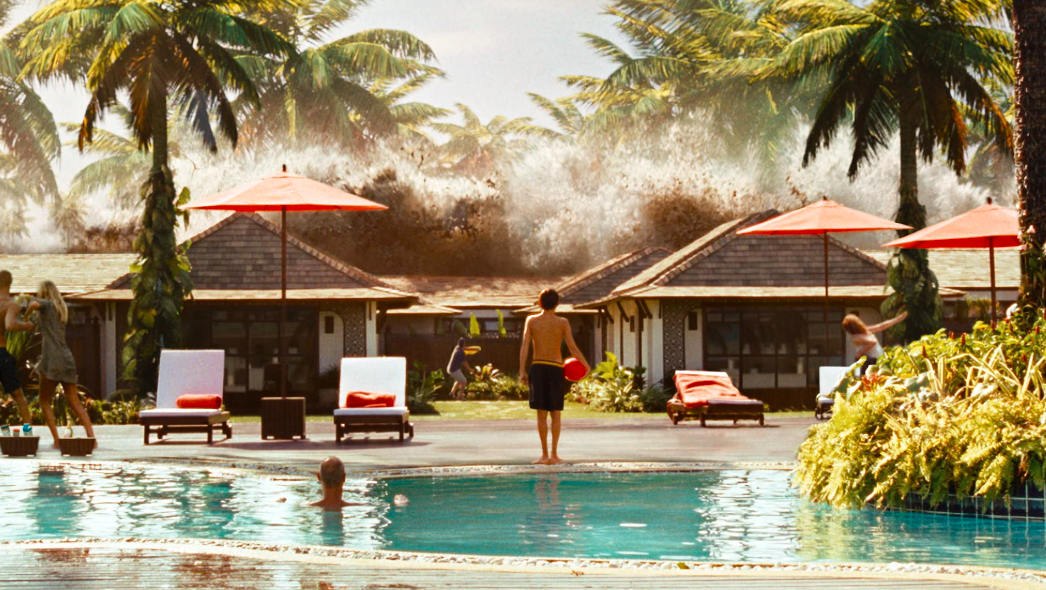
Water, when unleashed, is the most patient and merciless of destroyers. The 2004 film The Day After Tomorrow turned New York City’s streets into canals, a scenario that, while exaggerated, isn’t entirely fictional. The city’s aging infrastructure is a ticking bomb—just ask the residents of Hurricane Sandy, who watched entire neighborhoods drown in 2012. But the most haunting flood locations lie elsewhere. The Netherlands, a country that has spent centuries battling the sea, offers a chilling backdrop. The 1953 North Sea flood, which killed over 1,800, still looms in the national psyche. Today, films like The Flood use Rotterdam’s modern docklands to show what happens when humanity’s defenses fail. Water doesn’t just drown landscapes—it drowns illusions of control.
Wildfires: The Slow-Burning Apocalypse
In Only the Brave, the Yarnell Hill Fire isn’t just a backdrop—it’s a character, a living, breathing force of destruction. Arizona’s Coconino National Forest, where the fire raged in 2013, is a tinderbox of dry brush and relentless heat. Wildfires are the disaster genre’s understated villains: they don’t strike with the suddenness of a quake or the drama of a tornado, but they consume everything in their path with a slow, suffocating inevitability. The 2018 Camp Fire in California incinerated the town of Paradise in hours. The eerie silence that follows—a landscape reduced to charcoal and silence—is the stuff of nightmares. Yet, paradoxically, these scorched earths are where new life begins. The fascination with wildfires may stem from this duality: they destroy, but they also renew. They are nature’s way of saying, “You are not in control.”
The Psychological Pull: Why We Can’t Look Away
There’s a reason disaster movies endure. They tap into something ancient—the fear of the unknown, the awe of forces beyond our comprehension. But there’s more to it than that. These locations aren’t just settings; they’re symbols. Volcanoes represent the wrath of the earth. Earthquakes embody the fragility of human constructs. Tornadoes and floods remind us that nature doesn’t negotiate. The deeper fascination lies in the contrast between the beauty of these places and their potential for annihilation. We’re drawn to them because they force us to confront our own mortality. In a world where we’ve mapped the stars and decoded DNA, these natural phenomena remain untamed. They are the last true mysteries—and that’s what makes them so compelling.