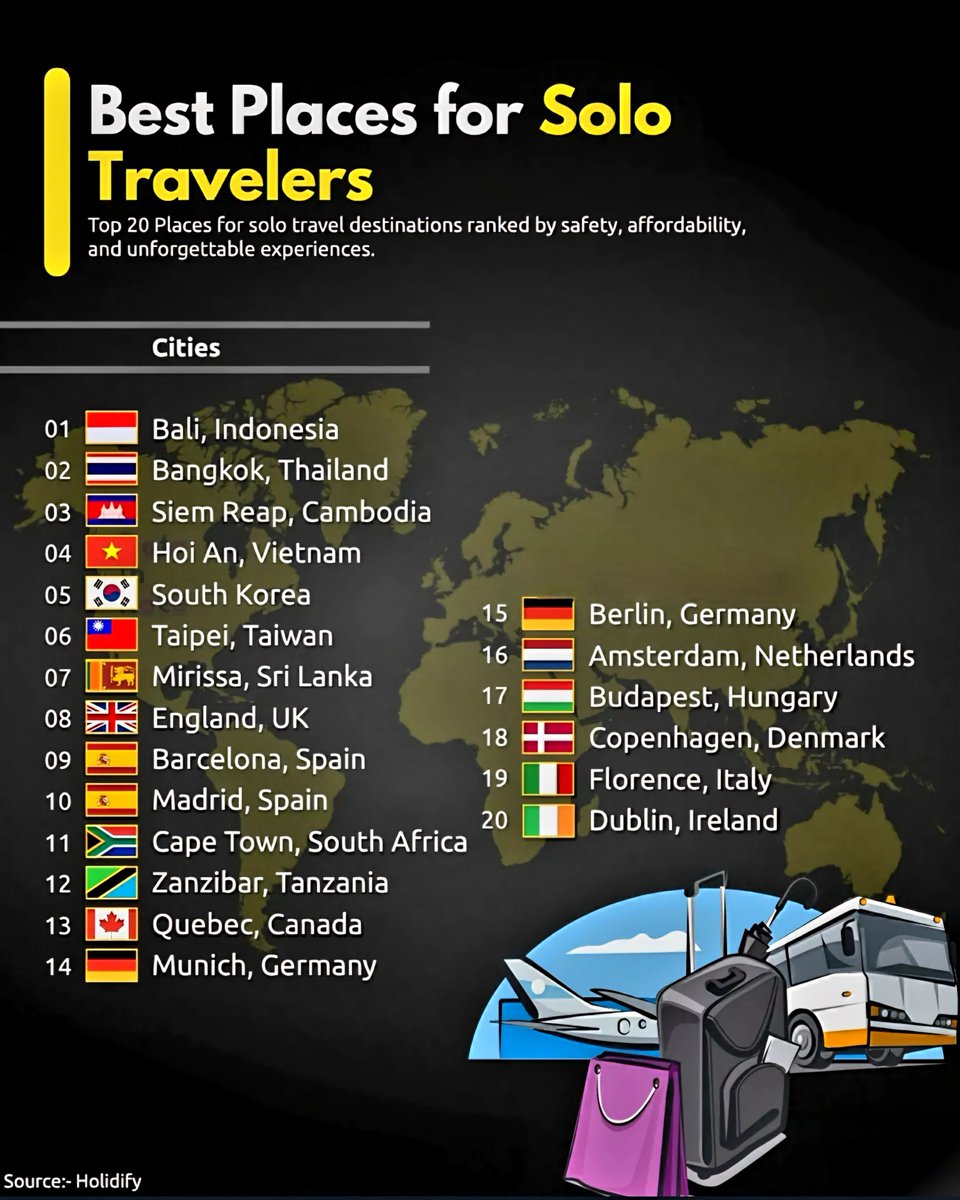
There’s a peculiar thrill in standing alone at a train station in a foreign city, suitcase in hand, with no itinerary beyond the next sunset. First-time solo travelers often arrive expecting adventure, only to discover something far more transformative: the quiet revelation that the world is not as intimidating as it seems. The destinations you choose become mirrors—reflecting not just landscapes, but the contours of your own resilience. Whether it’s the labyrinthine alleys of Marrakech whispering secrets or the neon-lit solitude of Tokyo’s capsule hotels, these places don’t just welcome you; they redefine what it means to belong. The best solo travel destinations for first-timers in 2026 aren’t just about ticking off landmarks. They’re about surrendering to the unknown and finding that the scariest part of the journey isn’t the destination—it’s the moment you realize how much you’ve grown along the way.
The Allure of the Familiar-Unfamiliar: Why First-Timers Crave Balance
Humans are paradoxical creatures. We crave novelty—the electric hum of a new city, the unscripted conversations with strangers—but we also need threads of the familiar to anchor us. The most intoxicating solo travel destinations in 2026 strike this balance flawlessly. Take Lisbon’s Alfama district, where the scent of grilled sardines mingles with the echo of Fado music in a way that feels both ancient and immediate. Here, the cobblestone streets are a labyrinth, but the locals’ warmth is a compass. Or consider Kyoto’s Arashiyama Bamboo Grove, where the towering stalks create a cathedral of green silence, yet the nearby matcha cafés offer a taste of home for even the most jet-lagged traveler. These places don’t just accommodate solitude; they choreograph it, guiding you through moments of quiet introspection and sudden, exhilarating connection.
The deeper pull? The illusion of control. In a world where algorithms dictate our next move, solo travel forces us to relinquish the illusion of predictability. Yet, paradoxically, the best destinations provide just enough structure—reliable public transport, English-friendly signage, or a thriving backpacker community—to make the chaos feel like an adventure rather than a crisis. It’s why Reykjavik’s compact size and Singapore’s impeccable efficiency top the list for first-timers. They offer the reassurance of a safety net without the suffocating predictability of home.
Cities That Whisper: Where Urban Solitude Feels Like a Luxury
Not all solo travel destinations are about pristine beaches or mountain retreats. Some of the most profound experiences happen in the heart of a city, where anonymity becomes a form of freedom. Berlin’s Kreuzberg neighborhood is a masterclass in this. By day, it’s a graffiti-splattered playground of vintage shops and anarchist bookstores. By night, it transforms into a den of underground clubs where strangers dance in silence, their bodies moving in sync without a word exchanged. The city’s raw, unpolished energy makes it the perfect proving ground for first-timers: a place where you can lose yourself in the crowd and still feel utterly alone.
Then there’s Melbourne’s laneways, a rabbit warren of hidden bars, street art, and cafés where the hum of espresso machines drowns out the noise of self-doubt. The city’s obsession with coffee culture isn’t just about caffeine—it’s a ritual of solitude. Sipping a flat white at a sidewalk table, you’re part of the scenery, yet entirely invisible. It’s the urban equivalent of a forest canopy: a place to observe without being observed. For those who fear the silence of the wild, these cities offer the next best thing: the illusion of invisibility in plain sight.
The Great Indoors: Destinations Where Solitude Isn’t a Choice—It’s the Point
Sometimes, the most transformative solo travel happens when you’re not just alone, but forced into it. Iceland’s remote guesthouses along the Ring Road are a case in point. With no neighbors for miles, the only sounds are the wind howling over volcanic plains and the crackle of a fireplace. There’s no Wi-Fi, no distractions—just the slow unraveling of your own thoughts. It’s the kind of solitude that feels like a confession: you can’t outrun your mind, but you can learn to listen to it.
For a different kind of enforced solitude, Japan’s onsen towns like Hakone or Beppu offer a uniquely Japanese paradox: communal baths where naked strangers share steaming waters, yet the etiquette is so strict that interaction is minimal. The ritual of soaking in mineral-rich waters, surrounded by mist and silence, becomes a meditation on impermanence. You’re physically close to others, yet emotionally untouchable. It’s a lesson in boundaries—how to be present without being consumed.
Off the Beaten Path: Where First-Timers Can Be Pioneers
The allure of the unknown isn’t just about escaping crowds—it’s about staking a claim on a place before it’s discovered. Georgia’s Caucasus Mountains are a prime example. With its Soviet-era charm, hearty khachapuri, and trails that lead to abandoned churches, it’s a destination that feels like a secret. First-timers here aren’t just tourists; they’re trailblazers, navigating a landscape where hospitality is measured in homemade wine and the only guidebook is a local’s advice.
Similarly, Oman’s Wahiba Sands offers a desert so vast and so quiet that the dunes seem to absorb sound. Camping under a sky so clear it feels like the universe is whispering to you, you realize that solitude isn’t just a state of being—it’s a privilege. These places don’t just welcome first-timers; they reward their curiosity with a sense of ownership. You’re not just visiting. You’re bearing witness.
The Digital Detox Paradox: Why Unplugging Feels Like Plugging In
In 2026, the most radical act of solo travel might be putting your phone in airplane mode. Bhutan’s Tiger’s Nest Monastery is a destination where the climb itself is a metaphor for digital detox. The 2.5-hour hike to the cliffside monastery, with its prayer flags snapping in the Himalayan wind, is a physical manifestation of shedding distractions. By the time you reach the top, your notifications feel like relics from another life.
Or consider Portugal’s Azores, an archipelago where the concept of “island time” isn’t just a cliché—it’s a way of life. With no Uber, no Google Maps, and limited cell service, you’re forced to ask for directions, to linger in cafés, to let the rhythm of the waves dictate your pace. The irony? The more you disconnect, the more connected you feel—to the landscape, to the locals, to the quiet hum of your own thoughts.
Cultural Chameleons: Destinations That Change You Without Trying
Some places don’t just welcome you—they reshape you. Morocco’s Chefchaouen, the blue-washed city nestled in the Rif Mountains, is one such place. The color isn’t just aesthetic; it’s psychological. Walking through the labyrinthine streets, you’re bathed in a hue that psychologists associate with calm and creativity. By the time you leave, you’ve absorbed a little of that serenity—like a sponge soaking up the Mediterranean sun.
Then there’s Varanasi, India, where the Ganges River flows like a liquid mirror, reflecting not just the sunrise, but the fragility of life. The city’s ghats are a theater of the human condition: pilgrims bathing in the sacred waters, corpses being cremated on pyres, and stray dogs napping in the shade. For first-timers, it’s a crash course in mortality—and the beauty of being alive. You don’t just visit Varanasi; it visits you.
The Solo Traveler’s Paradox: You’re Never Really Alone
Here’s the twist: the more you seek solitude, the more you find connection. In New Zealand’s Fiordland National Park, the silence of the wilderness is broken only by the call of a kea bird or the distant rumble of a waterfall. Yet, the solitude is deceptive. Every hiker you pass exchanges a nod, a smile, a shared snack. The unspoken rule is that strangers become companions in the blink of an eye. It’s a reminder that solitude isn’t the absence of people—it’s the absence of obligation.
Even in Costa Rica’s Monteverde Cloud Forest, where the mist clings to the trees like a shroud, you’re never truly alone. The howler monkeys scream in the distance, the toucans squawk overhead, and the wind carries the scent of damp earth. Nature isn’t just a backdrop; it’s a participant in your journey. The deeper you go, the more it seems to be guiding you—not toward a destination, but toward a version of yourself you didn’t know existed.
Final Thoughts: The Map Is Not the Territory
By 2026, the best solo travel destinations won’t just be places on a map—they’ll be experiences etched into your memory. They’ll be the hostel owner in Siem Reap who teaches you to cook Khmer curry, the fisherman in Zanzibar who lets you cast a net at dawn, the stranger in Tbilisi who invites you to a supra feast that lasts until the stars blur. These aren’t just destinations. They’re rites of passage.
The real magic of solo travel isn’t in the places you visit. It’s in the person you become when you’re forced to rely on nothing but your wits and your willingness to be surprised. So pack light. Leave room for the unexpected. And remember: the world isn’t as vast as it seems. It’s just waiting for you to step into it.