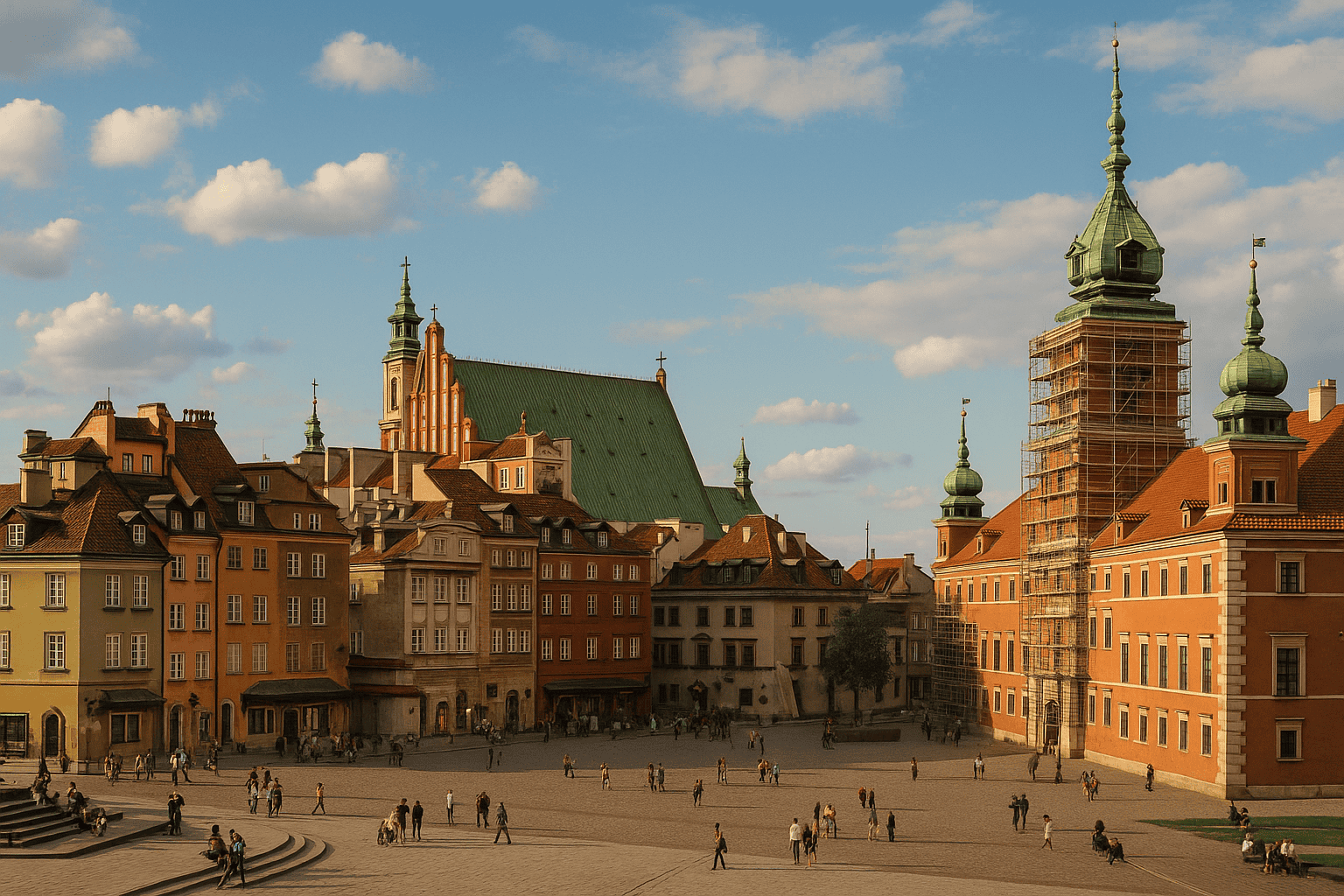
Warsaw’s historic core is best known for the meticulously reconstructed Old Town that draws throngs of tourists each year. Yet beyond the bustling market square lies a lesser‑known enclave of cobblestones, quiet courtyards, and baroque façades that most visitors never encounter. This hidden Old Town, tucked behind the main attractions, offers a texture of daily life that survived wars, regime changes, and urban modernization. The observations that initially seem mundane—narrow lanes, faded signage, the scent of baking rye—are in fact clues to a layered past that continues to shape the city’s identity.
1. The Forgotten Alley of Szeroka Street
Szeroka Street, tucked between St. Anne’s Church and the Royal Castle, forms a narrow passage that appears as a simple pedestrian shortcut. Its uneven cobbles and recessed doorways echo the 17th‑century merchant routes that once connected the market to the Vistula River docks. The alley’s persistent shadows and the occasional graffiti of historical dates reveal a community that has long used the space for discreet trade, shelter, and social exchange, underscoring the resilience of Warsaw’s commercial spirit.
2. The Courtyard Behind the House of the Polish Academy
One step beyond the public façade of the Academy lies a secluded courtyard accessed through an unmarked arch. Here, ivy‑clad stone walls enclose a modest garden where locals gather for informal chess matches. The courtyard’s existence reflects an early 20th‑century practice of creating semi‑private green spaces within dense urban blocks, a response to the need for quiet contemplation amid rapid industrial growth.
3. The Silent Brick Oven on Rynek Sienny
At the edge of Rynek Sienny, a weathered brick oven stands almost invisible behind a row of contemporary cafés. While modern patrons pass by without noticing, the oven once supplied bread to royal banquets and daily markets alike. Its preservation, despite surrounding redevelopment, illustrates Warsaw’s commitment to maintaining culinary heritage as a tangible link to the city’s feast‑and‑famine cycles.
4. The Hidden Passage Beneath the City Hall
Below the grand staircase of Warsaw City Hall, a narrow vaulted passage leads to an underground gallery of wartime photographs. The passage’s dim lighting and archival scent invite contemplation of the city’s wartime endurance. Its concealed nature mirrors the clandestine routes used by resistance fighters during the 1944 Uprising, turning ordinary architecture into a silent memorial.
5. The Old Apothecary at 12 Kazimierza Street
Number 12 Kazimierza Street houses a modest wooden sign that reads “Apteka Jana” in faded script. Inside, original 19th‑century cabinetry stores jars of herbal remedies, reminding visitors of a time when medicine was mixed on a wooden countertop. The shop’s continued operation reflects a cultural reverence for traditional knowledge amid modern pharmacy chains.
6. The Unmarked Fountain at Złota Street
Set into a quiet side lane, a modest stone fountain drips water into a shallow basin. Its simple design belies a historic function: providing water for horse‑drawn carriages and street cleaners in the 1800s. The fountain’s continued flow, despite the advent of municipal plumbing, serves as a living reminder of Warsaw’s infrastructural evolution.
7. The Overgrown Garden of the Former Merchant’s Guild
Behind a row of red‑brick townhouses, an overgrown garden contains a solitary oak and a rusted iron gate. Once the private courtyard of the Merchant’s Guild, the space now hosts community art installations. The garden’s abandonment and recent revitalization demonstrate how urban neglect can give way to grassroots cultural renewal.
8. The Hidden Stained‑Glass Window at St. John’s Chapel
Above a low‑ceilinged side chapel, a small stained‑glass window filters light into a spectrum of muted blues. The window, commissioned by a 17th‑century patron, escaped wartime destruction because it was concealed behind a movable altar. Its survival offers insight into the subtle acts of preservation undertaken by clergy during periods of conflict.
9. The Whispering Wall at 7 Miodowa Street
On the third floor of a modest townhouse, a recessed plaster wall bears faint, eroded graffiti from the 1960s—political slogans and love notes. The wall’s acoustic properties cause whispers to travel further than expected, fostering an intimate dialogue between occupants. This acoustic quirk reflects the human desire for private expression in a city often under surveillance.
10. The Lantern‑Lit Path of the Former Jewish Quarter
Beyond the main tourist route, a narrow lane lined with historic oil lanterns leads to a modest plaque commemorating the pre‑war Jewish community. The lanterns, restored by local artisans, cast a soft glow that contrasts with the city’s neon signs, evoking the neighborhood’s once‑vibrant cultural tapestry and its enduring impact on Warsaw’s multicultural identity.
11. The Unassuming Library on 15 Nowy Świat
Sandwiched between a boutique and a café, a small library preserves a collection of early 20th‑century Polish literature. Its discreet entrance and wooden reading tables invite scholars and casual readers alike to explore Warsaw’s literary heritage. The library’s modest presence underscores the city’s dedication to safeguarding intellectual history amid commercial pressures.
12. The Secret Garden Above the Old Brewery
Above the remnants of a 19th‑century brewery, a rooftop garden thrives on reclaimed brick and reclaimed wood. Contemporary residents cultivate herbs and vegetables, while old brewing equipment serves as decorative planters. This adaptive reuse of industrial space illustrates Warsaw’s broader trend of integrating sustainable urban agriculture into historic districts.