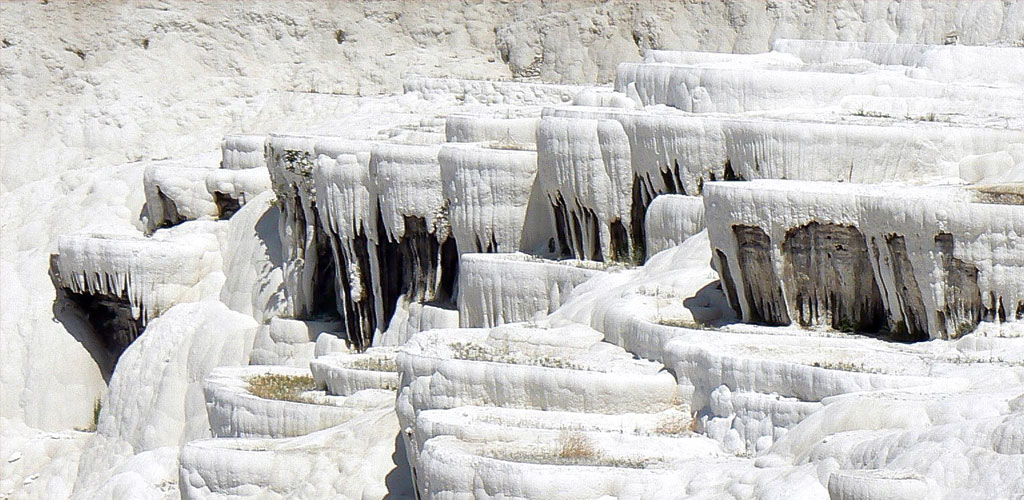
Hidden behind the bustling tourist trail of Pamukkale lies a lesser‑known marvel that seems to have been plucked from a geology textbook and set into a dreamscape: the Petrified Waterfall in the Aegean province of Denizli, Turkey. While Pamukkale draws crowds to its gleaming terraces, the Petrified Waterfall offers a quieter, more contemplative experience—a stone cascade that whispers of millennia of erosion, mineral flow, and Earth’s patient artistry. This listicle outlines the most compelling reasons to add this natural sculpture to your travel itinerary.
1. A Stone Cascade Frozen in Time
Unlike any living waterfall, the Petrified Waterfall presents a frozen river of stone that has solidified over tens of thousands of years. The limestone slabs cascade down a gentle slope, creating the illusion of water eternally suspended in mid‑air. This paradox of motion captured in stillness makes the site a living metaphor for the balance between change and permanence.
2. Geological Narrative in Every Layer
The waterfall’s terraces are composed of calcite and travertine deposited by ancient thermal springs. Each stratum records fluctuations in temperature, mineral content, and climate, acting as a natural archive that geologists can read like pages in a history book. Visitors can literally walk through the chapters of Earth’s geological past.
3. A Quiet Alternative to Pamukkale
Because it lies off the main tourist routes, the Petrified Waterfall experiences far fewer visitors than its famous neighbor. The tranquility allows for reflective photography, meditative walks, and an intimate connection with the landscape that is often lost in crowded destinations.
4. Unique Photographic Opportunities
Morning light casts soft shadows across the porous limestone, while late afternoon sun amplifies the white hues, creating a stark contrast against the surrounding greenery. The site’s symmetrical patterns and natural textures provide photographers with endless framing possibilities, from wide‑angle panoramas to macro details of mineral deposits.
5. Biodiversity Hidden Among the Stones
Despite its seemingly barren appearance, the petrified terraces host a surprising array of flora and fauna. Alpine herbs cling to cracks, while small insects and amphibians find refuge in the water‑filled pools that occasionally form after rain. This subtle ecosystem underscores the resilience of life in seemingly inhospitable environments.
6. Accessibility via Scenic Hiking Trails
The waterfall is reachable by a moderate hiking trail that weaves through pine forests and olive groves. The 2‑kilometer trek not only builds anticipation but also offers panoramic views of the surrounding valleys, making the journey as rewarding as the destination.
7. Cultural Echoes in Local Folklore
Nearby villages tell stories of the “Stone River” that once flowed with miraculous healing properties. While modern science attributes the formation to mineral precipitation, the myths add a layer of cultural richness that enriches the visitor experience.
8. Seasonal Transformations
During the wetter months, rainwater pools at the base of the terraces, creating reflective mirrors that double the visual impact of the stone cascade. In winter, a thin veil of frost occasionally dusts the limestone, turning the site into a sparkling white tableau.
9. Minimal Environmental Impact
Because the area is not overrun with commercial development, the footprint of tourism remains low. Visitors are encouraged to stay on marked paths, ensuring the delicate calcareous structures stay intact for future generations.
10. Proximity to Other Attractions
The Petrified Waterfall sits within an hour’s drive of the ancient city of Hierapolis, the white terraces of Pamukkale, and the thermal pools of Karahayıt. This geographic clustering allows travelers to craft a diverse itinerary that blends natural wonder with archaeological intrigue.
11. Educational Value for Schools and Scholars
Field trips to the waterfall provide hands‑on learning opportunities in geology, ecology, and cultural studies. The site’s visible stratification serves as a tangible teaching tool for concepts like sedimentation, mineralization, and climate change over geological timescales.
12. A Symbol of Earth’s Patience
Ultimately, the Petrified Waterfall stands as a silent testament to the slow, deliberate work of nature. Its stone curtain reminds us that monumental beauty often requires patience—both from the planet and from those who seek to witness its wonders.