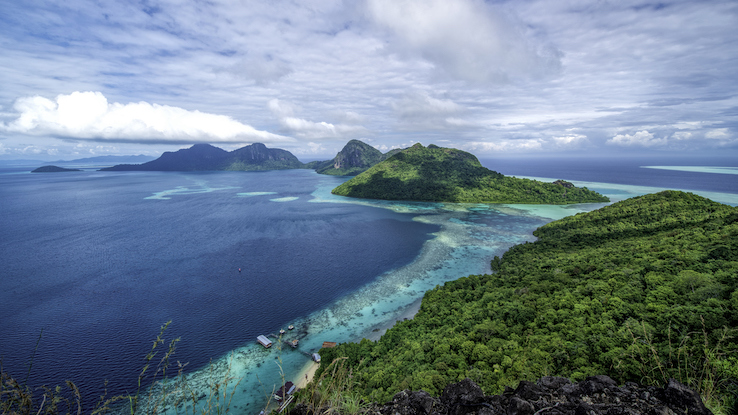
There is a persistent allure to places where footprints are rare and the horizon stretches unbroken. Travelers often remark that deserted islands feel like stepping into a living postcard, a quiet rebellion against the noise of daily life. Beyond the picturesque scenery lies a deeper fascination: the promise of solitude, the temptation of untouched ecosystems, and the subtle reminder of humanity’s small place in the world. The following list highlights five truly uninhabited islands that you can explore at no cost, each offering a unique glimpse into that quiet, compelling escape.
1. North Sentinel Island, Andaman and Nicobar Islands, India
Located in the Bay of Bengal, North Sentinel Island sits roughly 60 km west of Port Blair. Though officially off‑limits to protect its isolated inhabitants, the island’s surrounding waters are accessible for free via local fishing boats, allowing intrepid visitors to observe the island’s rugged shoreline from a safe distance. The fascination with North Sentinel stems from its status as one of the few remaining places where a community lives completely detached from modern society, prompting reflection on cultural preservation and the limits of exploration.
2. Malpelo Island, Pacific Ocean, Colombia
Malpelo lies about 500 km off Colombia’s Pacific coast, emerging as a volcanic rock formation surrounded by crystal‑clear waters. The island itself is uninhabited, and the Colombian government permits free landing for research and eco‑tourism under strict environmental guidelines. Divers are drawn to its extraordinary marine biodiversity, particularly the hammerhead shark aggregations, which serve as a reminder of the ocean’s hidden richness and humanity’s responsibility to protect it.
3. St. George Island, Gulf of Mexico, United States
St. George Island stretches roughly 20 miles along Florida’s panhandle, between the Gulf and the Apalachicola River. While portions of the island are managed by state parks with modest fees, the unprotected northern stretches remain free for public access. Visitors can hike through pine forests, camp on sand dunes, and explore tidal creeks without spending a dime. The island’s appeal lies in its juxtaposition of pristine natural habitats with the broader narrative of coastal resilience against rising sea levels.
4. Macquarie Island, Tasmania, Australia
Situated halfway between New Zealand and Antarctica, Macquarie Island is a sub‑Antarctic UNESCO World Heritage site governed by the Australian government. Although the island hosts a research station that requires permits, the surrounding waters are open for free day trips by charter vessels from Hobart. Its barren, wind‑swept terrain and abundant penguin colonies evoke a stark beauty, prompting contemplation of life at the planet’s fringes and the importance of protecting such remote ecosystems.
5. Isla del Sol, Lake Titicaca, Bolivia/Peru
Perched on the surface of Lake Titicaca, Isla del Sol remains largely uninhabited save for a handful of traditional villages. The island is freely accessible by public ferries departing from Copacabana, Bolivia, and Puno, Peru. While modest fees apply for ferry transport, stepping onto the island itself incurs no charge. Its stone ruins, terraces, and sweeping views spark curiosity about the ancient Incan civilization that once revered the island as a sacred birthplace, illustrating how history intertwines with natural isolation.