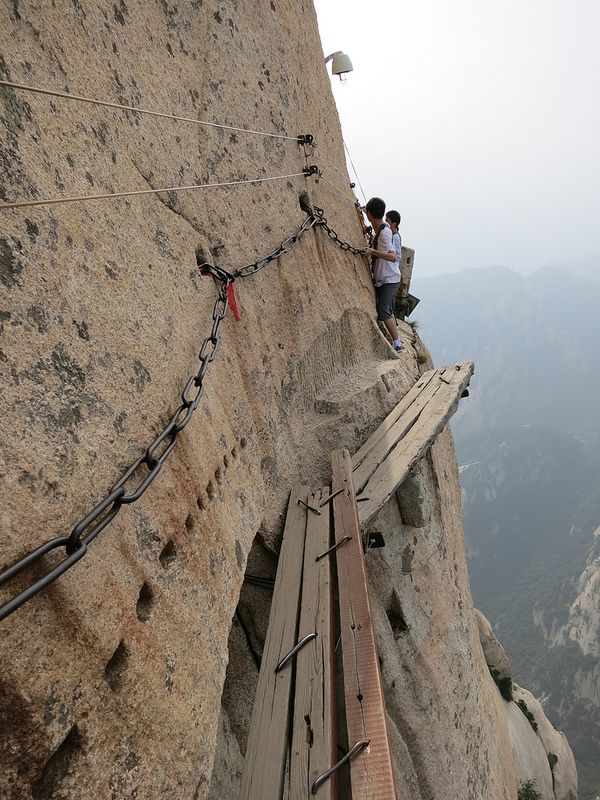
Mount Hua, one of China’s Five Great Mountains, is notorious for its sheer stone ladders, cliffside paths, and vertiginous drops. After completing the ascent, I compiled a practical guide that breaks down everything a reader can expect from a first‑hand account of the world’s most dangerous hike. The article is organized as a numbered list, each section delivering a specific type of content—from logistical details to cultural context—so travelers can plan, prepare, and appreciate the experience with confidence.
1. Route Overview and Geographic Context
This section maps the full circuit of the Mount Hua trek, covering the traditional “North Peak” loop, the “East Peak” shortcut, and the optional “West Peak” side‑track. I detail elevation changes, distance per segment, and the average time required to complete each leg. Readers also receive a brief geological explanation of the granite formations that make the cliffs both spectacular and treacherous, providing a foundation for understanding the terrain before stepping onto the trail.
2. Historical and Cultural Background
Mount Hua’s spiritual significance dates back over 2,000 years, hosting Taoist temples, ancient inscriptions, and imperial pilgrimages. This portion offers concise historical facts, explains the meaning behind key landmarks such as the “Plank Walk” and the “Jade Emperor’s Altar,” and highlights how local myths influence modern trail etiquette. Understanding this heritage helps hikers respect sacred sites and recognize why certain rituals persist among contemporary visitors.
3. Seasonal Weather Patterns and Optimal Timing
Climatic conditions on Hua Shan shift dramatically across the year. Here you’ll find a month‑by‑month breakdown of temperature ranges, precipitation probabilities, and wind intensity. I also discuss the impact of fog on visibility, the heightened risk of rockfall during the rainy season, and why early autumn (late September to early October) is generally considered the safest window for the ascent.
4. Logistics: Getting There and Permits
This practical guide outlines transportation options from Xi’an, Xianyang, and nearby cities, including high‑speed rail, shuttle buses, and private car rentals. I list the required entry permit, the online reservation system, and the fee structure for park access. Tips on avoiding peak‑hour crowds and securing accommodations in the nearby town of Huashan Village are included to streamline travel planning.
5. Packing List: Essential Gear and Safety Equipment
A curated checklist covers clothing layers, footwear with appropriate tread, gloves for ladder climbs, and headlamps for night‑time sections. I emphasize the importance of a lightweight harness, a personal anchor system, and a compact first‑aid kit, noting that the trail’s steep sections may require self‑belaying on certain ladders. Recommendations for backup power sources and weather‑proof storage protect equipment from sudden rain showers.
6. Physical Preparation and Training Regimen
To mitigate the intense altitude gain and constant climbing, I recommend a four‑week training plan focusing on leg strength, core stability, and cardiovascular endurance. Sample workouts include hill repeats, stair‑climbing intervals, and balance drills using a Bosu ball. The guide also outlines acclimatization strategies, such as spending a night at the 1,500‑meter base camp before attempting the summit.
7. On‑Trail Navigation and Signage Interpretation
Mount Hua’s path markings are a mix of traditional Chinese characters, painted arrows, and occasional wooden stakes. This section decodes each symbol, explains how to read distance markers, and offers tips for using a GPS device when official signage is obscured by fog. I also provide a downloadable schematic of the trail network for offline reference.
8. Detailed Safety Protocols for High‑Risk Sections
Each notorious segment—such as the “Plank Walk,” the “Sky Ladder,” and the “Ascending Tiger” – receives a step‑by‑step safety briefing. I outline proper hand placement, weight distribution, and how to secure a rope anchor when optional safety rails are absent. Emergency contact numbers, nearby rescue stations, and the procedure for signaling assistance using a whistle or reflective mirror are also covered.
9. Photography Tips for Capturing Extreme Landscapes
Because the vistas are as dramatic as the climb, I share camera settings for high‑contrast lighting, recommended lenses for sweeping panoramas, and techniques for shooting from narrow ledges without jeopardizing stability. Advice on protecting gear from dust and moisture, as well as the best times of day for sunrise and sunset shots, helps photographers maximize image quality while staying safe.
10. Local Cuisine and Rest‑Stop Nutrition
While descending, hikers often stop at mountain huts that serve traditional Shaanxi dishes such as “biang‑biang noodles” and “yangrou paomo.” I review the nutritional value of these meals, suggest portable snack alternatives (energy bars, dried fruit, electrolyte tablets), and advise on hydration strategies to counteract the altitude‑induced diuresis that can lead to dehydration.
11. Cultural Etiquette and Interaction with Fellow Hikers
Respectful behavior is essential on a sacred mountain. This portion outlines appropriate conduct at temples, guidelines for offering incense, and the recommended volume for conversation on narrow ledges. I also discuss common customs among local guides, such as the use of a ceremonial bell to signal the start of a group ascent, and how to politely decline hazardous shortcuts offered by less experienced trekkers.
12. Post‑Hike Recovery and Sustainable Practices
After completing the climb, I detail effective recovery techniques, including stretching routines, compression garments, and sleep optimization at the base camp. Additionally, the guide emphasizes low‑impact practices: packing out all trash, staying on designated trails to protect fragile flora, and supporting local conservation initiatives through modest donations to the park’s preservation fund.