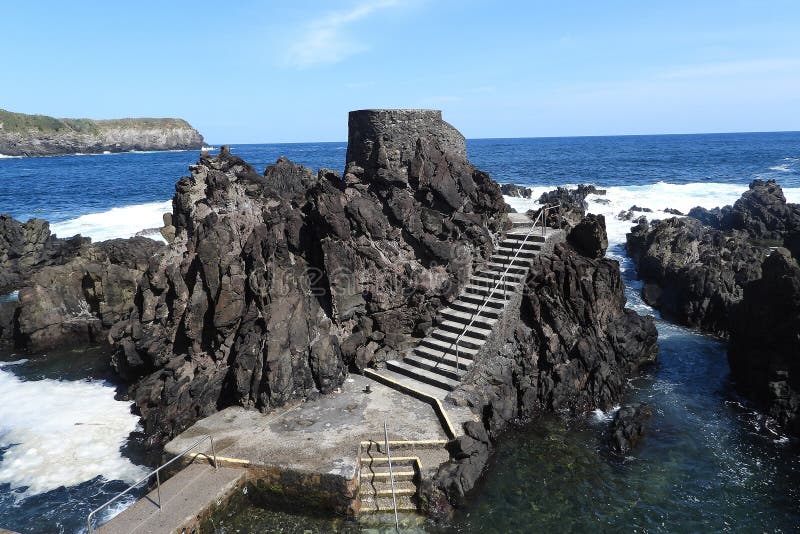
The Azores, an archipelago of volcanic islands in the Atlantic Ocean, are renowned for their pristine natural pools. Travelers often remark on the crystal‑clear waters that feel like man‑made pools, yet these formations are the result of centuries‑old geological activity and unique microclimates. Below is a concise guide to ten of the most striking natural pools, each accompanied by practical details and insight into why they captivate visitors beyond a simple splash.
1. Lagoa das Furnas – São Miguel
Located in the geothermal valley of Furnas (coordinates 37.7500° N, 25.3333° W), this lagoon is fed by hot springs that keep the water at a constant 38 °C. Many tourists comment on its “spa‑like” feel, but the true fascination lies in the interplay of volcanic steam, mineral‑rich waters, and the surrounding tea plantations, which together create a micro‑ecosystem rarely found elsewhere.
2. Piscinas Naturais de Ferraria – São Miguel
Nestled on the north‑west coast near Ponta Delgada (38.7600° N, 27.1050° W), Ferraria’s pool is directly heated by an underwater volcanic vent. Observers often notice the steam rising from the water’s surface—a visual cue that hints at the island’s active geothermal core. The pool’s warm water and constant wave action support a diverse range of marine life, making it a live laboratory for scientific observation.
3. Caldeirão Verde – Faial
Accessible via a short hike from Horta (38.5235° N, 28.6260° W), Caldeirão Verde is a verdant basaltic bowl that collects rainwater in a turquoise basin. Visitors typically remark on its vivid color contrast against the dark volcanic rock. The pool’s deep green hue is due to algae that thrive in the mineral‑laden water, illustrating how life adapts to harsh, isolated environments.
4. Poço da Ribeira do Galo – São Jorge
Situated near the village of Fajã da Caldeira de Santo Cristo (38.3833° N, 28.2333° W), this secluded pool forms where a volcanic fissure meets a spring. Travelers often describe the water as “unexpectedly warm” for an island known for its brisk Atlantic breezes. Its temperature stability results from subterranean geothermal circulation, offering a rare natural hot spring in the middle of a rugged coastline.
5. Covo da Praia da Vitoria – Terceira
Located on the western shore of Terceira (38.7333° N, 27.2000° W), the pool is carved into a cliffside and filled by ocean tides. Common observations note the gentle lull of the waves inside the confined space, creating a calm swimming environment despite the open sea. The pool’s protection from wind and currents highlights the island’s erosional history and demonstrates how volcanic rock can shape safe aquatic niches.
6. Lagoa da Conceição – São Miguel
Set near the town of Lagoa (37.7700° N, 25.3100° W), this large crater lake features several smaller natural pools along its shore. While many visitors see it as merely a scenic backdrop, the lake’s stratified layers—warm surface water over colder, deeper currents—support distinct fish populations, showcasing complex ecological zoning within a single water body.
7. Poço da Cova – Graciosa
Near the capital Santa Cruz da Graciosa (39.0667° N, 28.0667° W), Poço da Cova is a volcanic depression that fills with rainwater during the wet season. Observers often point out the pool’s clear, reflective surface that mirrors the island’s sky. The clarity results from low nutrient levels, limiting algae growth and providing an almost glass‑like view of the aquatic life beneath.
8. Ponta da Ferraria – Pico
Found on the southern coast of Pico (38.5333° N, 28.3833° W), this natural pool lies beneath a cliff where seawater is heated by volcanic activity. Tourists frequently remark on the “hot and cold” sensation when walking from the beach into the pool. The phenomenon is caused by hot water emerging from vents that mixes with the cooler Atlantic tides, creating a dynamic thermal gradient.
9. Lagoa do Fogo – São Miguel
Enclosed within the central mountains of the island (37.8000° N, 25.3000° W), Lagoa do Fogo is a high‑altitude crater lake with several marginal natural pools. Visitors often describe an “eerie silence” surrounding the water, a consequence of the lake’s isolation and lack of human activity. This seclusion allows the area to serve as a refuge for endemic bird species, underlining the pool’s ecological importance.
10. Poço Natural de Ponta do Altar – São Miguel
Located on the south‑west coast near Ponta Delgada (38.7250° N, 27.0833° W), this basaltic pool is formed where a volcanic fissure meets the sea. Many beachgoers note the startling temperature contrast between the warm interior and the chilly surrounding ocean. The heat derives from geothermal currents beneath the island’s crust, illustrating the persistent volcanic influence that shapes the Azores’ unique aquatic landscapes.