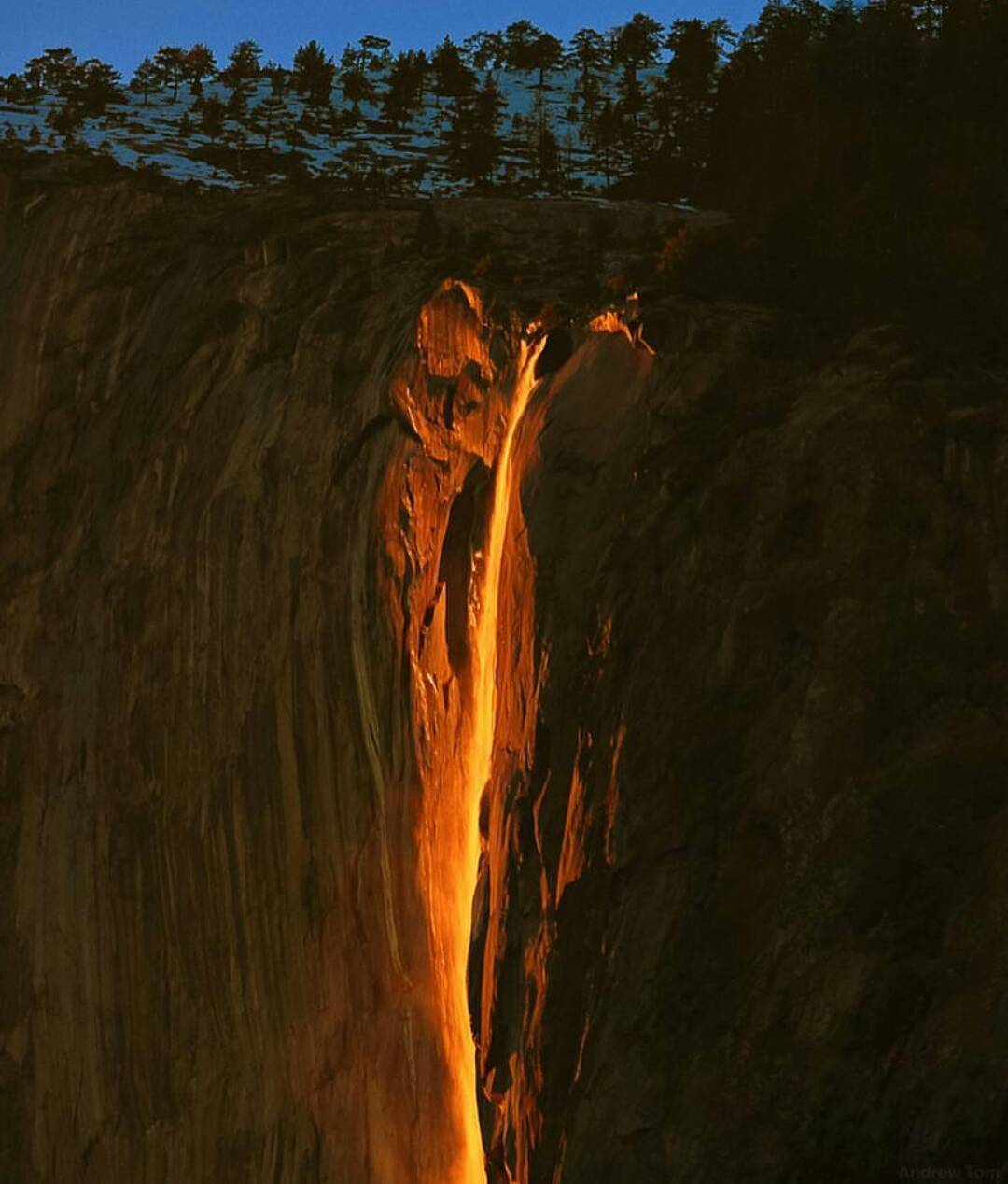
Yosemite National Park is famed for its dramatic waterfalls and the unique “firefall” phenomenon, where sunlight transforms crashing water into a radiant blaze. While the historic man‑made firefall at Glacier Point ended in 1968, natural fire‑like displays persist in hidden corners of the valley. Below are ten locations where the interplay of light, water, and rock creates the park’s most captivating fire‑fall moments. Each entry includes a practical address, a common observation made by visitors, and a concise explanation of why the effect occurs.
1. Glacier Point Historic Firefall (Closed)
Address: Glacier Point Road, Yosemite Valley, CA 95389 (park road, no formal street number).
What visitors see: In late February, the setting sun illuminated the flowing water from the Glacier Point Hotel’s balcony, sending a luminous “waterfall of fire” down the cliff face.
Why it works: The precise angle of the sun during the winter solstice combined with the hotel’s artificial water spray produced a narrow, bright ribbon of light. Though the hotel was removed, the site remains a historic reference point for the natural firefall phenomena that follow.
2. Horsetail Falls (Natural Firefall)
Address: Hetch Hetchy Road, Yosemite National Park, CA 95389.
What visitors see: In mid‑May, during the afternoon sun, the water from Horsetail Falls catches the light and glows orange‑red, resembling a waterfall of fire.
Why it works: The waterfall’s steep, thin curtain aligns with the sun’s trajectory at a low angle, causing thin streams of water to act as prisms, scattering sunlight into vivid hues that amplify the illusion of flame.
3. Vernal Fall – “Fire Trail” Viewpoint
Address: Mist Trailhead, Happy Isles, Yosemite Valley, CA 95389.
What visitors see: Around sunset, the lower tier of Vernal Fall glows with a golden halo as the sun’s rays skim the water’s surface.
Why it works: The rock ledge behind the fall creates a reflective basin that catches late‑day sunlight, boosting the water’s brightness and mimicking a flickering fire when viewed from the “Fire Trail” overlook.
4. Bridalveil Fall – Evening Firefall
Address: Bridalveil Fall Trailhead, Southside Drive, Yosemite Valley, CA 95389.
What visitors see: In late summer, when the sun is low, the mist from Bridalveil Fall glitters with amber tones, giving the impression of a soft, slow‑burning fire.
Why it works: The thin mist disperses light in a wide cone, amplifying the sun’s warm color spectrum. The surrounding granite’s high albedo reflects this light, creating a gentle, fire‑like glow.
5. Nevada Fall – “Fire Curtain” Spot
Address: John Muir Trail, near the top of Nevada Fall, Yosemite Valley, CA 95389.
What visitors see: At the very crest of the fall, the afternoon sun can cause the water’s edge to ignite with a brilliant orange‑yellow rim, resembling a flaming curtain.
Why it works: The fall’s steep lip creates a sharp break in the water’s flow. When the sun hits this edge directly, the thin film of water acts like a lens, concentrating sunlight and intensifying the reflected color.
6. Sentinel Rock – “Fire Needle” Refraction
Address: Sentinel Dome Trailhead, Glacier Point Road, Yosemite Valley, CA 95389.
What visitors see: On clear autumn afternoons, sunbeams striking the vertical face of Sentinel Rock refract off a seasonal waterfall, producing a bright, needle‑like shaft of light.
Why it works: The rock’s smooth granite surface functions as a natural prism, splitting sunlight into a concentrated beam that tracks the falling water, creating the illusion of a fiery needle.
7. Ribbon Fall – Midnight Sun Effect
Address: Upper Yosemite Falls Trailhead, Glacier Point Road, Yosemite Valley, CA 95389.
What visitors see: During midsummer evenings, the thin ribbon of water catches the lingering twilight, flashing a faint, coppery glow along its length.
Why it works: The water’s minimal volume allows it to act as a thin film, reflecting the warm hues of the setting sky more efficiently than larger falls, giving it a subtle fire‑like sheen.
8. Wapama Falls (Near Hetch Hetchy)
Address: Hetch Hetchy Reservoir, O’Shaughnessy Dam Road, Yosemite National Park, CA 95389.
What visitors see: In early spring, the sun filters through the dense canopy and catches the cascading water, creating a burst of amber light that seems to burn from within.
Why it works: The surrounding evergreen canopy filters light, intensifying the red‑orange spectrum. When this filtered sun hits the waterfall, the water’s surface reflects the enriched colors, amplifying the firelike appearance.
9. Lower Yosemite Fall – “Evening Ember”
Address: Lower Yosemite Fall Trailhead, Southside Drive, Yosemite Valley, CA 95389.
What visitors see: At sunset, the lower plunge’s mist catches the last rays of the day, glowing like ember embers drifting from a campfire.
Why it works: The mist’s high surface area diffuses the low‑angle sunlight, allowing a wide dispersion of warm light. The combined effect of mist and the canyon walls’ dark background heightens contrast, making the glow appear fiery.
10. Leavitt Meadow – “Firefly Waterfall”
Address: Leavitt Meadow Picnic Area, Tioga Road, Yosemite National Park, CA 95389.
What visitors see: In late July, a small seasonal cascade near the meadow glitters with a rapid, flickering flash that mirrors fireflies dancing on water.
Why it works: The shallow cascade creates a series of narrow, fast‑moving streams that break the sunlight into quick, bright pulses. The meadow’s open exposure maximizes sun angle, while surrounding grass reflects the light, enhancing the firefly‑like effect.