Italy’s rolling hills and rugged coastlines hide more than postcard‑perfect villages; scattered among them are eerie, deserted settlements that attract photographers, history buffs, and the oddly curious. The common observation is that these places feel both frozen in time and oddly alive—a paradox that fuels a deeper fascination with decay, memory, and the stories that linger in stone. Below is a curated list of abandoned Italian villages that are simultaneously creepy and cool, each offering a unique glimpse into the country’s forgotten past.
1. Craco, Basilicata
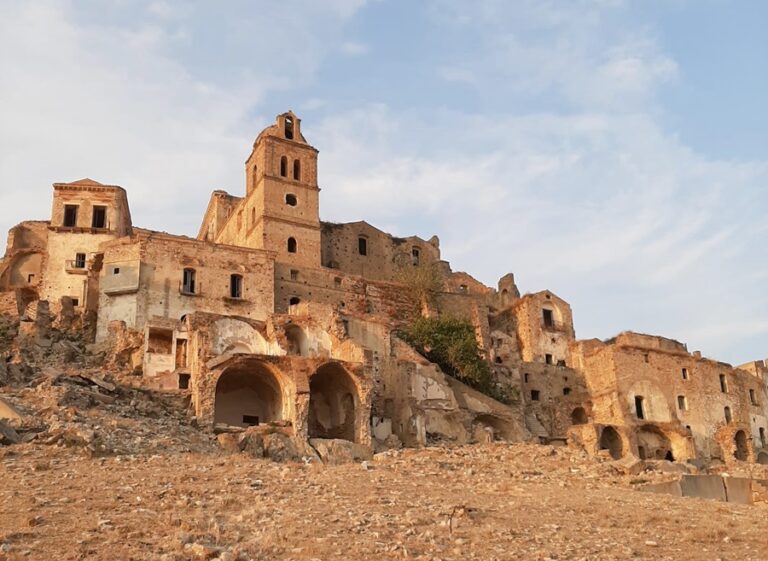
Located in the province of Matera (40°53′N 16°32′E), Craco sits atop a cliff overlooking the Basento River. Once a thriving medieval town, a series of landslides, plague, and a devastating earthquake in 1910 forced residents to evacuate. Today, the stone houses, collapsed arches, and the silent piazza create an uncanny tableau that feels like stepping onto a movie set. The visual contrast of verdant valleys against crumbling walls explains why Craco remains a magnet for filmmakers and urban explorers alike.
2. Civita di Bagnoregio, Lazio
Perched on a volcanic tuff hill in the province of Viterbo (42°44′N 12°33′E), Civita appears abandoned at first glance, especially after its resident population fell below 10 in the early 2000s. Though a few families still linger, most of the medieval houses stand empty, their shutters perpetually shut. The village’s precarious position on eroding cliffs adds a palpable sense of impermanence, turning every walk across the pedestrian bridge into a meditation on fragility and the passage of time.
3. Borgo di Pietrapelosa, Veneto
Hidden in the mountains of Belluno (46°19′N 11°58′E), Pietrapelosa was abandoned after the 1960s when younger generations migrated to urban centers. The sandstone walls still echo with the faint sounds of forgotten festivals, and the stone chapel remains intact, its frescoes faded but still visible. The remote location and well‑preserved medieval layout illustrate how isolation can both protect and doom a settlement, making the ruins a compelling study of demographic shift.
4. Montecorvino Rovella’s “Castello di Montecorvino”, Campania
Located near Salerno (40°31′N 14°49′E), the castle and adjoining village were deserted after a 1906 landslide buried several homes. The stone structures, now overgrown with ivy, give the impression of a fortified ghost town. The lingering military architecture juxtaposed with nature’s reclamation provides a stark reminder of how natural disasters can abruptly end centuries of habitation.
5. Roscigno Vecchia, Campania
In the province of Salerno (40°44′N 14°56′E), Roscigno Vecchia was evacuated in the 1960s due to seismic risk. The village’s whitewashed houses, narrow lanes, and abandoned church create an eerie silence that belies its former vibrancy. The decision to relocate residents to a newly built Roscigno illustrates the tension between preserving heritage and ensuring safety—a conflict that continues to intrigue scholars.
6. Castel del Monte, Abruzzo
Perched near L’Aquila (42°20′N 13°27′E), this fortified village was abandoned after the 2009 earthquake rendered it structurally unsafe. The stone towers and fortified walls remain, though many are cracked and sagging. Visitors report a palpable “presence” as if the very stones remember the daily lives once lived within them, highlighting humanity’s lingering imprint on architecture.
7. San Giovanni in Fiore’s “Borgo di Valle”, Calabria
Set in the province of Cosenza (39°24′N 16°12′E), the village was deserted in the 1970s when agricultural decline prompted migration. The terraced fields remain uncultivated, and the stone homes now blend into the surrounding olive groves. The juxtaposition of human abandonment against an enduring agricultural landscape underscores the fragile balance between economy and settlement.
8. Castelmagno, Piedmont
Located in the Cuneo province (44°34′N 7°00′E), Castelmagno was abandoned after World War II when the local cheese‑making industry declined. The deserted workshops and empty mountain chalet offer a striking contrast to the region’s famed culinary reputation, prompting reflection on how industry can shape, and later erase, community identity.
9. San Lorenzo di Barà, Lombardy
In the province of Brescia (45°31′N 10°31′E), this Alpine village was evacuated after a landslide in 1985. The wooden chalets, once vibrant with ski tourists, now stand silent under a blanket of snow for most of the year. The seasonal emptiness provides a chilling tableau that captivates winter photographers seeking stark, monochrome landscapes.
10. Castel di Tusa, Sicily
Near Messina (38°09′N 15°29′E), this coastal settlement was abandoned after a series of damaging earthquakes in the early 20th century. The remnants of fishermen’s huts and a collapsed harbor are slowly reclaimed by the sea, creating a haunting shoreline where nature and ruin intertwine, emblematic of Sicily’s volatile geological history.
11. Monterubiaglio, Umbria
Set in the province of Perugia (43°16′N 12°31′E), Monterubiaglio was deserted during the 1950s due to economic hardship. The village’s stone bridges and the still‑standing Romanesque church provide a rare, intact example of medieval urban planning that never evolved beyond its original layout, intriguing historians who study static settlements.
12. Pietra Ligure’s “Abandoned Fishing Village”, Liguria
Located along the Riviera di Ponente (44°18′N 8°10′E), this tiny hamlet was left empty after the 1970s when modern ports made its traditional fish traps obsolete. The rusted nets and graffiti‑covered walls tell a story of rapid modernization overtaking age‑old ways of life, making the site a compelling case study for the social impact of technological progress.