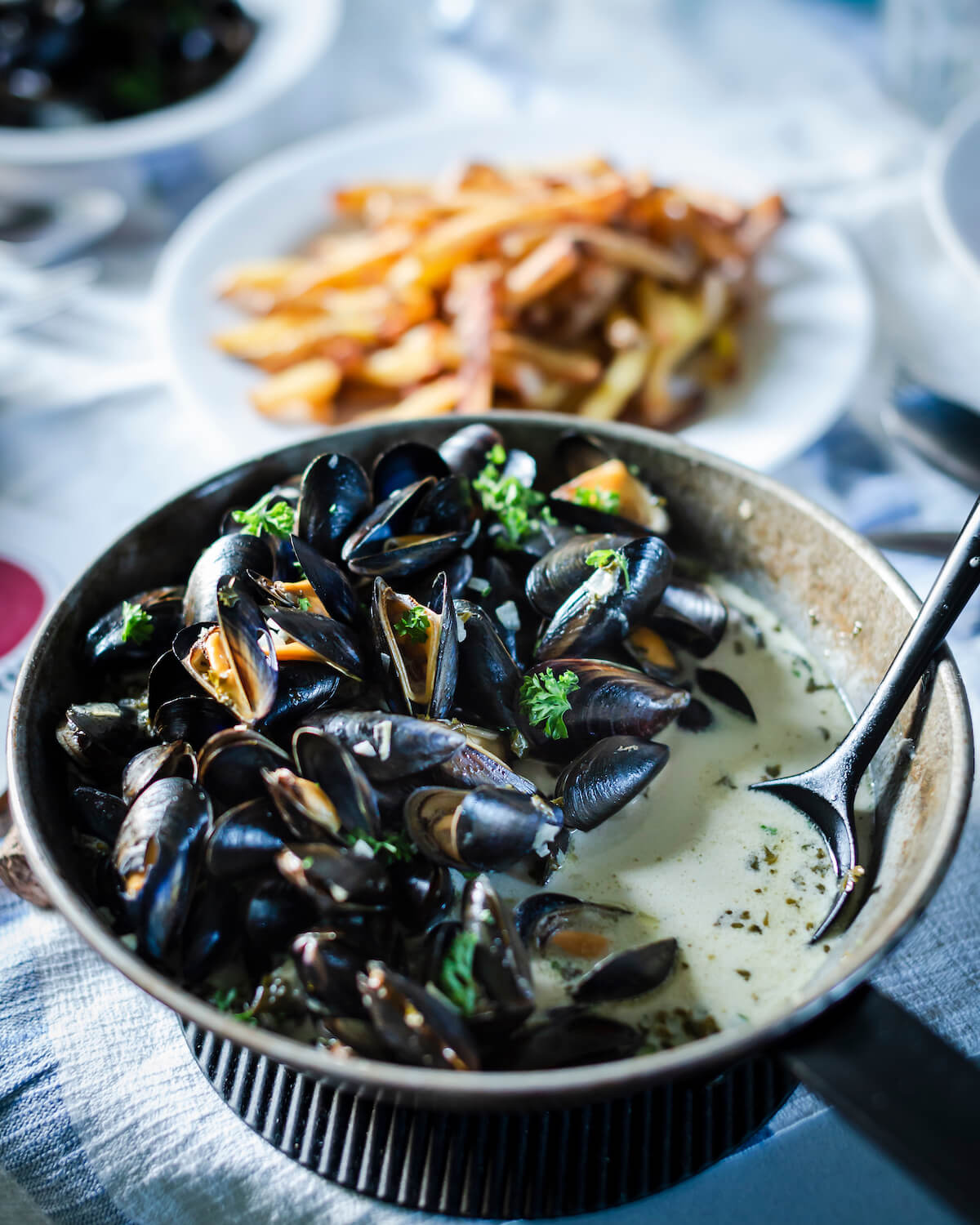
Brussels is renowned for its iconic dish of moules frites—a fragrant broth of mussels paired with crisp golden fries. While the dish is available in many restaurants, a handful of streets offer an especially immersive experience, where the aroma drifts through cobblestones and the setting amplifies the flavor. Exploring these thoroughfares not only delivers a culinary reward but also reshapes the perception of Belgian street food culture, inviting curiosity about the city’s maritime heritage and its modern urban rhythm.
1. Rue des Bouchers (Meatpacking District)
Located in the vibrant Meatpacking District, Rue des Bouchers is lined with historic eateries that have mastered the moules frites equation. The street’s industrial architecture frames an array of open kitchens, allowing diners to watch mussels simmer in garlic, white wine, and herbs before being ladled onto plates alongside freshly fished fries. The juxtaposition of the gritty surroundings with the delicate seafood encourages visitors to view the dish as a bridge between tradition and contemporary urban life.
2. Rue du Marché aux Herbes
In the heart of the historic center, Rue du Marché aux Herbes has long been a hub for market-goers and food enthusiasts. Its narrow lanes host family-run brasseries that serve moules frites using locally sourced mussels from the North Sea. The street’s name—“Herb Market”—reflects the emphasis on fresh herbs, which are hand‑chopped at each table. This direct connection to the ingredients invites diners to rethink the dish as a celebration of regional terroir rather than a simple street snack.
3. Avenue Louise
Though known for upscale boutiques, Avenue Louise also houses several high‑end bistros that reinterpret moules frites with a sophisticated twist. Here, the dish is presented on polished stone slabs, accompanied by artisanal triple‑cooked fries and a subtle seafood broth infused with truffle oil. The upscale setting challenges the notion that moules frites belong solely to humble eateries, prompting a fresh perspective on its culinary versatility.
4. Rue des Bouchers (Gaume Quarter)
The Gaume Quarter’s version of Rue des Bouchers offers a quieter, more intimate environment. Small, family‑operated taverns line the street, each guarding a secret recipe passed down through generations. The mussels are steamed in a broth of Muscat wine and local cider, while the fries are cut from heritage potatoes, twice fried for unmatched crunch. This street underscores how regional variations can transform a classic dish into a narrative of local identity.
5. Place du Jeu de Balle
Surrounded by the famous flea market, Place du Jeu de Balle buzzes with tourists and locals alike. Pop‑up stalls here serve moules frites in portable containers, making the dish a perfect companion to market browsing. The energetic atmosphere, with street musicians and vintage stalls, reframes the experience as a spontaneous culinary adventure, encouraging diners to see the dish as a mobile, communal snack.
6. Rue des Brasseurs
Craft beer enthusiasts gravitate to Rue des Brasseurs, where breweries and brasseries collaborate on moules frites pairings. Each establishment offers a house‑brewed amber ale that complements the mussel broth, while the fries are dusted with malt‑infused seasoning. The synergy of beer and seafood on this street highlights how moules frites can act as a culinary bridge between beverage culture and traditional fare.
7. Boulevard de Waterloo
Stretching toward the outskirts, Boulevard de Waterloo features large outdoor terraces that serve moules frites during warm afternoons. The open setting allows diners to enjoy the dish while observing the bustling traffic, creating a dynamic juxtaposition of fast‑moving city life and leisurely dining. This perspective encourages an appreciation of how the dish adapts to both intimate and expansive urban contexts.
8. Rue de la Montagne
Set against a backdrop of historic churches, Rue de la Montagne offers a contemplative dining experience. The street’s modest taverns use marble tables and soft lighting, inviting patrons to savor each mussel slowly. The focus on mindful consumption reframes moules frites as a dish worthy of contemplation, shifting the perception from hurried street food to a moment of quiet reflection.
9. Place Sainte-Catherine
Place Sainte-Catherine, once a fishing dock, preserves a maritime legacy in its architecture. Restaurants here source mussels directly from nearby ports, ensuring the freshest catch. The street’s open square hosts seasonal seafood festivals, where chefs demonstrate live cooking techniques. Observing the preparation transforms the dish into a performance, prompting onlookers to view moules frites as an art form rooted in tradition.
10. Rue des Pâtes (Le Plateau)
Le Plateau’s Rue des Pâtes blends creative culinary concepts with classic Belgian fare. Here, innovative chefs introduce twists such as saffron‑infused broth or sweet potato fries, challenging diners to expand their palate. The street’s avant‑garde reputation encourages a reinterpretation of moules frites, demonstrating that the dish can evolve while respecting its foundational flavors.
11. Rue de la Porte d’Anvers
Located near the historic city gate, Rue de la Porte d’Anvers offers a blend of medieval ambiance and modern gastronomy. Small bistros serve moules frites in traditional stoneware, accompanied by a side of pickled vegetables that add acidity to the richness of the broth. The setting invites consumers to imagine the dish as part of Brussels’ centuries‑old narrative, linking past to present.
12. Quai du Marché
Along the riverfront, Quai du Marché provides a scenic backdrop for moules frites. Restaurants with large windows overlook the water, allowing diners to watch boats glide by while savoring steaming mussels and golden fries. This waterfront perspective underscores the dish’s connection to maritime trade routes, encouraging a broader understanding of how geography shapes culinary heritage.