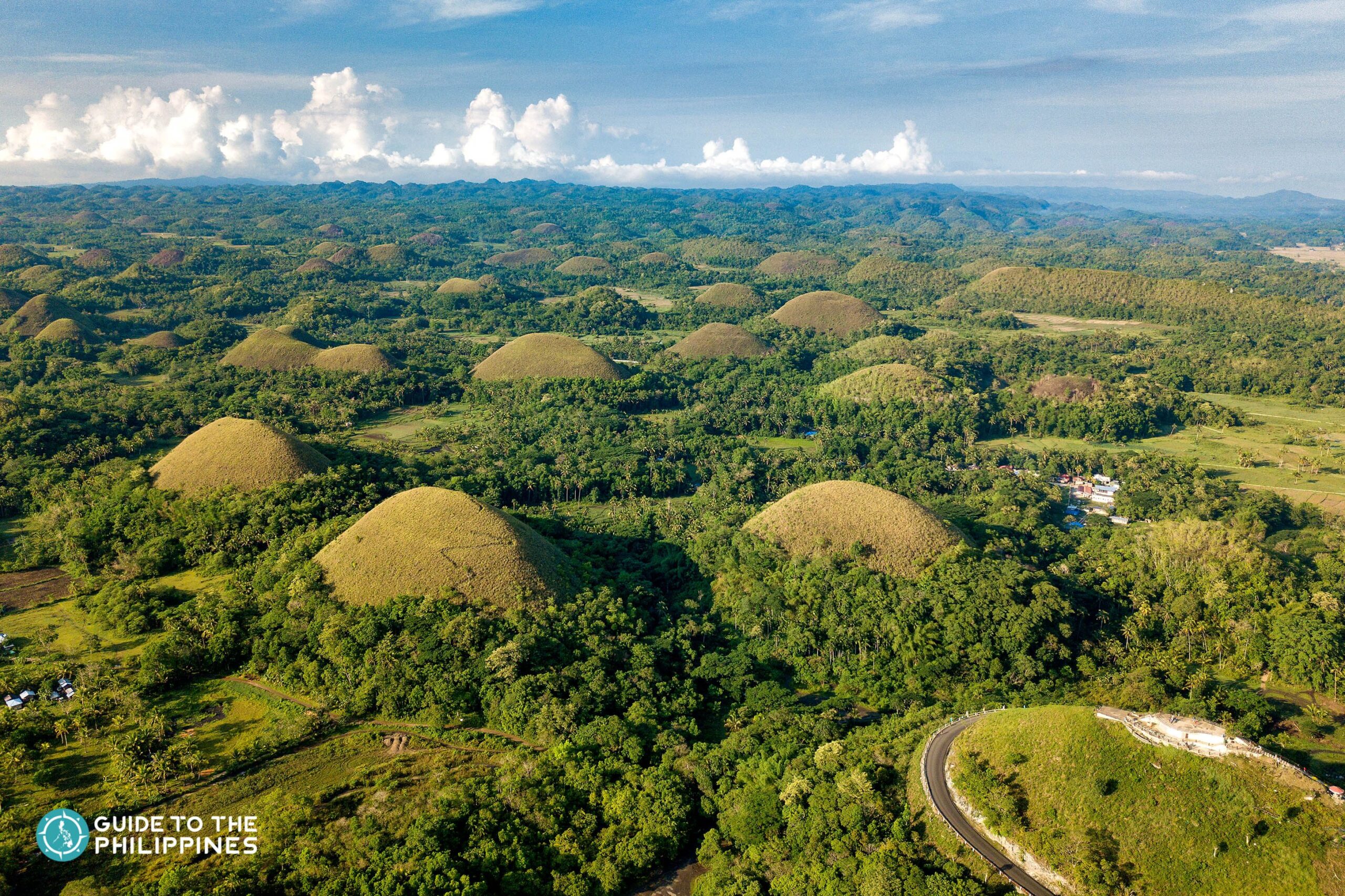
The Chocolate Hills, a striking collection of over 1,200 conical karst formations scattered across the island of Bohol, draw visitors with their unique geological allure, seasonal color changes, and cultural significance. This guide outlines the various types of content you can expect when exploring the hills, from practical travel advice to scientific insights, ensuring a comprehensive understanding of this natural wonder.
1. Geographic Overview and Location
Located in the heart of Bohol, the Chocolate Hills span the municipalities of Carmen, Batuan, and Sagbayan. The formation covers roughly 50 square kilometers, with elevations ranging from 30 to 120 meters above sea level. A brief map and coordinates are provided to help readers pinpoint the exact area and plan their route from major hubs such as Tagbilaran City and Panglao International Airport.
2. Geological Formation and Origin
The hills are the result of millions of years of limestone dissolution and erosion, forming karst topography. Geological experts explain how marine sediments, uplifted by tectonic activity, were gradually worn away, leaving behind the distinctive conical shapes. The section includes diagrams of the dissolution process and references to scientific studies for deeper exploration.
3. Seasonal Color Transformation
During the dry season, the vegetation atop the hills dries and turns a chocolate-brown hue, giving the formation its name. In the rainy season, the hills are cloaked in vibrant green. Readers receive a month-by-month guide to visual changes, helping photographers and sightseers schedule visits for the desired aesthetic.
4. Cultural and Folklore Signories
Local legends attribute the hills to giants or to the footprints of a mythical giant who counted the stones he stepped upon. This segment shares three prevalent folktales, their origins, and how they influence contemporary Boholano identity. It also highlights traditional festivals that celebrate the hills, such as the Chocolate Hills Festival held each March.
5. Visiting Logistics and Access Points
Key entry points include the Chocolate Hills Viewpoint in Carmen and the newer observation deck in Sagbayan. The article outlines road conditions, recommended transport options (rental cars, tricycles, guided tours), parking facilities, and ticket pricing. Practical tips on early-morning visits to avoid crowds are also included.
6. Guided Tour Options and Packages
Various operators offer day trips, half-day tours, and combined packages with nearby attractions like the Philippine Tarsier Sanctuary and Loboc River Cruise. Comparative tables list price ranges, inclusions (e.g., lunch, souvenir vouchers), and the level of guide expertise, allowing readers to select the option that fits their budget and interests.
7. Photography Tips and Best Angles
The hills provide compelling compositions across different times of day. Advice covers optimal lighting conditions, recommended lenses (wide-angle for panoramic shots, telephoto for close-ups of individual hills), and suggested shooting positions for the classic “hillscape” perspective. A quick reference chart lists the sunrise and sunset windows for each season.
8. Environmental Conservation Efforts
Local authorities and NGOs implement programs to protect the karst ecosystem, including reforestation, waste management, and visitor education. This portion describes ongoing projects, how tourists can contribute (e.g., using designated pathways, avoiding litter), and the impact of responsible tourism on preserving the hills for future generations.
9. Nearby Attractions and Day-Trip Extensions
Beyond the hills, Bohol offers diverse experiences such as the Panglao Island beaches, Mag-Aso Falls, and the Man-Made Forest. The article provides a suggested itinerary that pairs the Chocolate Hills with at least two other sites, complete with travel times and recommended activities.
10. Local Cuisine and Dining Recommendations
Visitors often seek a taste of Boholano fare after exploring the hills. The guide lists three popular eateries near the viewpoint—each offering regional specialties like “Boholano Lechon,” “Kinilaw,” and “Tuba” (coconut wine). Menu highlights, price ranges, and dietary options are summarized for quick reference.
11. Accommodation Options Near the Hills
From eco-lodges to mid-range hotels, accommodations cater to varied budgets. Each listing includes room types, amenities (e.g., free Wi‑Fi, breakfast), distance to the hills, and average nightly rates. A short review of guest experiences helps readers gauge comfort and service quality.
12. Safety Guidelines and Health Precautions
While the area is generally safe, occasional steep paths and loose soil require caution. The article outlines essential safety measures—wearing sturdy footwear, staying hydrated, and avoiding the hills during heavy rainstorms. Emergency contact numbers for local medical facilities and police stations are also provided.