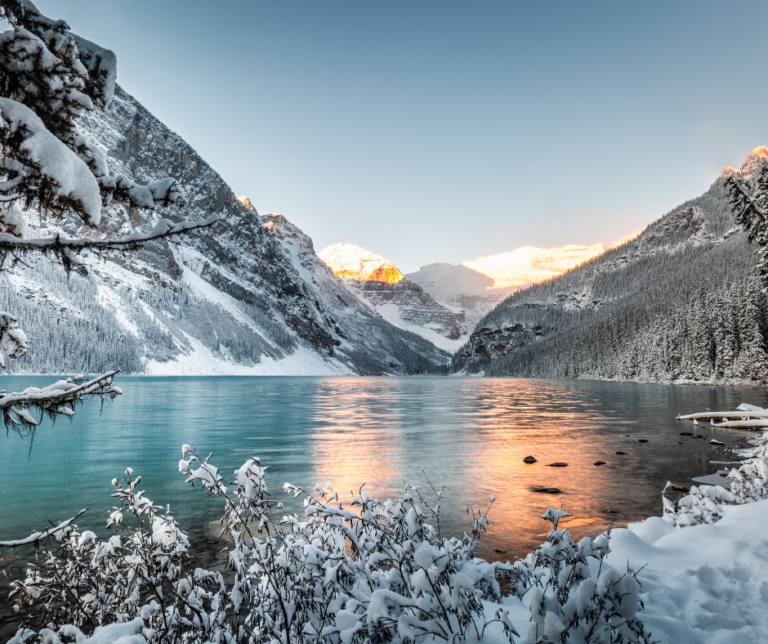
Winter’s embrace is not merely a season—it’s a cinematic canvas where the world transforms into a living diorama of frost-kissed wonder. The silver screen has long been enchanted by this time of year, weaving tales where snowflakes fall like whispered secrets and frozen landscapes become protagonists in their own right. From the eerie grandeur of the Overlook Hotel to the crystalline allure of alpine villages, these movie destinations don’t just exist; they beckon, haunting and hypnotic, like the flicker of a projector in a darkened theater. To wander their real-world counterparts in winter is to step into a story where every breath is a line of dialogue, and every snowdrift a plot twist. Here are ten such places, where the magic of cinema meets the alchemy of winter, inviting you to become part of the narrative.
The Overlook Hotel: Where Shadows Whisper in the Frost
Perched high in the Colorado Rockies, the Overlook Hotel—though fictional—echoes in the real-world grandeur of the Timberline Lodge. This timber-framed sanctuary, clinging to the slopes of Mount Hood, is a paradox: a beacon of warmth in the howling wilderness, yet a stage for the macabre. In winter, its gabled roofs sag under the weight of snow, and icicles hang like the frozen tears of Jack Torrance. The lodge’s Great Hall, with its massive stone fireplace, feels like the heart of a story still unfolding. To stand where Stanley Kubrick’s camera once prowled is to feel the chill of isolation—and the thrill of being lost in a tale where the line between reality and nightmare blurs with every gust of wind.
Arendelle: A Kingdom Carved from Ice and Light
Frozen’s Arendelle may be a fairy-tale realm, but its inspiration is rooted in the resplendent fjords of Norway. In winter, the country’s northern reaches become a kingdom of perpetual twilight, where the aurora borealis paints the sky in emerald and violet strokes. Tromsø, a city draped in snow, feels plucked from the film itself, its wooden houses glowing like lanterns against the endless night. The Lyngen Alps, jagged and white, mirror Elsa’s ice palace, while the fjords—silent and glassy—reflect a world untouched by time. Here, winter isn’t just a season; it’s a coronation, where the earth itself dons a crown of frost.
The Shining’s Colorado: A Descent into Winter’s Labyrinth
Kubrick’s The Shining turned the Stanley Hotel in Estes Park into a symbol of creeping dread. But the true horror—and beauty—lies beyond its doors, in the surrounding wilderness. Winter in Colorado’s Rocky Mountain National Park is a descent into a labyrinth of ice and silence. Trail Ridge Road, a high-altitude thoroughfare, becomes a ribbon of white, winding through forests where elk move like ghosts and the wind howls like the ghosts of the Overlook’s past. The park’s frozen lakes, still and reflective, hold secrets beneath their surfaces, while the alpine tundra, a stark and barren plain, feels like the final frontier of sanity. To traverse it is to understand why Jack Torrance lost his mind—because winter here doesn’t just test you; it reshapes you.
Narnia’s Lantern Waste: Where Winter Never Melts
The Chronicles of Narnia’s eternal winter, ruled by the White Witch, finds its echo in the Swiss Alps. The Jungfrau region, with its glaciers and peaks, is a landscape so pristine it feels untouched by human hands. In winter, the Lauterbrunnen Valley becomes a frozen cathedral, its cliffs dusted with snow like the pages of a fairy tale. The Staubbach Falls, a veil of ice in the coldest months, hangs suspended in time. Here, the air is so crisp it stings, and the silence is so profound it’s as if the world itself is holding its breath. To walk these paths is to step into Narnia—not as a visitor, but as a traveler who has crossed through the wardrobe and into a winter that never ends.
Hobbiton in the Snow: A Cozy Escape from the Cold
New Zealand’s Hobbiton is a place of eternal summer in the films, but in reality, the North Island’s winter transforms it into a storybook village dusted with snow. The rolling hills of the Alexander Farm, usually emerald, take on a muted silver hue, while the Party Tree stands sentinel over a world that feels plucked from a Dickensian Christmas card. The thatched roofs of the hobbit holes, laden with frost, seem to hum with the warmth of a hearth fire. To wander these paths in winter is to experience Middle-earth as it might have been in the Shire’s earliest days—a place where time moves slowly, and every meal is a feast, every gathering a celebration. The contrast between the film’s lush greenery and the real-world chill is a reminder that even in the coldest seasons, there’s magic in the mundane.
The Ice Planet Hoth: A Wasteland of Frozen Fury
George Lucas’s Hoth, the frozen battleground of The Empire Strikes Back, is brought to life in the Northern Cape of South Africa. The Karoo Desert, with its stark, rocky plains, becomes a stand-in for the ice planet’s desolate beauty. In winter, the landscape is a monochrome dreamscape, where the sun casts long, skeletal shadows and the wind carries the echoes of AT-AT walkers. The starkness is breathtaking—a place where survival is a daily challenge, and the cold is a constant companion. To stand here is to feel the isolation of Luke Skywalker’s exile, to understand why the Rebel Alliance chose this unforgiving terrain as their last stand. It’s a reminder that even in the harshest environments, there’s a strange allure to the unyielding.
Prague in the Snow: A Gothic Fairy Tale Reborn
No winter destination feels more like a gothic novel come to life than Prague. The city’s Baroque spires, dusted with snow, pierce the winter sky like the quills of a sleeping dragon. The Charles Bridge, usually teeming with tourists, becomes a haunting promenade where the statues of saints watch over the frozen Vltava River. The Old Town Square, with its astronomical clock, feels like the stage for a macabre ballet, where the past and present collide in a swirl of frost and candlelight. Winter in Prague is a slow dance with history, where every cobblestone whispers tales of alchemists, kings, and lovers lost to time. To wander its streets is to become a character in a dark fairy tale—one where the ending is always uncertain, but the beauty is undeniable.
The Alps of The Grand Budapest Hotel: A Pastel Dream in Frost
Wes Anderson’s The Grand Budapest Hotel is a symphony of pastel colors and meticulous symmetry, and its Alpine setting finds its real-world counterpart in the Tyrolean Alps. The region’s ski resorts, like Kitzbühel and Innsbruck, are postcard-perfect in winter, their chalets adorned with twinkling lights and their slopes groomed to perfection. The snow here is so pristine it looks like powdered sugar, and the air so crisp it could shatter glass. To ski these mountains is to move through a Wes Anderson film—every turn a carefully composed shot, every lodge a miniature palace of indulgence. The contrast between the film’s whimsical aesthetic and the raw, untamed beauty of the Alps is a reminder that winter can be both a playground and a masterpiece.
Conclusion: The Alchemy of Winter and Cinema
These destinations are more than just backdrops; they are characters in their own right, shaping the stories that unfold within their frozen borders. Winter, with its stark beauty and unrelenting chill, has a way of stripping away the superficial, leaving only the essence of a place—and the essence of ourselves. To visit them is to engage in a silent dialogue with the films that inspired them, to walk the same paths as heroes and villains alike, and to emerge, somehow, transformed. Whether you seek the eerie solitude of the Overlook, the regal splendor of Arendelle, or the gothic allure of Prague, winter’s cinematic destinations offer a journey not just through space, but through time—a chance to live inside the frame of a story, if only for a little while.