There’s something hauntingly magnetic about horror movie filming locations—the way they linger in the mind long after the credits roll. These places aren’t just backdrops; they are silent witnesses to cinematic terror, where fiction and reality blur into an eerie symbiosis. From the snow-laden terror of *The Shining* to the demonic whispers of *The Exorcist*, these real-life houses and buildings have become pilgrimage sites for horror enthusiasts, each holding a story darker than fiction. Stepping into these spaces is like walking through a portal into the nightmares that once terrified millions. Let’s explore twelve of the most chilling filming locations where horror came to life.
The Overlook Hotel: Where Kubrick’s Nightmare Still Lingers
The Overlook Hotel isn’t just a set—it’s a character in *The Shining*, a labyrinthine beast that devours sanity. The Timberline Lodge in Oregon, with its towering wooden beams and sweeping mountain views, served as the exterior, while the interiors were painstakingly recreated at Elstree Studios in England. Yet, the real magic lies in the hotel’s atmosphere. The winding corridors, the blood-red elevators, the ghostly whispers in the Gold Room—all feel eerily plausible here. Walking the same steps as Jack Torrance is to confront the fragility of the human mind against the weight of isolation. The Overlook doesn’t just exist; it breathes, and it remembers.
The Exorcist’s Georgetown: Where Demons Walk Among Us
Georgetown, Washington D.C., is a neighborhood of stately brownstones and cobblestone streets, but beneath its genteel exterior lies the birthplace of one of horror’s most infamous scenes. The 1973 film *The Exorcist* used a quiet, tree-lined street in Georgetown as the home of Regan MacNeil, where a mother’s love clashed with something far more sinister. The house at 3600 Prospect Street became a symbol of violated innocence, its windows dark with the weight of possession. Today, visitors report an unshakable sense of dread near the property, as if the air itself is thick with the memory of blasphemous whispers. Georgetown doesn’t just host a horror story—it hosts a curse.
The Conjuring’s Perron Farmhouse: A Gateway to the Unknown
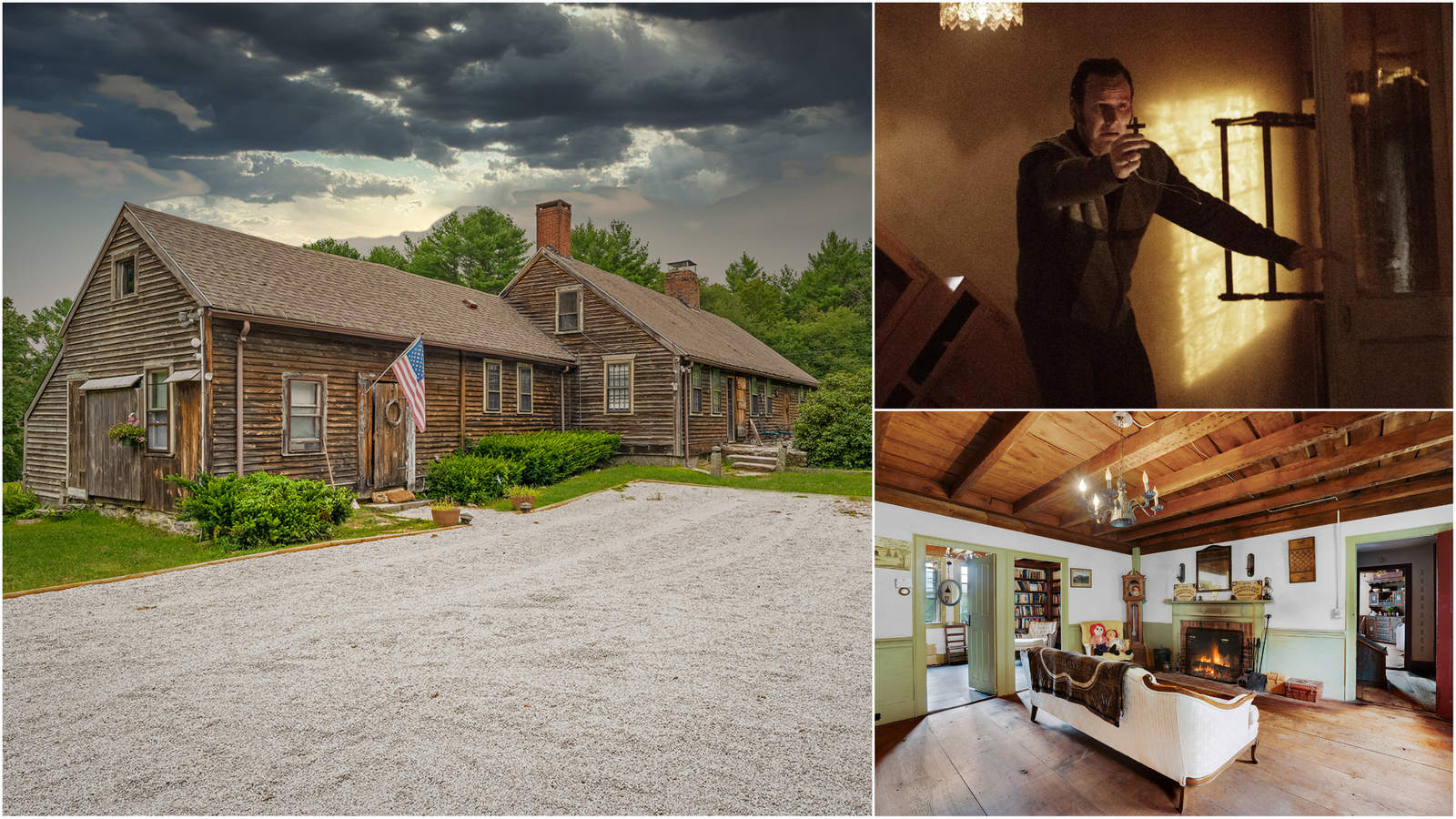
The Perron family farmhouse in Harrisville, Rhode Island, is where *The Conjuring* unfolded, a place where the veil between worlds grew thin. This 200-year-old farmhouse, with its creaking floors and drafty windows, became a crucible of supernatural terror. The Perrons reported decades of unexplained phenomena—objects moving, voices calling from empty rooms—long before Hollywood arrived. The film amplified these whispers, turning the farmhouse into a modern-day haunted house where every shadow feels like a watcher. Standing in its sagging porch, one can almost hear the faint echo of Lorraine Warren’s voice: *Something is here.*
The Amityville House: A House That Should Not Exist
No horror location is as infamous—or as controversial—as the Amityville house in Long Island, New York. The 1979 film *The Amityville Horror* turned this Dutch Colonial home into a symbol of familial unraveling, where a house that “kills” its inhabitants became the stuff of legend. The real-life Lutz family fled the home after just 28 days, citing paranormal activity so intense it defied explanation. Today, the house remains a magnet for thrill-seekers and skeptics alike, its blacked-out windows a silent challenge to those who dare to look. Is it a hoax? A mass hallucination? Or does the house itself harbor a malevolence that lingers like a stain? The Amityville house doesn’t just stand—it endures.
The Bates Motel: A Relic of Psycho’s Madness
No location in horror is as iconic—or as unsettling—as the Bates Motel in *Psycho*. While the exterior was a meticulously crafted set, the spirit of the motel lives on in the actual Skirball Cultural Center in Los Angeles, where the famous shower scene was filmed. The motel’s neon sign, flickering in the night, feels like a beacon for the lost and the doomed. Norman Bates’ mother’s voice still seems to echo through the halls, and the peep holes in the walls feel like eyes watching from the dark. The Bates Motel isn’t just a place—it’s a psychological wound, a reminder that evil often wears the mask of the mundane.
The Haunting of Hill House: A Mansion That Breathes
Edith Wharton’s novel *The Haunting of Hill House* found new life in Netflix’s 2018 adaptation, but the Hill House itself is a real place—a sprawling Victorian mansion in Eureka, California, that has stood vacant for decades. Its peeling wallpaper, sagging floors, and labyrinthine layout make it the perfect vessel for terror. The house doesn’t just decay; it *watches*. Visitors describe an oppressive weight in the air, as if the house itself is holding its breath, waiting for the next soul to wander into its grasp. Hill House isn’t haunted—it’s *hungry*.
The Texas Chainsaw Massacre House: Where the Saw Still Screams
In rural Texas, a dilapidated farmhouse stands as a grim monument to *The Texas Chainsaw Massacre*. This is where Leatherface and his cannibal family wreaked havoc, a place where the stench of decay lingers in the air. The house, now boarded up and fenced off, is a relic of raw, unfiltered terror. It’s not just a set—it’s a crime scene. The Texas Chainsaw Massacre House doesn’t just exist; it *endures*, a reminder that horror isn’t always supernatural—sometimes, it’s just human nature at its most monstrous.
The Shining’s Room 237: A Door That Should Never Be Opened
Room 237 in *The Shining* is more than a room—it’s a portal to the unknown. While the exterior was filmed at the Timberline Lodge, the interior was a set, yet the idea of the room persists. The Overlook Hotel’s Room 237 is where Jack Torrance confronts his darkest desires, where a woman’s ghostly embrace turns into something far more sinister. The room doesn’t just exist in the film—it exists in the collective nightmare of horror fans. Knocking on that door feels like inviting something in.
The Exorcist Stairs: Where Gravity Bends to Evil
The infamous Exorcist stairs in Washington D.C. are where Father Karras meets his fate, plummeting to his death in a moment of divine desperation. These steps, now a pilgrimage site for horror fans, are deceptively ordinary—just a flight of concrete leading up to a church. But the energy here is anything but. Visitors report a sudden, inexplicable dread, as if the air itself is resisting their presence. The Exorcist stairs don’t just lead upward—they lead into the abyss.
The Conjuring’s Occult Museum: Where Objects Remember
The Warrens’ Occult Museum in Connecticut is a real place, a repository of cursed artifacts that inspired *The Conjuring* universe. The museum’s collection—including the infamous “Dolly” doll and the haunted Raggedy Ann—feels like a graveyard of forgotten horrors. Each object hums with a quiet malevolence, as if it’s waiting for the right person to pick it up. The Occult Museum isn’t just a museum—it’s a warning.
The Stanley Hotel: Where Stephen King Found His Muse
Perched in the Rocky Mountains, the Stanley Hotel in Colorado is where Stephen King stayed—and where he found the inspiration for *The Shining*. The hotel’s grand staircase, its eerie silence, and the feeling of being watched all contributed to King’s masterpiece. Today, the Stanley offers ghost tours, where guests report sudden temperature drops and the sensation of unseen presences. The Stanley Hotel isn’t just a hotel—it’s a muse for nightmares.
The House of the Devil: A Suburban Nightmare
*The House of the Devil* (2009) turned a seemingly ordinary suburban home into a vessel for satanic terror. The house, located in Rhode Island, is unassuming from the outside—just another cookie-cutter home in a quiet neighborhood. But inside, the walls seem to pulse with dread. The film’s slow-burn horror relies on the uncanny, the way the familiar becomes terrifying. This house doesn’t just stand—it *watches*.