Spending just three hours inside the British Museum forces you to be selective, yet the museum’s layout lends itself to a focused itinerary that still feels comprehensive. By concentrating on a curated set of galleries, you can witness the arc of human creativity, confront cultural assumptions, and leave with a sharpened curiosity about the stories behind each artifact. The rooms listed below are chosen for their visual impact, historical significance, and ability to shift perspective in a short visit.
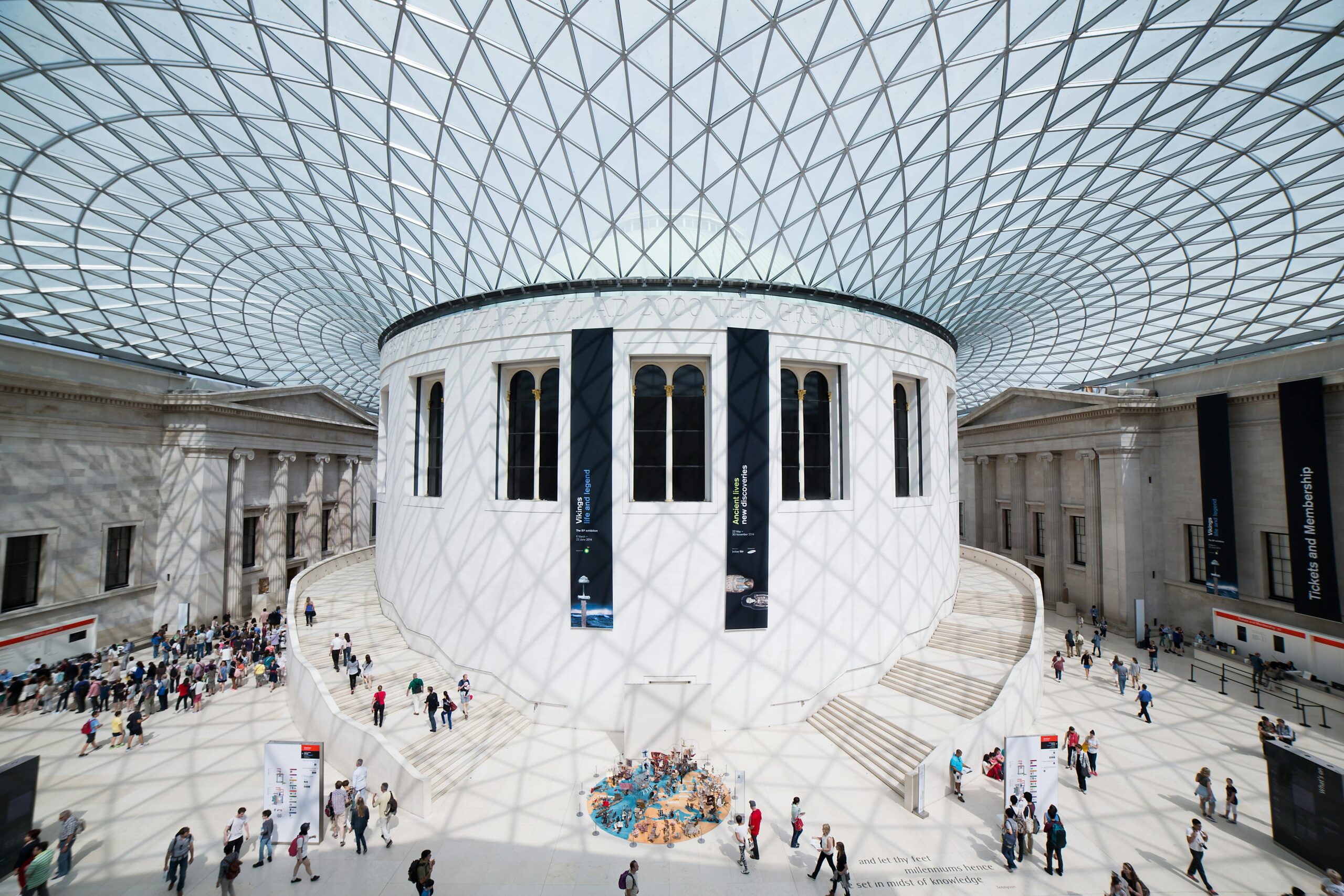
1. The Great Court – The Atrium of Light
This soaring glass-roofed space serves as the museum’s central hub, blending modern engineering with Victorian ambition. From the floor, you can trace the museum’s layout and observe the rhythmic flow of visitors, a living illustration of how countless cultures intersect under a single roof. The Great Court also houses the iconic Reading Room, a quiet sanctuary where scholars once pored over rare manuscripts, reminding you that the museum is as much a place of study as it is of display.
2. The Rosetta Stone (Room 4)
Standing before the Rosetta Stone, you confront the very key that unlocked ancient Egyptian hieroglyphs. The stone’s three scripts—Greek, Demotic, and hieroglyphic—serve as a visual metaphor for translation’s power to bridge epochs. This artifact challenges the assumption that language is static, illustrating how a single object can reshape entire fields of knowledge.
3. The Elgin Marbles (Room 1)
These marble sculptures from the Parthenon confront you with the complexities of cultural heritage and repatriation debates. Their graceful forms embody the ideals of classical antiquity, while their presence in London invites contemplation of colonial histories and the evolving ethics of museum collections.
4. The Egyptian Mummy Theatre (Room 62)
Here, a row of embalmed bodies and elaborate sarcophagi reveals the ancient Egyptian obsession with the afterlife. The theatrical arrangement—complete with painted wooden coffins and shabti figures—demonstrates how ritual, art, and belief intertwine, prompting questions about how societies manage mortality.
5. The Lewis Chessmen (Room 40)
These intricately carved 12th‑century chess pieces, made from walrus ivory, are more than game pieces; they are windows into medieval Norse culture. Their expressive faces and varied postures suggest a society that prized craftsmanship and storytelling, encouraging you to reassess the cultural reach of the Viking Age.
6. The Assyrian Lion Hunt Reliefs (Room 6)
Carved in alabaster, these colossal reliefs depict an aristocratic hunter’s pursuit of lions across the ancient Near East. The dynamism of the scenes—thrashing beasts, archers in motion, and towering lions—underscores the political propaganda of Assyrian kings, illuminating how art served as an instrument of power.
7. The Benin Bronzes (Room 25)
These bronze plaques, once part of royal palace walls in present‑day Nigeria, illustrate the sophisticated metalworking and narrative tradition of the Benin Kingdom. Their displacement during the 19th‑century punitive expedition raises vital questions about cultural restitution and the ethics of collecting.
8. The Sutton Hoo Ship Burial (Room 41)
Although the original ship is missing, the accompanying artifacts—gold helmets, ornate belts, and intricately carved silver—evoke a world of early medieval England where power was expressed through material splendor. The exhibit invites you to imagine the ritual significance of burial and the construction of identity.
9. The Chinese Ceramics Gallery (Room 33)
Spanning several dynasties, the collection showcases porcelain ranging from the translucent “celadon” of the Song dynasty to the bold cobalt blues of the Qing. Each piece is a testament to technological innovation and the global trade routes that transmitted aesthetic ideals across continents.
10. The African Art Gallery (Room 24)
This space brings together sculptures, masks, and textiles from across sub‑Saharan Africa, challenging the stereotype of “tribal art” as static. The displayed works highlight dynamic cultural exchange, religious symbolism, and the modern reinterpretation of traditional forms, urging a re‑evaluation of Africa’s artistic legacy.
11. The Enlightenment Gallery (Room 2)
Located in the former King’s Library, this room houses scientific instruments, natural history specimens, and early printed books. The eclectic mix underscores the 18th‑century belief in universal knowledge and the museum’s original mission to educate the public, prompting reflection on how the definition of “knowledge” has evolved.
12. The Contemporary Installations (Room 90)
Rounding out the tour, this ever‑changing space hosts modern artworks that dialogue with the museum’s historic collections. Whether a video installation responding to the Rosetta Stone or a sculpture echoing the form of the Lewis Chessmen, these pieces invite you to consider how past and present continually converse.