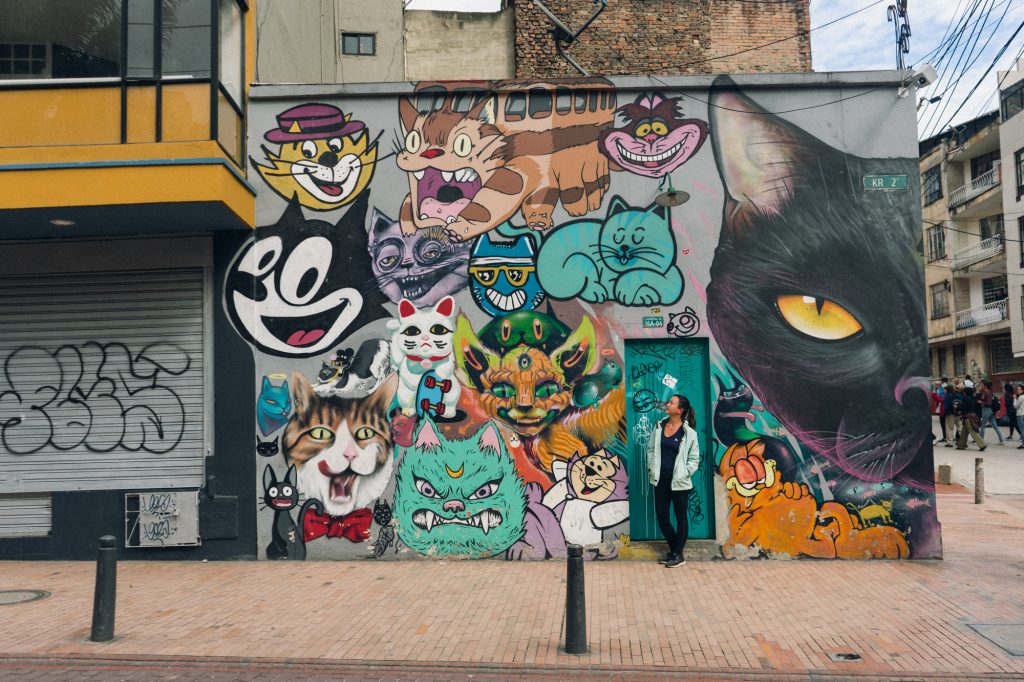
Bogotá’s streets whisper stories in color, and its hidden alleys serve as canvases where urban life meets artistic rebellion. A free walking tour through these vibrant corridors offers more than sightseeing—it is a journey through the city’s collective imagination, each mural a visual stanza in a sprawling poem. Below is a curated list of the most compelling wall‑art alleys, organized for self‑guided exploration. Follow the numbered headings, step into the alleys, and let the streets speak.
1. La Candelaria’s Calle del Embudo
Stretching between Carrera 4 and Carrera 5, this narrow lane is a river of pigment that channels Bogotá’s colonial past into contemporary narratives. The dominant mural, “The River of Time,” uses flowing brushstrokes to depict the city’s evolution, inviting walkers to picture themselves as droplets moving through history.
2. Street of the Forgotten Books (Calle de los Libros Perdidos)
Located off Avenida Jiménez, the alley’s walls are adorned with oversized, torn book pages floating in mid‑air. Each page features handwritten verses in Spanish and English, creating a dialogue between forgotten stories and the modern passerby. The visual metaphor of suspended literature underscores Bogotá’s reputation as a city of readers.
3. The Neon Jungle (Selva de Neón)
Hidden behind the Plaza de Bolívar’s municipal building, this alley bursts with fluorescent flora and fauna rendered in neon paint. The glowing vines twist around brick, suggesting the city’s nocturnal pulse. The effect is both a literal and figurative illumination of Bogotá’s nightlife.
4. Alley of the Broken Mirrors (Callejón de los Espejos Rotos)
Between Calle 24 and 25, fragmented mirror shards are embedded into mural surfaces, reflecting fragments of the street and its visitors. The broken reflections symbolize the multiplicity of identities that coexist in the capital, making each glance a personal experience.
5. Graffiti Garden (Jardín de Graffitis)
On the outskirts of the Universidad Nacional campus, a series of murals blend botanical motifs with urban tags. Vines sprout from aerosol cans, and flowers bloom from stenciled outlines, portraying nature’s resilience amidst concrete. The garden’s layout functions as an open‑air gallery curated by the city’s own residents.
6. The Whispering Walls (Muros Susurrantes)
Found near the Teatro Mayor, this alley features subtle, tonal paintings that change appearance with the angle of sunlight. At sunrise, the walls whisper pastel hues; at dusk, they deepen into bold, assertive colors. The transition mirrors Bogotá’s shifting moods throughout the day.
7. The Clockwork Corridor (Corredor Relojero)
Situated off Carrera 7, the alley’s theme revolves around timepieces—gears, clocks, and hourglasses rendered in intricate detail. Each mural is a reminder that while the city moves forward, it remains anchored in moments of collective memory.
8. Alley of the Flying Masks (Calle de las Máscaras Voladoras)
Along the route of Avenida El Dorado, oversized masks appear to soar off the walls, their eyes tracking pedestrians. The masks draw from Colombia’s carnival tradition, inviting visitors to consider the personas they wear in everyday life.
9. The Mosaic Mirage (Espejismo de Mosaico)
Near the Centro Comercial Andino, this alley employs tiny colored tiles to assemble larger images that appear abstract from a distance yet resolve into recognizable scenes up close. The technique plays with perception, much like Bogotá’s own layered cultural landscape.
10. The Silent Symphony (Sinfonía Silenciosa)
Located beside the Metropolitan Cathedral, murals depict musical notes that cascade down brick façades as if caught in mid‑air. Though the alley is quiet, the visual composition suggests an unheard melody, echoing Bogotá’s rich musical heritage.
11. The Memory Lane (Calle de la Memoria)
This alley preserves a series of monochrome portraits of Bogotá’s historic figures, each rendered with charcoal textures that fade toward the edges. The gradual dissolution evokes the fading recollection of the past, urging visitors to pause and reflect.
12. The Dreamscape Tunnel (Túnel del Sueño)
At the far end of Calle 57, a tunneled passageway is lined with surreal landscapes—floating islands, colossal eyes, and towering trees. The dream‑like quality serves as a metaphor for the city’s aspirations, inviting travelers to imagine Bogotá’s future as they walk beneath the imagined sky.