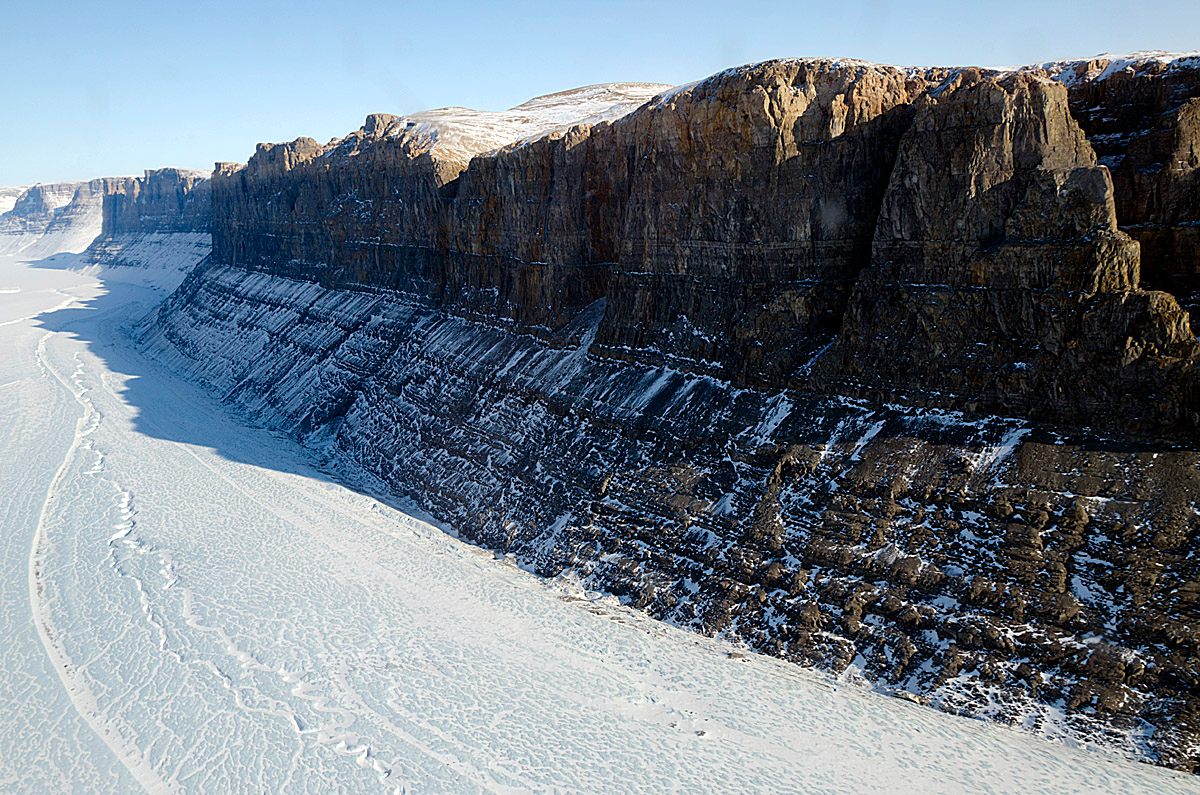
The expansive, ice‑scoured valleys of Greenland’s “Grand Canyon of the Arctic” offer a counter‑intuitive vision of what a canyon can be. Carved by ancient glacial meltwaters and still being reshaped by today’s climate, this remote landscape forces travelers to rethink the classic image of sun‑baked canyon walls. The sheer scale, stark contrasts, and silent beauty of these Arctic gorges invite curiosity and reshape expectations about the natural world’s extremes.
1. Geological Foundations: A 2‑Million‑Year Story
Unlike its desert counterparts, the Arctic canyon was formed primarily by glacial erosion during the Pleistocene. Repeated advances and retreats of the ice sheet gouged deep troughs into bedrock, leaving steep, U‑shaped walls that now stretch for over 150 kilometers. Fossilized marine sediments embedded in the cliffs reveal that these rocks were once seabed, adding a marine chapter to the canyon’s geological narrative.
2. Ice‑Clad Walls: A Palette of Light and Shadow
Seasonal meltwater creates a dynamic surface on the canyon walls, where turquoise melt streams cascade over frozen cliffs in summer and form towering icicles in winter. The interplay of sunlight with the reflective ice amplifies visual contrast, offering photographers a constantly shifting canvas that highlights the canyon’s three‑dimensional depth.
3. Remote Accessibility: Journey by Icebreaker
Reaching the canyon requires a multi‑day voyage aboard an ice‑strengthened vessel from Reykjavik or Nuuk. Navigation through sea ice, calving glaciers, and foggy bays adds an element of adventure, underscoring the canyon’s isolation and reinforcing the sense that this landscape is preserved for the intrepid and the inquisitive.
4. Climate Change Lens: A Living Laboratory
The canyon functions as a natural observatory for climatologists. Rapid glacial retreat, permafrost thaw, and shifting vegetation zones are documented in real time, offering scientists—and visitors—a tangible illustration of global warming’s impact on high‑latitude terrains.
5. Indigenous Connections: Echoes of Inuit Lore
For centuries, Inuit communities have navigated the canyon’s periphery, embedding it within oral histories that describe the “valley of the frozen river.” These stories provide a cultural dimension that enriches the visitor’s perspective, tying human experience to the stark geography.
6. Biodiversity Hotspot: Life Against the Odds
Despite the harsh climate, the canyon supports a surprising array of life. Arctic foxes, musk oxen, and resilient lichens cling to rock faces, while seabirds nest on cliff ledges during the brief summer. The presence of these species illustrates adaptation strategies that challenge conventional assumptions about Arctic ecosystems.
7. Glacial Hydrology: The Hidden Waterways
Underground melt channels carve tunnels beneath the canyon floor, occasionally surfacing as bubbling springs that feed turquoise pools. These hidden waterways influence sediment transport and create microhabitats, offering researchers a chance to study subglacial hydrodynamics in situ.
8. Photographic Opportunities: The Midnight Sun Effect
During the Arctic summer, the canyon experiences continuous daylight. The low‑angle sun casts elongated shadows, accentuating the canyon’s depth and providing unique lighting conditions that differ from the harsh noon light typical of desert canyons.
9. Seasonal Transformations: From Verdant to White
In late spring, alpine flora briefly blankets the canyon’s base, adding muted greens to the landscape. By early winter, the same area is cloaked in pristine snow, erasing visible traces of the previous season and emphasizing the canyon’s cyclical rebirth.
10. Scientific Expeditions: A Hub for Multidisciplinary Research
Geologists, glaciologists, and biologists regularly collaborate in field camps set up along the canyon rim. The site’s accessibility to multiple scientific disciplines makes it a focal point for interdisciplinary studies, fostering a deeper understanding of Earth’s polar processes.
11. Safety Considerations: Respecting an Untamed Environment
Unpredictable weather, crevasses hidden beneath fresh snow, and rapidly shifting ice conditions demand rigorous preparation. Visitors are advised to travel with experienced guides, carry satellite communication devices, and adhere to local regulations that protect both people and the fragile ecosystem.
12. Sustainable Tourism: Preserving Curiosity for Future Generations
Tour operators now implement low‑impact practices, such as limiting group sizes, using electric generators for camp power, and enforcing strict waste management protocols. These measures ensure that the canyon’s allure remains intact, allowing future explorers to experience the same perspective‑shifting wonder.