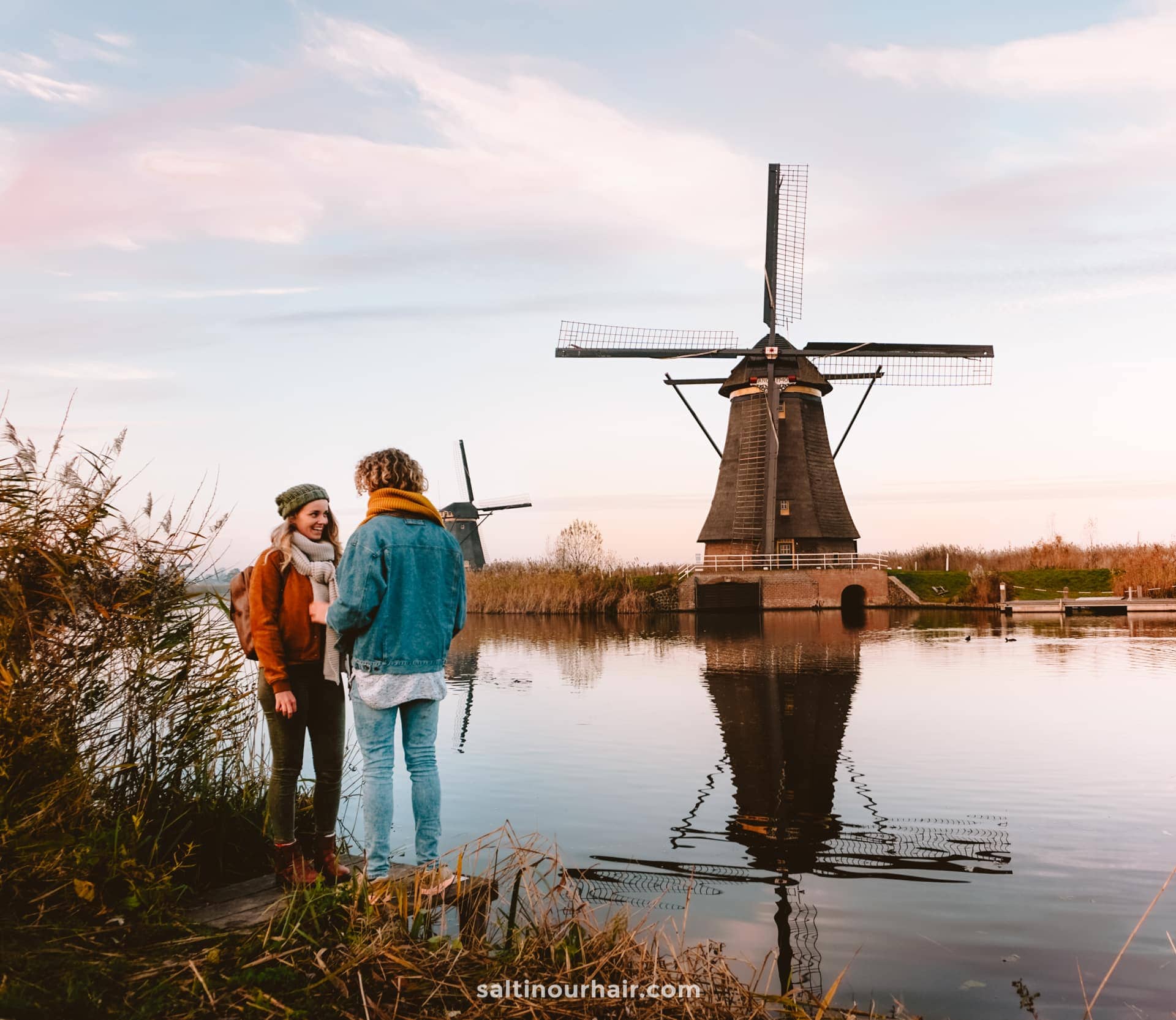
The Netherlands is a landscape stitched together by the graceful turning of sails, each windmill a silent sentinel that whispers stories of engineering prowess and cultural resilience. While Kinderdijk dominates travelers’ imaginations, a dozen lesser‑known giants spin their own narratives across the country. Below are seven windmills that stand apart—each a metaphorical compass pointing toward a distinct facet of Dutch heritage.
1. De Gooyer – Amsterdam’s Urban Beacon
Rising from the heart of Amsterdam’s vibrant De Pijp district, De Gooyer is a towering stone‑clad windmill that resembles an anchor dropped into a sea of modernity. Constructed in 1725, it once ground grain for a bustling city market. Today, the mill’s robust gears have been repurposed into a thriving brewery, where the scent of malt dances with the faint echo of turning sails. Visitors can climb the narrow staircase to a panoramic terrace, gaining a bird’s‑eye view of canals and skyscrapers—a reminder that tradition can coexist with progress.
2. De Valk – Haarlem’s Crown Jewels
De Valk, meaning “The Falcon,” perches atop the historic town of Haarlem like a regal bird surveying its domain. Erected in 1749, this wood‑framed mill once served as a grain mill and later a sawmill, its blades adapting to the wind’s whims. The mill’s interior boasts original Dutch oak machinery, allowing guests to witness the precise choreography of gears and shafts. At sunset, the sails glide against a crimson sky, casting long shadows that mimic the falcon’s swoop—symbolizing the enduring spirit of Dutch ingenuity.
3. Windlust – The Romantic Rebellion of Wieringermeer
Set against the reclaimed polder of Wieringermeer, Windlust (meaning “Wind Desire”) stands as a romantic rebellion against the flat, ordered lines of the surrounding farmland. Built in 1852, this smock‑type windmill once pumped water from the low‑lying fields, safeguarding the land from the sea’s relentless advance. Its white-painted body and bright blue cap contrast sharply with the golden wheat, evoking a painter’s brushstroke that captures the tension between nature’s force and human determination.
4. De Grote Geert – The Quiet Sentinel of Groningen
De Grote Geert, translating to “The Great Gertrude,” anchors the northern province of Groningen like a steadfast lighthouse. Constructed in 1860, this tower mill originally ground rye for local bakers, its massive stone base echoing the resilience of the region’s agricultural heritage. The interior exhibits a rare intact brake wheel, allowing visitors to grasp the mechanical poetry that once transformed wind into flour. Its quiet presence amidst rolling dunes reminds travelers that power often resides in subtle endurance.
5. De Kat – Utrecht’s Whimsical Cat
De Kat—named after the Dutch word for “cat”—sits in the scenic village of Wijk bij Duurstede, a place where the river Rijn folds around a historic bridge. Built in 1687, this post mill humorously mimics a feline’s agility, its rotating cap swiveling to catch the most favorable gusts. The mill’s interior houses a collection of ancient Dutch millstones, each bearing the grainy imprint of centuries of flour. When the wind sighs, the sails flutter like a cat’s tail, offering a playful metaphor for the balance of grace and industry.
6. De Nijverheid – The Industrious Engine of Enkhuizen
In the storied port town of Enkhuizen, De Nijverheid (meaning “The Industry”) stands as a testament to the Netherlands’ golden age of trade. Constructed in 1736, this smock mill originally functioned as a malt mill, feeding the breweries that fueled maritime voyages. Its imposing brick base and ornate ironwork reflect the wealth of a city that once rivaled Amsterdam in commerce. Today, guided tours reveal the mill’s intricate gear trains, each component a cog in the larger machinery of Dutch global influence.
7. De Vriendschap – The Friendship Bridge of Texel
Located on the island of Texel, De Vriendschap (or “The Friendship”) spans the Atlantic breezes like a hand extended across the water. Built in 1911, this “hollow post” windmill was designed to grind corn for the island’s modest farming community. Its modest size belies a profound purpose: the mill’s sails have historically served as a signal to fishing boats, urging them toward safe harbor. Visitors can climb to the upper deck and hear the wind whisper through the timber—an auditory reminder that collaboration, like wind, can be harnessed for collective good.