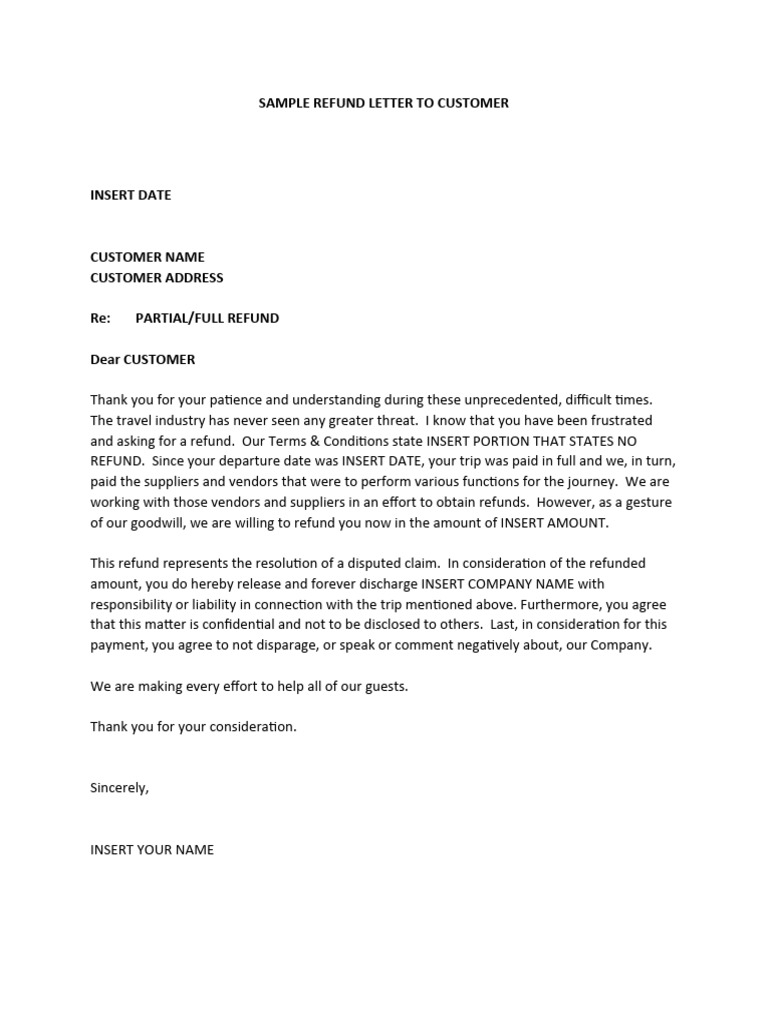
Securing a $10,000 refund can feel like unlocking a hidden door in the world of consumer rights. The key to replicating that success lies in a carefully crafted email that balances professionalism, precision, and persuasive clarity. Below is a step‑by‑step template, broken into actionable sections, that any consumer can adapt to maximize the odds of a favorable outcome.
1. Precise Subject Line
Begin with a concise subject that immediately conveys the purpose of your message. Example: “Request for $10,000 Refund – Order #12345 – Service Failure”. A clear subject reduces the risk of your email being overlooked or filtered into a generic inbox folder.
2. Formal Greeting with Name
Address the recipient by name whenever possible (“Dear Ms. Johnson”). Personalization signals that you have done your research and are communicating with a specific individual rather than a faceless department.
3. Brief Introduction and Context
In two sentences, identify yourself, your account number, and the transaction in question. For instance: “My name is Alex Rivera, a long‑standing customer (Account #987654). On March 15, I purchased a premium membership for $10,000, Order #12345.” This establishes the factual foundation for the rest of the email.
4. State the Problem Clearly
Detail the specific issue that triggered the refund request. Use objective language: “The service delivered fell short of the advertised features, as the promised 24‑hour support was unavailable for two weeks, resulting in a breach of contract.” Avoid emotional adjectives; focus on measurable discrepancies.
5. Cite Relevant Policies or Laws
Reference the company’s refund policy, warranty terms, or applicable consumer protection statutes. Example: “According to your Terms of Service (Section 4.2), full refunds are granted when services are not rendered as described within 30 days.” Demonstrating legal awareness adds credibility.
6. Attach Supporting Evidence
List any attached documents—receipts, screenshots, chat logs—using bullet points for clarity. For example: “- PDF receipt of payment; – Email exchange dated March 20‑22 confirming service outage; – Screenshot of advertised features.” Mentioning attachments pre‑empts follow‑up requests.
7. Present a Reasonable Request
Specify the exact amount you expect to be refunded and the preferred method of payment. “I respectfully request a full refund of $10,000 to be processed to the original credit card within 14 business days.” Clear expectations reduce ambiguity.
8. Offer a Constructive Resolution Path
Indicate willingness to discuss alternative solutions, such as a partial refund or service credit, while reaffirming the primary goal. “Should a full refund be unfeasible, I am open to a proportionate credit toward future services, provided it reflects the value lost.” This shows flexibility without conceding your position.
9. Set a Polite Deadline
Establish a firm but courteous timeline to encourage prompt action. “I kindly request a response by May 5, 2026, to avoid escalating the matter to the appropriate consumer protection agency.” A deadline creates urgency while remaining professional.
10. Provide Contact Information
Conclude with multiple contact channels—phone, email, and mailing address—to ensure the recipient can reach you easily. “You may contact me at (555) 123‑4567 or alex.rivera@email.com for any clarification.” Accessibility demonstrates openness.
11. Express Appreciation and Professional Closing
End on a courteous note that reinforces a collaborative tone. “Thank you for your attention to this matter. I look forward to a swift resolution.” Follow with a standard sign‑off such as “Sincerely,” and your full name.
12. Attach a PDF Version of the Email
For added formality, attach a PDF copy of the email that includes company branding and timestamps. This secondary document can serve as a reference point if the correspondence is forwarded within the organization, ensuring consistency across reviewers.