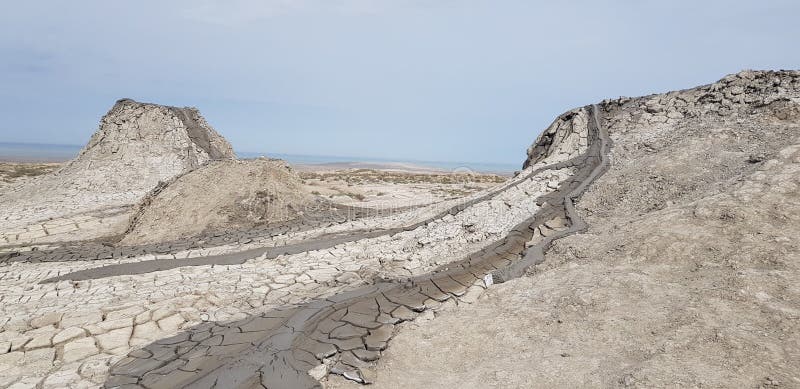
Azerbaijan’s landscape hides a dozen bubbling secrets, and among them are the country’s mud volcanoes—natural oddities that look like the Earth is exhaling thick, dark breath. These geysers of ooze and flame form a surreal theater where geology performs with a flamboyant flair. Below are twelve of the most bizarre mud volcanoes that punctuate Azerbaijan’s terrain, each offering a distinct spectacle for the curious traveler.
1. Lokbatan Mud Volcano
Located on the outskirts of Baku, the Lokbatan mud volcano resembles a colossal, simmering cauldron on the steppes. When it erupts, the terrain erupts in a plume of sulfur-tinged steam that rises like a slow‑moving dragon breathing fire. The surrounding fields are coated with a thin, glossy layer of black mud, turning the landscape into a natural canvas of abstract expressionism.
2. Gobustan Mud Volcano
Set amid the famed rock carvings of Gobustan, this mud volcano adds a living, breathing element to the ancient petroglyphs. Its regular bursts of mud flow are akin to a giant, slow‑pulsing heart, reminding visitors that the earth’s surface is as dynamic as human history etched in stone.
3. Absheron Mud Volcano (Milanova)
Part of the Absheron Peninsula’s volcanic belt, the Milanova mud volcano erupts with a theatrical flair, spewing bright, orange‑red flames that flicker like a torch in a night‑time ballet. The surrounding shoreline is dotted with pools of thick, tar‑dark mud that emit a faint, metallic scent, lending the area an otherworldly aura.
4. Yanardag (“Burning Mountain”) Mud Volcano
While Yanardag is primarily known for its eternal flame, the adjacent mud vents create a striking contrast. The mud’s slow, viscous movement mirrors the stubborn persistence of the fire, together forming a duet of fire and earth that feels like nature’s own opera.
5. Haji Qara Qıran Mud Volcano
Hidden in the lowlands near the Caspian Sea, this volcano erupts with a rhythmic cadence, each burst resembling the roll of distant drums. The resulting mud crusts form a temporary bridge across a shallow lagoon, inviting adventurous hikers to tread upon the very surface of the Earth’s breath.
6. Kura River Mud Volcano
Situated along the banks of the Kura River, this volcano’s eruptions are synchronized with seasonal floods, creating a mesmerizing pattern of mud domes that rise and fall like the tide of an ancient sea. The juxtaposition of liquid water and thick mud offers a lesson in the balance of fluid dynamics.
7. Barda Mud Volcano
In the agrarian heartland of Barda, the mud volcano’s eruptions have earned the nickname “the earth’s kettle.” When the mud spews, it creates a frothy, bubbling surface that looks like a massive pot simmering over a low flame—an apt metaphor for the region’s fertile, yet volatile, soil.
8. Jabilu Mud Volcano
Located near the border with Georgia, Jabilu’s eruptions are less frequent but far more dramatic. When they occur, the mud bursts forth in towering plumes, resembling smoke columns from a ship’s smokestack—an industrial echo in a wild, untamed setting.
9. Goygol Mud Volcano
The Goygol volcano sits close to the crystal‑clear Goygol Lake, creating a striking visual dialogue between pristine water and murky mud. The contrast is reminiscent of a chiaroscuro painting, where light and darkness battle for dominance on the canvas of the landscape.
10. Khachmaz Mud Volcano
Perched near the northeastern coast, this volcano’s eruptions are timed with the region’s windy gusts, sending the mud swirling in spirals that look like miniature tornadoes. The phenomenon illustrates how wind can sculpt even the most viscous of earth materials.
11. Salyan Mud Volcano
In Salyan, the volcano’s constant low‑level activity produces a steady, oozing stream of mud that spreads like a black river across the plain. The slow crawl of this mud mirrors the patient patience of a snail, inviting observers to contemplate the slow but relentless forces shaping the terrain.
12. Neftchala Mud Volcano
Adjacent to Azerbaijan’s bustling oil fields, the Neftchala mud volcano offers a juxtaposition of industrial extraction and natural exhalation. Its eruptions create thick, glossy puddles that reflect the sky like polished mirrors, reminding onlookers that beneath the ground lies both wealth and wonder.