Before you launch yourself into the crystal‑clear waters of Costa Rica’s Pacific or Caribbean coastlines, it pays to know how to spot a rip current. These narrow, fast‑moving channels of water can pull even the strongest swimmer out to sea in seconds. Below is a concise guide that equips you with the visual cues and practical steps needed to identify a rip current before you wade in. Ready to test your beach‑safety savvy?
1. Look for a Break in the Wave Pattern
A rip current often appears as a noticeable gap or a dull line where the usual breaking wave pattern is absent. While surrounding waves crash and foam, the water within the rip stays relatively calm, creating a “slick” surface that signals a potential hazard.
2. Spot a Concentrated Flow of Surface Foam
Foam or debris that seems to be pulled straight out to sea in a narrow channel is a classic sign. This line of foam moves directly away from the shore, contrasting with the more irregular movement of surrounding surf.
3. Observe the Water’s Color and Turbidity
Rips can cause clearer water to appear darker or murkier because they carry sand and sediment from the seabed. A darker streak extending from the shore toward deeper water may indicate a strong, seaward flow.
4. Notice the “Bunching” of Waves
When waves converge or bunch together near a particular spot, it can be a sign that water is being funneled into a rip. This creates a higher, steeper wave line on either side of the channel, while the channel itself remains relatively flat.
5. Check for a Rapid Return Flow
Stand on the beach and watch the water as it recedes. If you see a consistent, narrow stream of water pulling back quickly, that’s the hallmark of a rip current moving offshore.
6. Use the “Two‑Finger Test”
Place two fingers side‑by‑side on the water’s surface. If the water between them moves away from you faster than the water outside the fingers, you are likely looking at a rip current.
7. Look for a “Channel” Between Sandbars
Rips often form in the gaps between sandbars or around underwater structures. If you notice a shallow, linear depression in the sand that runs perpendicular to the shoreline, it could be channeling water offshore.
8. Pay Attention to Local Signage and Flags
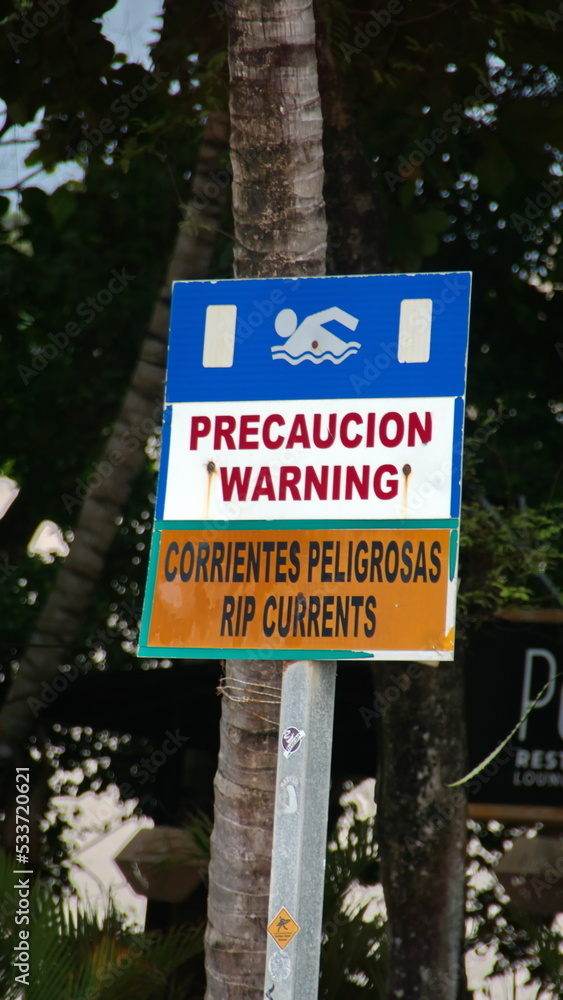
Many Costa Rican beaches use red flags or posted signs to indicate risky conditions, including the presence of rip currents. Even if visual cues are subtle, official warnings should be treated as reliable indicators.
9. Listen for the Sound of Water Moving Quickly
Sometimes you can hear a faint, rushing noise where a rip is active. The sound is similar to a distant river or a fast‑flowing stream, and it can be heard even when the surface appears calm.
10. Watch How Swimmers React
If you see multiple swimmers moving away from a particular spot or appearing uneasy, that collective behavior often points to an unseen rip current. Local knowledge can be a valuable safety resource.
11. Test the Water with a Stick or Hand
Gently push a stick or your hand into the water at suspect locations. If the stick is pulled straight back toward the ocean with little resistance, you have likely found a rip current.
12. Ask a Local or Lifeguard for a Quick “Rip‑Check” Challenge
Here’s a playful question to pose to any knowledgeable beachgoer: “Can you spot the rip before I step in?” Challenge yourself to identify at least three rip indicators before entering the water. If you’re unsure, ask a lifeguard for confirmation—better safe than swept away.