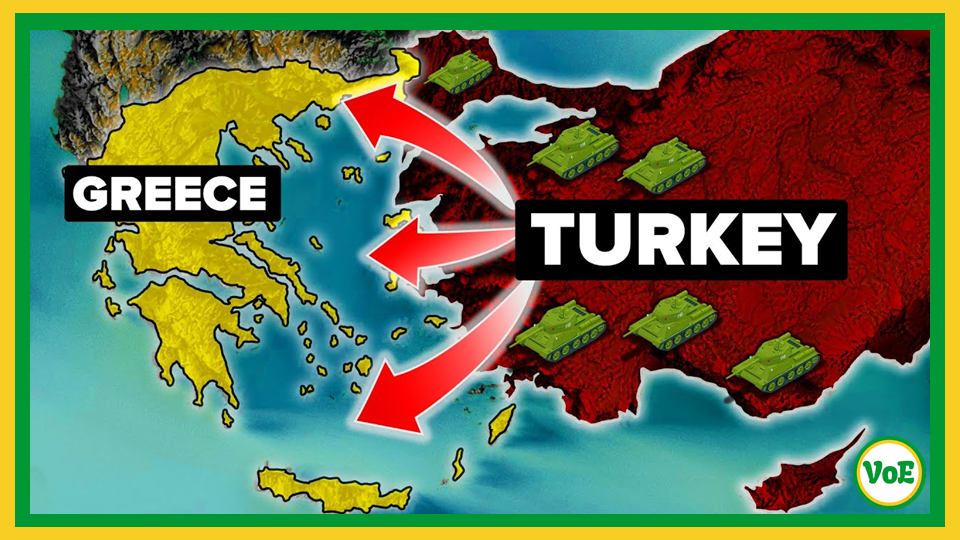
The rivalry between Greece and Turkey is one of the most enduring and complex in the Mediterranean. At first glance, it appears to be a simple clash of neighboring nations over disputed islands, cuisine, and sports chants. Yet the fascination that draws scholars, travelers, and casual observers alike stems from layers of history, identity, and geopolitics that continue to shape the region. Below are the primary facets of this rivalry, each revealing why the competition remains both visible and deeply rooted.
1. Historical Legacies of Empire
Both countries inherited the remnants of ancient empires—Greece with its classical polis culture and Turkey with the Ottoman legacy. The transition from Byzantine to Ottoman rule left a mosaic of architectural ruins, religious sites, and mixed populations. Understanding how former imperial borders were redrawn after World War I, especially through the Treaty of Lausanne, clarifies why the two nations often perceive each other’s historical narratives as competing claims to the same cultural heritage.
2. The Aegean Sea Dispute
The most visible flashpoint is the Aegean Sea, where Greece and Turkey contest territorial waters, airspace, and the status of several islands. While tourists may notice occasional news headlines about naval drills, the underlying tension is tied to strategic control of shipping lanes, energy resources, and national pride. The proximity of these islands—some only a few kilometers apart—magnifies the stakes for both sides.
3. Language and Identity
Greek and Turkish languages belong to different linguistic families, yet both incorporate loanwords from centuries of coexistence. The everyday use of Greek in Constantinople (Istanbul) and Turkish in Greek islands reflects a subtle cultural interweaving. This linguistic overlap fuels a fascination for linguists and travelers, challenging simplistic narratives that portray the two nations as wholly separate.
4. Culinary Crossovers
Food lovers often point to shared dishes—such as baklava, souvlaki, and meze—as evidence of a culinary rivalry. While a Greek visitor might claim the origin of a particular recipe, a Turkish counterpart could argue a centuries‑old Ottoman version. The subtle variations in spices, preparation, and presentation demonstrate how cuisine becomes a quiet battlefield for cultural ownership.
5. Sports Rivalries and National Pride
Football matches, especially those between Olympiacos and Galatasaray, serve as modern arenas where national pride erupts. The palpable energy in stadiums is not merely about the score; it reflects historical grievances and contemporary political rhetoric. Observers often overlook how these sporting events amplify broader societal tensions and reinforce collective identities.
6. Religious Heritage and Sacred Sites
Orthodox Christianity dominates Greece, while Islam is prevalent in Turkey. Yet both religions share sacred sites that have shifted hands over centuries—most notably the Hagia Sophia, which transitioned from church to mosque to museum and back to mosque. The contested stewardship of such landmarks provides insight into how religious symbolism intertwines with national narratives.
7. Migration Patterns and Diaspora Communities
Millions of Greeks and Turks live abroad, forming vibrant diaspora communities in the United States, Germany, and Australia. These expatriates often maintain strong ties to their homelands, influencing public opinion and political lobbying. The diaspora’s role in sustaining the rivalry reveals how personal histories and transnational networks keep the competition alive far beyond the Mediterranean basin.
8. Tourism Competition
Both countries vie for the attention of global travelers, marketing their ancient ruins, sun‑kissed beaches, and vibrant nightlife. While a brochure might highlight the Parthenon or the Blue Mosque, the competition extends to cruise itineraries, airline routes, and digital campaigns. This rivalry pushes each nation to preserve and promote its cultural assets, benefitting visitors in the process.
9. Energy Exploration in the Eastern Mediterranean
Recent discoveries of natural gas reserves have added an economic dimension to the rivalry. Greece and Turkey each claim rights to offshore drilling zones, citing international law and historical precedent. Energy companies and regional alliances are now part of the equation, turning an age‑old dispute into a 21st‑century contest for energy security and financial gain.
10. Diplomatic Relations and NATO Membership
Both nations are members of NATO, which creates a paradoxical relationship: they cooperate militarily while simultaneously clashing on bilateral issues. The alliance forces them to manage disagreements through diplomatic channels, yet it also amplifies the rivalry when one perceives the other as undermining collective security objectives. The duality of partnership and competition is a core element of the Greek‑Turkish dynamic.
11. Cultural Festivals and Shared Celebrations
Annual festivals—such as Greece’s Carnival and Turkey’s Şeker Bayramı—often feature similar music, dance, and communal feasting. While each event celebrates distinct cultural narratives, the overlapping customs illustrate a common Mediterranean spirit. Observers who recognize these parallels gain a deeper appreciation for how the rivalry coexists with a shared regional identity.
12. Archaeological Competition
Excavations in sites like Troy, Ephesus, and Delphi attract scholars from both countries, each eager to claim academic primacy. The race to uncover artifacts not only advances historical knowledge but also fuels national pride by linking contemporary identities to ancient glories. This scholarly competition underscores the intellectual underpinnings of a rivalry that transcends politics.