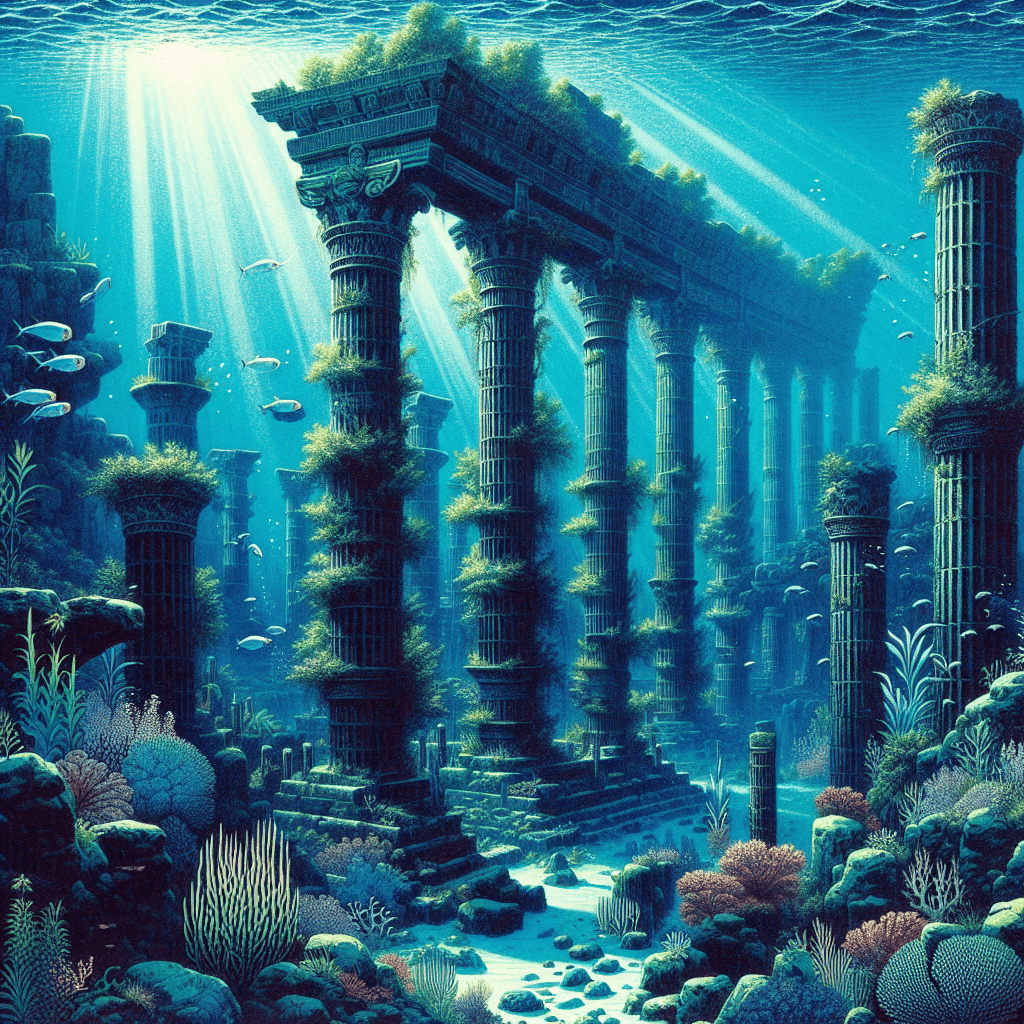
Hidden beneath the turquoise waters of the Aegean lies a mystery that has captivated explorers for centuries: the so‑called “Atlantis of Greece.” While legends speak of a sunken city of unimaginable wealth, modern archaeology offers tangible clues that hint at a civilization lost to the sea. Can you imagine strolling through marble streets now covered in coral? The following guide outlines the most compelling sites, artifacts, and research avenues, and even presents a challenge for intrepid divers: locate the most promising wreck before the next tide rolls in.
1. The Sunken Harbor of Pavlopetri
Discovered in 1967, Pavlopetri is the world’s oldest known submerged city, dating back to the Bronze Age (c. 2800 BCE). Located off the coast of Laconia, its streets, walls, and megalithic tombs remain remarkably intact beneath 3‑5 meters of water. The city’s layout suggests a bustling trade hub, and sonar imaging has revealed a complex network of roads and public squares that scholars compare to the mythic grandeur of Atlantis.
2. The Bronze Age Shipwrecks of the Kyrenia Peninsula
Off the northern coast of Cyprus, a cluster of shipwrecks dating from 1500‑1200 BCE provides a glimpse into the maritime commerce that likely supplied the sunken city. These wrecks contain amphorae, copper ingots, and luxury items that indicate a high‑level exchange network. Divers have recovered intact cargoes, allowing experts to reconstruct trade routes that may have linked the submerged settlement to mainland Greece.
3. The Bronze Age Harbor at Pharos Island
Near the modern town of Pylos, underwater surveys have identified a natural harbor that once accommodated large merchant vessels. The harbor’s protective reefs and stone quays hint at sophisticated engineering. Researchers believe it served as a gateway for goods destined for the mysterious city, and its strategic position aligns with ancient accounts of a “golden port” mentioned by early Greek historians.
4. The Sunken Temple of Poseidon
At the foot of the steep cliffs near Cape Sounion, divers have found a submerged marble structure believed to be a temple dedicated to Poseidon. Marble fragments, marble columns, and votive offerings suggest a place of worship that sank after a series of seismic events. The temple’s orientation toward the sea reinforces the myth that the city was a divine sanctuary for the god of the ocean.
5. The Enigmatic “Atlantis” Tablet
Recovered from a depth of 12 meters near the island of Kythira, a stone tablet bears an inscription that some scholars interpret as a reference to “a city beneath the waves.” While the text remains partially illegible, carbon dating places it in the Late Minoan period, adding credence to the hypothesis that ancient Greeks were aware of a catastrophic flood that swallowed a prosperous settlement.
6. The Copper Workshops of Methoni
Underwater excavations off the southern coast of the Peloponnese have uncovered the remains of copper smelting workshops. Large slag heaps, furnace stones, and bronze tools indicate a thriving metal industry. The proximity of these workshops to the Sunken Harbor suggests that the lost city likely possessed a robust manufacturing sector, a hallmark often associated with the legendary Atlantis.
7. The Submerged Defensive Walls of Koroni
In the waters near the fortress of Koroni, sonar scans reveal a series of interconnected stone walls extending for several kilometers. These structures appear to form a defensive perimeter, potentially protecting a coastal settlement from naval invasions. Their construction technique mirrors that of Mycenaean fortifications, implying that the sunken city may have been a fortified metropolis.
8. The Ancient Aqueduct System
Divers exploring the seabed near the island of Spetses have identified stone channels and pipework that likely formed an aqueduct system. The engineering precision suggests a sophisticated water supply network capable of supporting a sizable urban population. The presence of such infrastructure underscores the city’s advanced urban planning, a characteristic of the fabled Atlantis.
9. The Sunken Amphitheater of Lerna
Near the Lerna marshes, a partially collapsed amphitheater has been located at a depth of 8 meters. Seating tiers, a stage area, and decorative mosaics indicate a cultural hub where performances and public gatherings occurred. The amphitheater’s existence points to a vibrant civic life, reinforcing the notion that the sunken settlement was more than a commercial port.
10. The Mystery of the “Gold Hoard”
In 2018, a treasure hunter retrieved a cargo of gold jewelry and ingots from a wreck near the island of Crete. The items, dated to the 12th century BCE, bear unique markings that do not match known Greek city‑states. Some researchers propose that the hoard belonged to a merchant fleet traveling to the sunken city, adding a tantalizing layer of mystery to the legend.
11. The Submerged City of Kythnos
Off the eastern coast of Kythnos, a series of stone foundations and roadways have been mapped using 3‑D photogrammetry. The layout resembles a grid pattern typical of planned urban settlements. Artifacts recovered include pottery, stone tools, and fragments of a bronze statue, suggesting a settlement of considerable size and artistic achievement.
12. The Challenge: Dive and Document
For those seeking a hands‑on adventure, the ultimate challenge is to locate and document the most promising underwater site using a personal dive computer and a waterproof camera. Record depth, GPS coordinates, and visual footage, then compare your findings with the published sonar maps. Success not only contributes to ongoing research but also offers a personal connection to the mythic Atlantis of Greece.