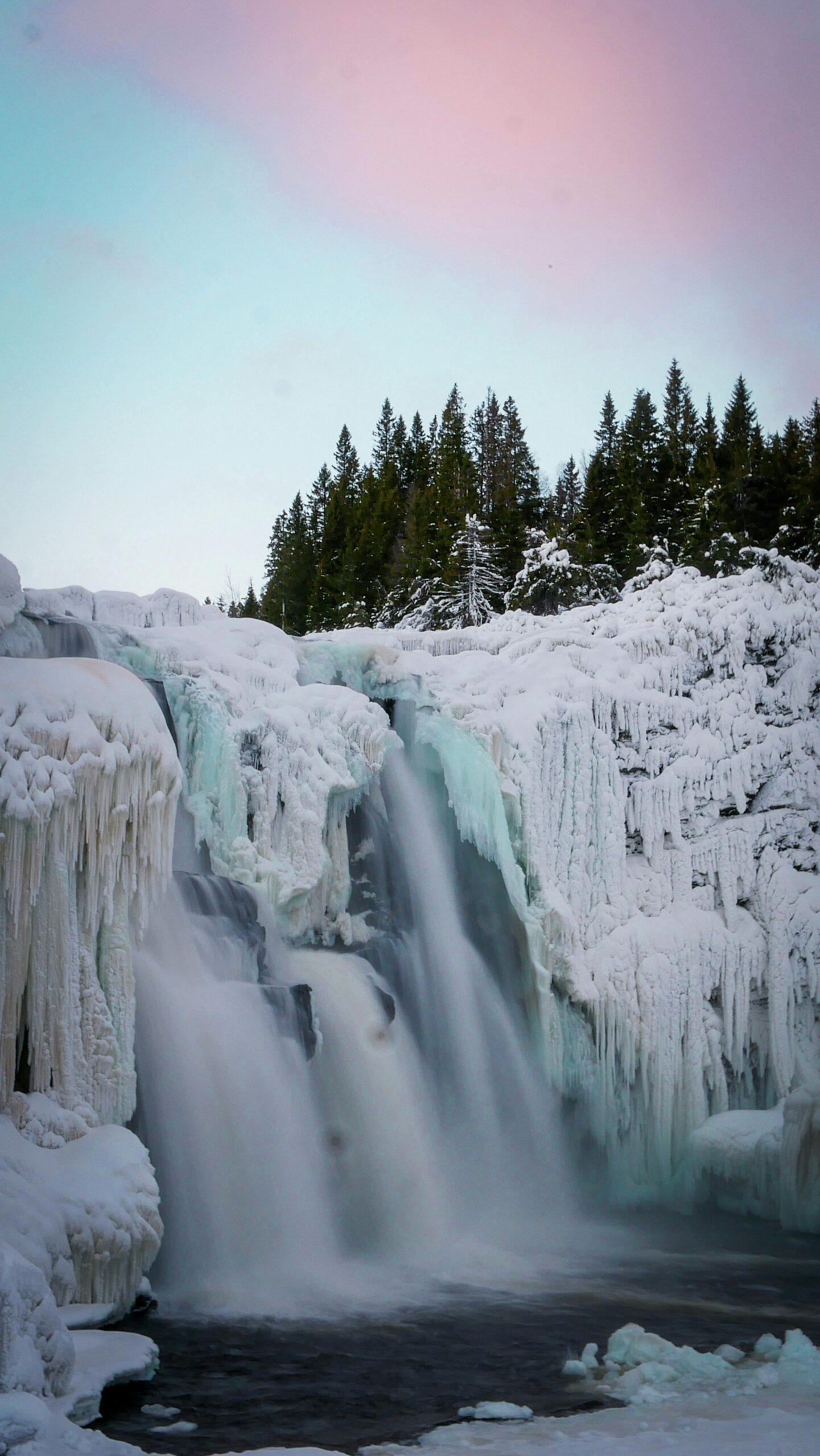
Winter transforms many of America’s most iconic waterfalls into shimmering sculptures of ice and snow. Visitors who brave the cold discover not only breathtaking scenery but also a subtle psychological pull that makes frozen waterfalls uniquely compelling. Below is a practical guide to twelve prime locations, each paired with an observation that many travelers share and a brief note on the deeper allure behind that experience.
1. Niagara Falls – New York, NY
Address: Niagara Falls State Park, Niagara Falls, NY 14303, USA. In winter, the mist from the Horseshoe and American Falls freezes into delicate ice curtains, creating a crystalline veil over the roaring water. The common observation is that the ice “sounds” as it cracks underfoot, echoing the power of the flow beneath. This audible contrast reminds visitors of nature’s duality—soft silence atop raw force—revealing an innate human fascination with the juxtaposition of fragility and strength.
2. Multnomah Falls – Columbia River Gorge, OR
Address: Multnomah Falls, 9740 Multnomah Falls Road, Troutdale, OR 97060, USA. The waterfall’s lower tier becomes an icy staircase, while the upper cascade freezes into a towering ice column. Travelers often note the “diamond‑like” sparkle of the ice when sunlight hits it. The sparkle triggers an evolutionary response to light, signaling safety and abundance, which explains why the sight feels both awe‑inspiring and comforting.
3. Havasu Falls – Grand Canyon, AZ
Address: Havasu Falls, Havasupai Indian Reservation, Peach Springs, AZ 86434, USA. Though access is limited in winter, the exposed ice formations on the sandstone cliffs become strikingly blue. Observers frequently comment on the “blue glow” that seems to emanate from within the rock. This effect is caused by light refraction through thin ice layers, a visual cue that the brain interprets as depth and mystery, fueling a deeper curiosity about hidden worlds.
4. Bridal Veil Falls – Telluride, CO
Address: 600 W Sturdevant Road, Telluride, CO 81435, USA. The falls freeze into a curtain that resembles a bridal veil draped over the valley. Many visitors remark on the “delicate lace” appearance. The lace‑like pattern mirrors familiar human artifacts, allowing people to anthropomorphize the natural formation, which satisfies an intrinsic desire to find familiarity in the wild.
5. Palouse Falls – Washington, WA
Address: Palouse Falls State Park, 1312 W Grand Ave, LaCrosse, WA 99027, USA. In winter, the basalt cliffs become rimed with frost, and the water’s descent slows as ice forms at the lip. Tourists often describe the “silence” that descends when the water is partially frozen. Silence reduces sensory overload, highlighting the visual spectacle and engaging the mind’s capacity for introspection.
6. Upper Falls – Yosemite National Park, CA
Address: Yosemite Valley, Yosemite National Park, CA 95389, USA. The uppermost cascade of Yosemite Falls accumulates a thick sheet of ice, making the waterfall appear as a towering glacier. Visitors frequently note that the ice “looks like a frozen thunderclap.” The analogy to thunder signals the retained energy of the falling water, translating a violent sound into a visual form that the brain can process safely.
7. Tahquamenon Falls – Upper Peninsula, MI
Address: Tahquamenon Falls State Park, 530 East Tahquamenon River Road, Paradise, MI 49768, USA. The lower falls develop an extensive ice curtain, while the upper falls form a spectacular ice bridge. Observers often comment on the “ice veil that hangs in the air.” This perception of suspended water evokes a sense of timelessness, appealing to the human fascination with moments that appear to defy the flow of time.
8. Shoshone Falls – Twin Falls, ID
Address: Shoshone Falls Park, 2500 E Shoshone Falls Blvd, Twin Falls, ID 83301, USA. Known as the “Niagara of the West,” the falls develop a delicate sheet of ice that clings to the rock face. Travelers frequently point out the “crystalline armor” protecting the water. The armor metaphor reflects a protective instinct, suggesting that the natural world is both beautiful and resilient, which resonates with human concepts of survival.
9. Gibbon Falls – Yellowstone National Park, WY
Address: Gibbon Falls Trailhead, Yellowstone National Park, WY 82190, USA. The falls freeze into a thin sliver of ice, creating a stark line against the black basalt. Visitors often remark on the “ink‑like” silhouette of the ice. This stark contrast triggers the brain’s pattern‑recognition systems, offering a visual puzzle that satisfies a natural curiosity for deciphering unusual forms.
10. Snoqualmie Falls – Washington, WA
Address: 650 River Road, Snoqualmie, WA 98065, USA. The waterfall creates a massive ice sheet at its base, while the plunge pool becomes a mirror reflecting winter light. Tourists commonly describe the “glowing pond” effect. The reflective surface acts like a natural lantern, tapping into humans’ attraction to light sources in dark environments, a trait rooted in early survival strategies.
11. Bridal Veil Falls – Lake Havasu City, AZ
Address: 1650 Havasu Road, Lake Havasu City, AZ 86403, USA. In winter, the waterfall’s flow slows, and a thin layer of ice decorates the surrounding cliffs. Viewers note the “silvery threads” that hang from the rock. These threads resemble fine hair, invoking a gentle, intimate image that encourages a personal connection to the landscape.
12. Lower Falls – Grand Teton National Park, WY
Address: Lower Falls Trailhead, Grand Teton National Park, WY 83002, USA. The lower cascade builds a thick ice sheath that mirrors the surrounding peaks. Visitors often comment on the “perfect glass” look of the frozen water. The glass analogy reflects humanity’s desire for clarity and purity, providing a visual representation of an unblemished natural world.