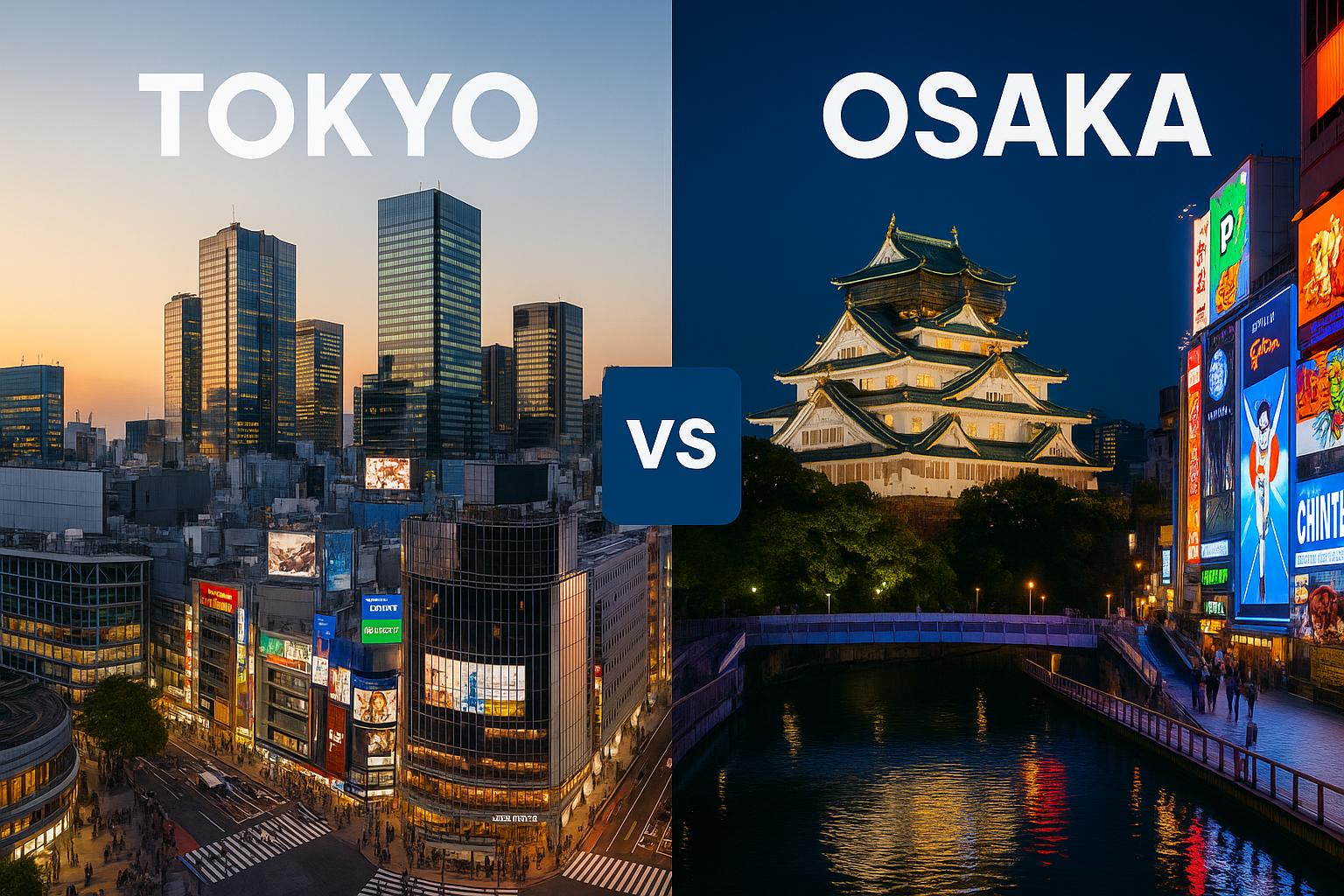
Choosing a home base for a Japanese adventure can feel like selecting the right anchor for a ship—one that steadies you while allowing you to explore the surrounding seas. Tokyo and Osaka, Japan’s two largest metropolises, each offer distinct currents of culture, cuisine, and convenience. This guide weighs the essential factors, helping you decide which city should serve as your launching point.
1. Transportation Hub Efficiency
Tokyo’s railway network is a sprawling spiderweb, with the Shinkansen, JR lines, and private subways converging at mega‑stations like Tokyo and Shinjuku. The punctuality and frequency are unmatched, making day trips to places such as Nikko, Hakone, or the Fuji Five Lakes seamless. Osaka’s transport is equally reliable but more compact; Osaka Station and Namba serve as hubs for the Kansai region, linking to Kyoto, Kobe, and Nara with swift regional trains.
2. Nightlife Pulse
Tokyo’s nightlife beats like an endless drum solo—Roppongi’s high‑rise bars, Shibuya’s all‑night clubs, and the underground jazz lounges of Ginza provide endless options for nocturnal explorers. Osaka, known as “the kitchen of Japan,” offers a more relaxed, street‑level vibe; the neon‑lit Dotonbori canal hosts countless izakayas and karaoke rooms where locals unwind after work.
3. Culinary Landscape
Tokyo boasts a Michelin‑starred skyline, with over 200 starred restaurants ranging from delicate sushi at the Tsukiji Outer Market to avant‑garde kaiseki in hidden alleys. Osaka counters with hearty comfort foods—takoyaki, okonomiyaki, and kushikatsu—served in lively yatai stalls that embody the city’s reputation as a food lover’s playground.
4. Accommodation Variety
In Tokyo, accommodation spans capsule hotels tucked beneath skyscrapers, luxury boutiques in Ginza, and traditional ryokan experiences in neighborhoods like Asakusa. Osaka offers a more affordable spectrum, with budget hostels near Shin‑Osaka Station, business hotels in Umeda, and boutique stays along the Osaka Bay waterfront.
5. Cultural Heritage Access
While Tokyo is a modern marvel, it still houses historic gems such as the Meiji Shrine and the Edo‑era gardens of Koishikawa. Osaka’s cultural roots are more visible in its ancient Osaka Castle, the historic Osaka Museum of History, and the nearby UNESCO World Heritage sites of Kyoto and Nara, easily reachable within an hour.
6. Cost of Living
Daily expenses in Tokyo tend to be higher—average meals, transportation fares, and nightlife drinks command premium prices. Osaka’s cost structure is generally more modest, allowing travelers to stretch their budgets further without sacrificing quality or convenience.
7. Language Comfort
Both cities have English signage in major stations and tourist zones, yet Tokyo’s international business districts host a larger proportion of English‑speaking staff, making navigation slightly smoother for first‑time visitors. Osaka’s locals are renowned for their friendly dialect and willingness to help, even if English proficiency varies.
8. Day‑Trip Radius
If your itinerary includes Mt. Fuji, the Izu Peninsula, or the historic town of Kamakura, Tokyo is the logical launchpad. Conversely, Osaka provides swift access to the cultural trio of Kyoto, Nara, and Kobe, as well as the natural beauty of the Kii Peninsula and the seaside resort of Wakayama.
9. Safety and Cleanliness
Both metropolises rank high on safety indexes, but Tokyo’s streets often feel more ordered, with rigorous waste‑separation systems and a palpable sense of security after dark. Osaka shares this reputation, though its bustling entertainment districts can feel a touch more informal.
10. Shopping Experience
Tokyo is a shopper’s labyrinth—high‑end fashion in Omotesandō, tech gadgets in Akihabara, and quirky subculture boutiques in Harajuku. Osaka’s retail scene centers around Shinsaibashi’s covered arcade and the massive Namba Parks, offering a blend of contemporary brands and traditional crafts at a slightly lower price point.
11. Seasonal Attractions
Cherry blossom viewing in Tokyo’s Ueno Park and the illuminated winter displays along Marunouchi provide iconic seasonal moments. Osaka counters with the spectacular Osaka Castle Park sakura and the vibrant summer fireworks along the Okawa River, delivering equally memorable experiences.
12. Overall Vibe
Think of Tokyo as a high‑octane engine—fast, expansive, and constantly evolving—perfect for travelers seeking a pulse‑pounding, cosmopolitan base. Osaka resembles a comfortable yet spirited riverboat, cruising gently while still offering lively stops and a warm, communal atmosphere. Your choice should align with the rhythm you wish to set for your Japanese journey.