The Amazon Rainforest is often described as having a distinct “dry season,” a notion that oversimplifies its complex climate dynamics. In reality, the region experiences nuanced variations in rainfall, humidity, and river levels that defy the binary concept of wet versus dry periods. This article examines why the idea of a dry season in the Amazon is misleading and highlights the diverse conditions travelers, researchers, and conservationists encounter throughout the year.
1. Misleading Calendar Labels
Popular travel guides label certain months as “dry,” implying a predictable lull in precipitation. However, these labels are based on limited data from a few weather stations and do not account for microclimates across the basin. Even during the so‑called dry months, rain can occur on any given day, making the label more marketing shorthand than scientific fact.
2. Spatial Variability of Rainfall
The Amazon spans over 6 million square kilometers, encompassing varied topographies from lowland swamps to highland plateaus. Rainfall intensity can differ by more than 300 mm between western and eastern sections within the same month, meaning that while one area may experience reduced precipitation, another may still be drenched.
3. River Levels Remain High
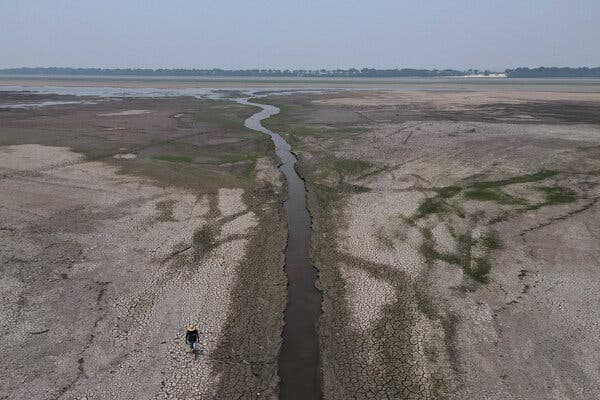
Even when rainfall totals dip, the Amazon’s massive river system retains elevated water levels for months. The delayed response of river discharge means that navigation, floodplain accessibility, and local ecosystems continue to operate under conditions akin to the wet season, contradicting the notion of a true “dry” period.
4. Persistent Humidity
Relative humidity in the Amazon rarely falls below 70 % year‑round. This high baseline moisture creates an environment where the air feels damp regardless of rainfall amounts, challenging the perception that a dry season brings noticeably drier, more comfortable conditions.
5. Cloud Cover Does Not Disappear
Satellite observations reveal that cloud cover persists over much of the basin throughout the year. Even during the drier months, the region experiences frequent overcast skies, which affects solar radiation, temperature regulation, and the visual landscape that travelers expect to be clear.
6. Plant Phenology Adjusts, Not Stops
Amazonian flora exhibit continuous growth cycles that are less dependent on a strict dry period. Many species have adapted to variable water availability, producing flowers, fruits, and new leaves throughout the year. This ongoing phenology undermines the idea that a dry season triggers a uniform pause in plant activity.
7. Wildlife Movement Patterns Remain Fluid
Animal species such as jaguars, tapirs, and countless bird varieties adjust their territories based on food and water sources rather than a seasonal calendar. Their movements reflect subtle shifts in resource distribution, not a binary dry‑wet divide, making the “dry season” label insufficient for ecological planning.
8. Indigenous Communities’ Calendars Differ
Local Indigenous groups base their agricultural and hunting calendars on river cycles, floodplain regeneration, and specific weather cues, not on a standardized dry season. Their traditional knowledge acknowledges a continuum of moisture conditions, illustrating the inadequacy of external seasonal classifications.
9. Climate Change Amplifies Uncertainty
Recent climate models predict increased variability in rainfall patterns across the Amazon, with some areas experiencing longer dry spells while others see intensified wet periods. This emerging complexity further erodes the reliability of a fixed dry season narrative.
10. Tourism Expectations Are Misaligned
Many travelers schedule trips during the advertised dry season to avoid rain, only to encounter unexpected showers, swollen rivers, and limited trail access. The mismatch between expectation and reality can lead to safety issues and disappointment, emphasizing the need for more accurate seasonal information.
11. Economic Activities Depend on Continuous Water Flow
Hydroelectric power generation, river transport, and fisheries all rely on consistent water levels. Even modest reductions in rainfall do not significantly alter these sectors, underscoring that the Amazon’s economy functions on a near‑constant moisture regime rather than a distinct dry period.
12. Conservation Strategies Require Nuance
Effective conservation planning must account for the gradual transitions and localized climate patterns across the basin. Programs that assume a simple dry season risk overlooking critical windows for habitat restoration, seed dispersal, and species migrations, potentially compromising long‑term ecological outcomes.