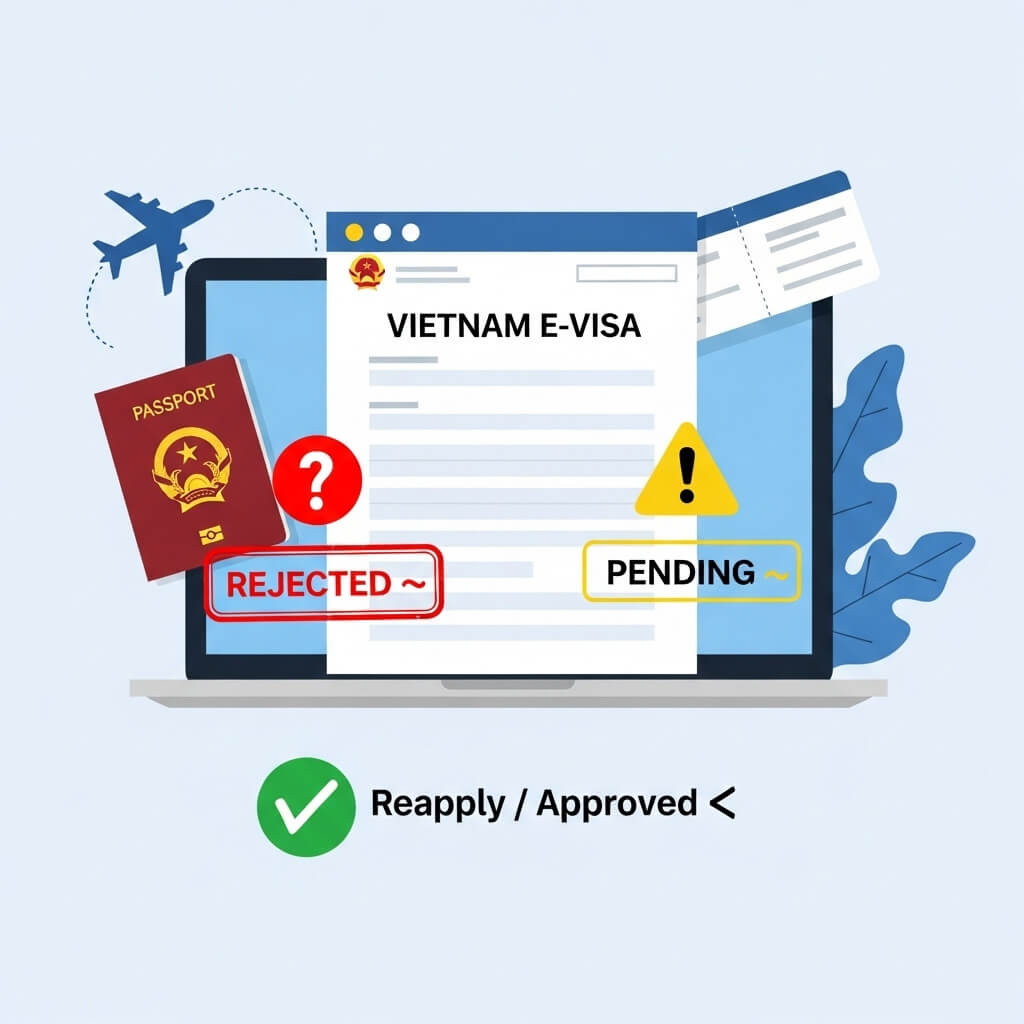
Vietnam remains a top destination for travelers, business professionals, and students alike. Yet, many encounter a frustrating roadblock: visa rejection. While the reasons often seem straightforward on the surface, they can reveal deeper systemic and procedural nuances. Understanding the common pitfalls and the underlying causes can dramatically improve your chances of a successful application. Below is a comprehensive guide that breaks down the typical reasons visas are denied and offers practical steps to fix each issue.
1. Incomplete Application Form
Leaving fields blank or providing partial information triggers automatic rejection. Vietnamese immigration authorities require every field to be filled accurately, even optional sections. Missing data suggests negligence, prompting officials to err on the side of caution. Double‑check the form against the checklist provided by the embassy or e‑visa portal, and ensure no section is left untouched before submitting.
2. Incorrect Passport Details
Even a single typo in the passport number, expiry date, or issuing country can invalidate the entire request. The system cross‑references these details with the International Civil Aviation Organization (ICAO) database; mismatches result in an immediate denial. Verify your passport information directly from the identification page and copy it verbatim into the visa application.
3. Expired or Near‑Expiry Passport
Vietnam requires a passport to be valid for at least six months beyond the intended stay. Travelers who submit a passport expiring within that window often see their applications rejected. This rule safeguards against the need for emergency extensions and aligns with regional travel standards. Renew your passport well in advance to meet the six‑month threshold.
4. Inconsistent Travel Itinerary
Providing an itinerary that conflicts with your visa type—such as a tourist itinerary for a business visa—raises red flags. Immigration officers assess whether the declared purpose aligns with entry permissions. If the itinerary appears vague or contradictory, the application is likely to be denied. Prepare a detailed, purpose‑specific itinerary that matches the visa category you are applying for.
5. Insufficient Supporting Documents
Supporting documentation varies by visa type, but common requirements include flight reservations, hotel bookings, and invitation letters. Submitting generic or unverified documents can lead to suspicion of fraud. For example, a hotel reservation from a non‑official website may not be accepted. Use official sources, attach original PDFs, and ensure each document is current and clearly legible.
6. Unclear Purpose of Visit
When the reason for travel is vague—such as “tourism” without specifying locations or activities—officers may suspect ulterior motives. A well‑articulated purpose, backed by a letter of invitation (for business or study) or a detailed travel plan (for tourism), clarifies intent and reduces uncertainty. Be explicit about dates, destinations, and activities to demonstrate genuine intent.
7. Previous Visa Violations
Any record of overstaying, illegal work, or prior visa refusals in Vietnam, or even in other countries, influences the decision. Immigration databases flag previous infractions, leading to automatic rejection in many cases. If you have a past violation, consider applying for a waiver or seeking legal counsel to address the issue before reapplying.
8. Inadequate Financial Proof
Applicants must show sufficient funds to support themselves during their stay. Bank statements, pay slips, or sponsor letters that are outdated or show insufficient balance result in denial. Financial proof should be recent (within the last three months) and reflect a stable income or savings that comfortably cover the entire duration of the visit.
9. Mismatched Visa Type and Length of Stay
Applying for a short‑term visa but indicating a stay longer than the permitted duration is a common mistake. For instance, a 30‑day tourist visa paired with a 60‑day itinerary signals inconsistency. Align your intended length of stay with the maximum allowed for the visa category, or request a longer‑duration visa if needed.
10. Failure to Meet Health Requirements
During certain periods, Vietnam may require proof of vaccination (e.g., COVID‑19, yellow fever) or a recent medical certificate. Ignoring these health mandates leads to outright rejection. Obtain the required vaccinations, keep official certificates, and upload them in the prescribed format before submission.
11. Incorrect Visa Fee Payment
Visa fees must be paid through the designated method (online payment gateway, bank transfer, or cash at the embassy). Overpaying, underpaying, or using an unapproved payment channel results in processing delays and eventual denial. Verify the exact fee, confirm the accepted payment method, and retain the receipt for upload with your application.
12. Use of Ineligible Travel Agencies
Some agencies lack accreditation to process Vietnamese visas, leading to fraudulent submissions. Using an unapproved service can cause the application to be automatically rejected by the immigration system. Always confirm that the agency is listed on the official Vietnam Immigration website or directly apply through the e‑visa portal.
13. Failure to Provide Accurate Return Ticket
Immigration officials require proof of a departure flight that aligns with the visa’s validity period. A return ticket booked after the visa expires or a placeholder reservation with no confirmed seat raises doubts about your intent to leave. Book a confirmed return ticket that falls within the visa’s authorized timeframe and attach the e‑ticket or itinerary.
14. Misinterpretation of Visa Category Labels
Vietnam categorizes visas by numeric codes (e.g., “DL” for tourism, “TN” for business). Selecting the wrong code, even if the accompanying documents are correct, leads to outright rejection because the system processes each category differently. Review the official visa classification chart and double‑check the code before finalizing the application.
15. Ignoring Recent Policy Changes
Vietnam frequently updates its visa regulations, especially in response to global events. Applicants who rely on outdated guides may submit forms that no longer meet current standards. Subscribe to the official immigration website’s news feed or consult the latest embassy bulletin before applying to ensure compliance with the newest requirements.
16. Discrepancies Between Passport Photo and Profile Photo
Vietnam’s e‑visa system requires a digital passport‑style photo that matches the official specifications (size, background, neutral expression). Uploading a casual or mismatched image triggers a technical rejection. Use a professional passport photo service that adheres to the exact dimensions and guidelines outlined on the immigration portal.
17. Unclear Sponsorship Information
For business or student visas, the sponsor’s details—company name, registration number, and contact information—must be precise. Vague or incomplete sponsor data leads to verification failures. Obtain an official invitation letter that includes all required sponsor credentials and verify the information against Vietnam’s business registry.
18. Overlooking Language Requirements
All supporting documents must be either in Vietnamese or accompanied by a certified English translation. Submitting documents solely in a third language (e.g., French) results in automatic denial. Hire a certified translator or use the embassy’s translation services to ensure every document meets language criteria.
19. Misreporting Travel History
Some visa applications ask for a record of previous trips to certain countries. Providing inaccurate or omitted travel history can be flagged during background checks. Be honest and thorough when listing prior international travel, especially to countries with stringent visa policies.
20. Ignoring Regional Entry Restrictions
Travelers arriving via certain border points (e.g., land crossings from neighboring Laos or Cambodia) may be subject to additional scrutiny. Applying for a tourist visa but planning to enter through an airport designated for business entrants can cause a mismatch and denial. Choose the entry point that aligns with your visa type and verify the permitted ports of entry on the official immigration site.