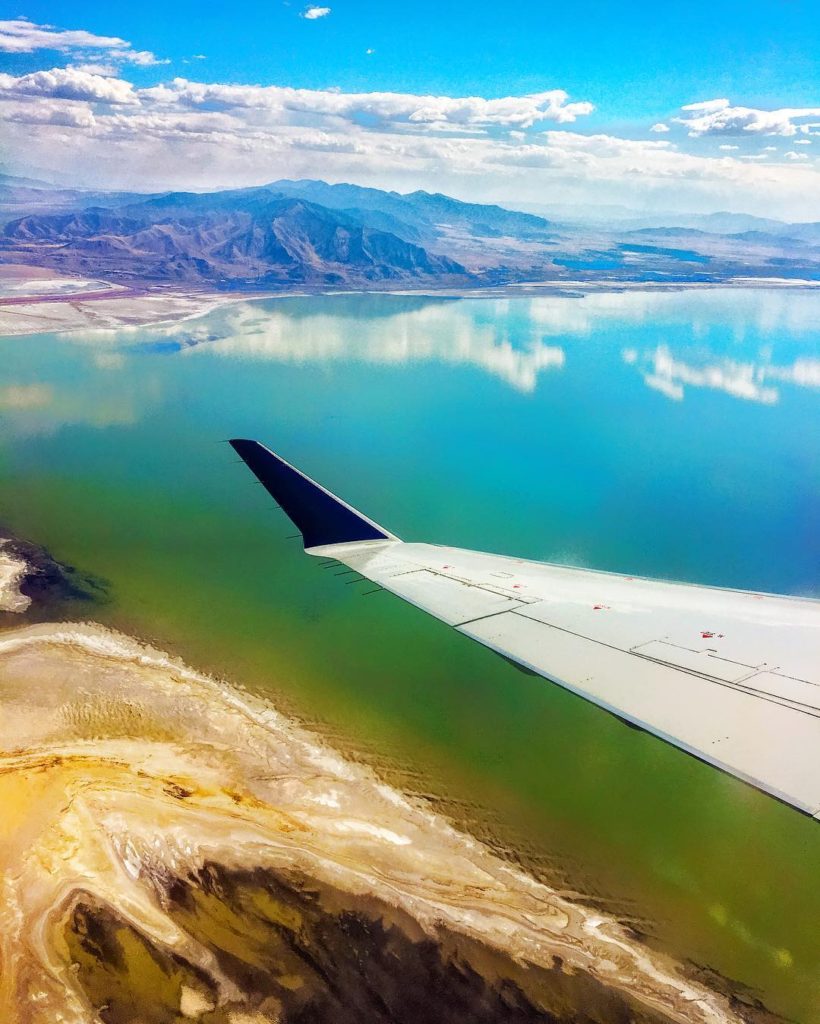
When you choose a window seat, the scenery outside the aircraft can transform an ordinary flight into a memorable adventure. This list highlights ten of the most spectacular aerial vistas available on commercial routes, detailing the geography, typical flight times, and what travelers can expect to see from their seat. Whether you prefer rugged coastlines, glittering city skylines, or expansive desert dunes, these flight paths deliver visual experiences that are worth planning for.
1. Icelandic Fjord Overflight (Reykjavik ↔ London)
North Atlantic flights between Keflavík International Airport (KEF) and London’s major hubs often follow a great‑circle route that grazes the southern coast of Iceland. From a window seat, passengers can witness towering basalt cliffs, cascading waterfalls, and the deep blues of fjords such as Faxaflói. The view peaks during daylight hours in late spring and early summer when daylight stretches across the high latitudes, allowing the sunrise to illuminate the volcanic landscape.
2. The Alpine Corridor (Zurich ↔ Tokyo)
Long‑haul flights crossing the Eurasian continent via the “Korean Peninsula” corridor frequently pass over the Swiss Alps and the Japanese archipelago. In the first half of the journey, the aircraft descends over snow‑capped peaks, glacial valleys, and alpine lakes. On the approach to Tokyo, the window offers a sweeping vista of Mount Fuji framed by the Pacific coastline, especially striking during clear autumn days.
3. The Amazon River Sweep (Manaus ↔ Miami)
South American routes linking Brazil’s Amazon gateway, Eduardo Gomes International Airport (MAO), to Miami International (MIA) provide a rare low‑altitude glimpse of the world’s largest river system. As the plane follows the river’s meandering course, passengers can see dense rainforest canopies, isolated river villages, and the sinuous “River of Doubt.” The most vivid colors appear after the rainy season, when the water level is high and the surrounding vegetation is lush.
4. The Kenyan Savannah (Nairobi ↔ Amsterdam)
Flights departing from Jomo Kenyatta International Airport (NBO) and heading northward cross the equatorial plateau before entering the Kenyan savannah. During daylight, a window seat reveals sprawling grasslands dotted with acacia trees, seasonal migrations of wildebeest, and the occasional silhouette of a distant mountain range. The view is best in the dry season, when dust‑colored horizons contrast sharply with the bright sky.
5. The Great Barrier Reef Route (Brisbane ↔ Los Angeles)
Trans‑Pacific services that depart from Brisbane Airport (BNE) and head west often trace a path just north of the Australian coastline before turning toward the open Pacific. In the early stages of the flight, the aircraft flies over the Great Barrier Reef, giving passengers an aerial perspective of turquoise waters, coral atolls, and the occasional white‑capped island. This view is most pronounced on clear mornings when the sun reflects off the water’s surface.
6. The Scandinavian Arch (Oslo ↔ New York)
Flights connecting Scandinavia to the United States routinely pass over the intricate archipelago of Norway’s coast, including the famous fjords of Sognefjord and Hardangerfjord. From a high window seat, travelers can discern steep cliffs plunging into deep blue waters, dotted with tiny fishing villages. The view continues across the Arctic Circle, providing occasional sightings of ice fields and, in winter, the faint glow of the aurora borealis at high latitudes.
7. The Patagonian Andes (Santiago ↔ Sydney)
Long‑range routes that link Chile’s Santiago International Airport (SCL) with Sydney’s Kingsford Smith International (SYD) often chart a southerly course over the Andes. The aircraft’s ascent reveals dramatic snow‑capped peaks, glacial lakes, and the rugged terrain of Patagonia. The descent over the southern ocean showcases dramatic coastlines where the Andes meet the sea, especially striking during the Southern Hemisphere’s summer months.
8. The Dubai Skyline Approach (Dubai ↔ London)
When landing at Dubai International (DXB) from European hubs, the final approach offers an iconic cityscape framed by the Persian Gulf. Passengers enjoy a view of the Burj Khalifa piercing the sky, the Palm Jumeirah’s artificial island, and the glittering waterfront. This urban panorama is best experienced during sunset, when the city lights reflect off the water and create a dazzling spectacle.
9. The Hawaiian Island Overfly (Honolulu ↔ Tokyo)
Trans‑Pacific routes that link Honolulu (HNL) with Tokyo’s Narita (NRT) frequently cross the Hawaiian archipelago on the outbound leg. A window seat provides a rare opportunity to observe volcanic islands such as Oahu, Maui, and the towering crater of Mauna Kea from above. The view is especially remarkable during sunrise, when the islands are bathed in golden light and the surrounding ocean appears glass‑smooth.
10. The Sahara Desert Edge (Cairo ↔ Paris)
Flights departing from Cairo International (CAI) toward Paris Charles de Gaulle (CDG) often trace a trajectory that skirts the northern edge of the Sahara Desert. From the aircraft, passengers can watch the stark shift from fertile Nile Delta landscapes to the arid desert’s sand dunes and oases. The contrast is most striking in early autumn, when the desert’s surface glows under the high sun, creating a seamless horizon that stretches for miles.